Lunch with Harold Wilson

In the early 1990s, when I was a graduate student, my parents would sometimes visit and we’d go to lunch, mostly on Sundays. On more than one occasion, we found ourselves in the same restaurant as a much larger family party: kids, parents, and grandparents, one of whom, it turned out, was Harold Wilson.

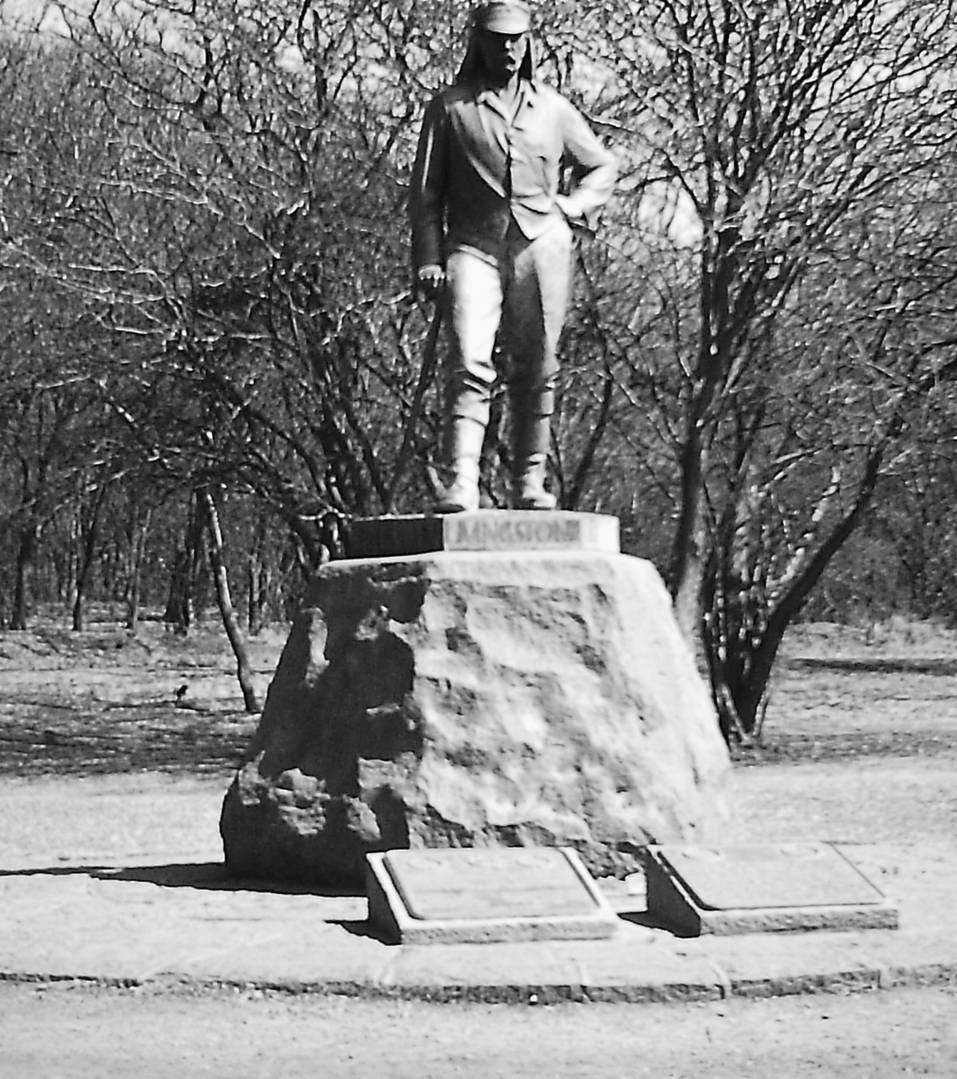
I have remembered these passing encounters because I have been going through more family stuff, most of which is material from the time my parents spent overseas in the early part of their marriage, from 1958 to 1965. I have been piecing together the precise timeline of their movements, and those of my sisters born back then – I’ve always known they lived in Rhodesia, after Cyprus, were out of Rhodesia before UDI, and in Zambia for a bit, then came back to the UK, but the precise timings have all been a bit vague. Now, with an archive of my mother’s scrapbooks from this period, 100s of photos, cinefilms, their passports, a couple of their books (Ian Smith’s autobiography; the 1000 page history of the Rhodesian Air Force, 1920 – 1980….), plus a bit of googling, it’s becoming a little clearer. 

My father went to Rhodesia in 1959 (closely followed by my mother), when the British delivered the first of 15 Canberra bombers to the Royal Rhodesian Air Force (RRAF), then the air force of the Central African Federation. He had transferred his RAF commission to the RRAF, signing up for a ten year stint (the precise motivations behind this decision, how the two of them negotiated this barely a year or so into their marriage, is well and truly lost to the mists of time). But the Central African Federation (CAF) was already in crisis at this point. Pressures for independence for Northern Rhodesia and Nyasaland were generating the counter-movement that would lead eventually to the Rhodesia Front regime in Southern Rhodesia declaring independence unilaterally to forestall any further moves to black majority rule, or indeed anything even approaching it. Founded in 1953, considered by its supporters as a noble experiment, the CAF was described by Kenneth Kaunda in Zambia Shall be Free simply as ‘ugly’ – suspected from its foundation by African nationalists as an effort to effectively gerrymander the region to guarantee continued authority for Southern Rhodesia’s white minority.

When the CAF was formally dissolved in 1963, serving members in the RRAF were given various options, laid out in a pamphlet kept in one of my mum’s scrapbooks: ‘Dissolution of the Federation of Rhodesia and Nyasaland: Royal Rhodesian Air Force – Options Available to Officers and European Members’. Some stayed with the RRAF in Southern Rhodesia; others, including my old man, transferred back into the RAF, but in his case on condition of serving a two-year secondment with the soon to be Zambian Air Force, initially the Northern Rhodesian Air Wing (it being clearly underlined in the paperwork, otherwise focussing on pension issues, that this meant transferring to a military service where “all units must be non-racial in character”). So, my parents lived in Zambia for two years, either side of independence, and came home with both sisters at the end of 1965 (the tickets and boarding passes for the trip home are amongst the souvenirs my mother kept – flying with Central African Airways, it involved flying from Livingstone to Lusaka, onto Ndola, then to Nairobi, and then finally to London. She also kept a set of the in-flight cutlery, of which only a small fork remains). 

I have not really considered before just how intense a period of geopolitical tension they lived through – it didn’t seem to be an aspect of their own recollections of this period. When talked about, their time in Rhodesia and in Livingstone was mentioned in terms of seemingly endless tennis, and regular brais, two Alsatians. But air power was pretty central to the crisis around the CAF, Rhodesia, and UDI throughout the 1950s and 1960s – white Rhodesian identity centred on notions of being ‘the most loyal of the loyal’ in their service to the Crown, primarily enacted and re-enacted through the close links between the RAF and Rhodesia, back to the second world war at least, and the Rhodesian air force was thoroughly integrated into post-war British imperial and then Commonwealth defence strategy – that’s why they were flogged the Canberras in the first place. And in turn, this meant that ‘the winds of change’ set in motion by changing British colonial policy in the early 1960s ran straight into the very significant obstacle of white-Rhodesian air power. In the deal done to dissolve the Federation, in 1963, under a Tory British government, the Southern Rhodesians got all the good planes – the ones which could do all the damage – as the same pamphlet explains: they got Hunters, Vampires, Canberras, and helicopters, amongst other things.  The Zambians had to settle for a handful of ageing transport planes: 4 Dakotas and 2 Pembrokes. Oh, and my dad, and some of his mates. This arrangement (not the bit about my dad, the bit about the planes) caused consternation amongst black African nations at the time – it’s at this moment that Zambia effectively becomes a ‘frontline’ state.

Smith, in The Great Betrayal, describes this allocation in the following way: “It had been accepted before the conference [in July 1963 where it was agreed to dissolve the CAF] that the armed forces would come to Southern Rhodesia en bloc. This was vital to us because both army and air force were highly efficient, and constituted the most proficient fighting force in sub-Saharan Africa, other than South Africa’s. The British had made it clear that they did not wich any of this to fall into the hands of the two Northern territories”.

On the other hand, this division is seen rather differently from a Zambian perspective:

“Zambia’s treatment at independence in the case of the two Rhodesias may probably go down as one of the greatest injustices ever to occur in the sharing of goods and services between states previously in a federal system of government. This was particularly evident in the sharing of the military arsenal between the two Rhodesias. Northern Rhodesia was the richest territory in the federation, despite the federation’s capital being in Southern Rhodesia. One would therefore have expected the sharing to have been in favour of the highest contributor to the purchase of that equipment—or, at the least, an equitable distribution. This was not to be. Southern Rhodesia received the lion’s share, leaving the new state of Zambia with some old and out-of-service aircraft four DC-3 Dakotas and two Pembrokes) and little of anything else. In addition, the new state of Zambia did not have its own indigenous officer corps—all officers were from the British Army and the British Royal Air Force, or from the ‘white’ settler communities from both Southern and Northern Rhodesias (now Zimbabwe and Zambia respectively) who had decided to cast their lot with Salisbury—another distinction for Southern Rhodesia.”

This is all well enough known, and part of the standard story about the lead-up to UDI is the idea that in 1964 and 1965, under Wilson’s newly elected Labour government, the British did not go down the route of military intervention because of the strength of the Rhodesian military, particularly it’s air force, and also because of the close personal and professional ties between the British and Rhodesian military meant that the government could not depend on the loyalty of the RAF or Army. It’s a line, for example, repeated by Denis Healy in his autobiography.  

So now, you see, I’m suddenly struck by the odd idea that Harold Wilson once sat around strategizing about how to deal with Ian Smith by making judgements about the loyalty of men like my dad – by this time, 1964-5, serving again in the RAF, on secondment to the Zambian Air Force, having spent 4 years in the RRAF.

Now, it turns out that this line about the problem of getting the British military to engage in hostilities with their white Rhodesian ‘kith and kin’ might not have been quite so central to Wilson’s decision-making and that of his government as is often made out – it might have been a convenient excuse: “the British government rejected the option of using force because it was engaged in a desperate struggle to limit its military liabilities for economic reasons […] but publicly it was prudent to argue that the use of force was neither militarily feasible, nor desirable because of popular sympathy for Rhodesian ‘kith and kin'” (Watts, C. 2005: Killing kith and kin: the viability of British military intervention in Rhodesia, 1964-5. Twentieth-Century British History 16, 382-415).

(By the way, another thing I have not done before is actually read Rhodesia’s Unilateral Declaration of Independence – it’s reproduced in Smith’s book. It’s a most remarkable political document – it’s like a long whinge from a recalcitrant child, a geopolitical version of taking one’s ball home because the bigger kids wouldn’t let you have your way).

I now realise how, whatever their motivations, my parents had gone to Rhodesia for more than the few years they ended up staying, 5 or 6, but had intended at least to be there for 10 – their coming home, having enjoyed being part of the final colonial generation, and an event that shaped much of the subsequent emotional ‘shape’ of my family’s life as I have known it, was both premature and forced on them. Bill Schwarz has written about how the memory of empire was critical to the ways in which British domestic politics unfolded in 1960s through to the 1980s, focussing on the central role of Enoch Powell’s  ‘proconsular social vision’ in articulating a racialised vision of order and disorder that had been most clearly developed ‘overseas’, and not least in places like Rhodesia before and after the dissolution of the CAF. Well my parents were hardly ‘proconsular’, but they certainly bought back home not just a memory of an orderly world but one which was experienced as upward social mobility, comfort and the good life of a sort that returning to married quarters in provincial England might not have immediately substituted for. My mother stopped scrapbooking when they got back to England – the very last thing pasted in is the paperwork allocating them their married quarter at RAF Honington, in December 1965.

There is a distinctly Rhodesian variant of what J.M. Coetzee has called ‘white writing’, in books by writers such as Alexandra Fuller and Peter Godwin, recounting the pleasures and losses of growing up in Rhodesia in the 1960s and 1970s. My mother read these books, but this was not quite the period of her own experience. I should admit too that I gave her Smith’s autobiography, with some reservations of principle, and I think she finally worked out that he really was ‘a nasty piece of work’.

None of this ever came up when we sat across the room from Wilson, just a few years before his death, in a restaurant in Oxford.

New book: Why Inequality Matters

I thought I should pass this along, from The Equality Trust:

This week saw the launch of an important new booklet called Why Inequality Matters. It draws on key findings in The Spirit Level and also presents further essential information about income inequality and its consequences in a brief and accessible format.

The booklet was written by members of My Fair London, a group of volunteers affiliated to The Equality Trust, and produced in association with the Trust and the CLASS think-tank. We hope you find the booklet useful and informative and we should be very grateful if you could share it with as many people as possible, especially those who may not have the time to read The Spirit Level.

The booklet can be accessed directly here: http://www.equalitytrust.org.uk/docs/why-inequality-matters.pdf

New book: Democracy and Public Space by John Parkinson

I have just begun reading a new book by John Parkinson, Democracy and Public Space (I came across it here). It combines theorising about key concepts – democracy, public space – with comparative analysis of the quality of democratic public spaces in major cities around the world. Parkinson argues that “democracy depends to a surprising extent on the availability of physical, public space, even in our allegedly digital world. It also argues that in many respects the availability of space for democratic performance is under threat, and that by overlooking the need for such space – or arguing against that need – we run the risk of undermining some important conditions of democracy in the modern world.”

That might not sound like an unusual argument to geographers and urbanists – it is common enough to find people in these fields arguing about the continuing importance of ‘real’ physical space for democratic politics. Parkinson’s argument is directed at democratic and political theorists, but opens up a dialogue with spatial disciplines too. He has some insightful comments about the limits of spatial theory when it comes to thinking about public space and democracy – he identifies two blind spots:

“The first is that all sorts of public activity are often treated as categorical and normative equivalents: that encountering members of the public in playful settings is normatively the same as engaging in binding collective decision-making, for example. The second is that the idea of democracy is either taken as a background assumption not worth exploring or is taken to be something roughly equivalent to freedom. In some work, this generates unintended irony. There are writers who decry the privatization of public space on the grounds that people can no longer ‘do what they want’ in it, which merely pits one liberal individualist claim against another without providing any reasons to choose between them. I shall spend some time in this book providing reasons – liberal reasons – to choose between some competing claims on the use of space but also argue that, for the most part, democracy is the means we use to make such choices, not something to which we can appeal to make the choice for us.”

I think he is pretty much spot on in both respects. His book also spends some time thinking through just what is ‘public’ about public spaces, what sort of value it is that defines publicness – it might be accessibility, or use of common resources, or common impact, or public role performance.

It will be interesting to see if the book gets any traction in geography-land – Parkinson’s conception of space is probably not wobbly enough, his mode of theorising about democracy and public space probably too ‘liberal’, his use of comparative empirics a little too conventional. These are all things I like about the book. Above all, it is a slow exposition of a performative theory of democracy that centres on practices, and spaces, of claim-making, and it takes time to think through the meaning of concepts and how they can be cashed-out empirically.

Calhoun on LSE and Libya

Not exactly hot off the presses, I’ve only just noticed this essay by Craig Calhoun in Public Culture, a long and detailed reflection on the changing dynamics of public social science and the public functions of Universities more generally, as exposed by the LSE/Saif Gaddafi/etc affair of last year.

Did he jump, was he nudged?

For those interested in this sort of thing (“this sort of thing” including behavioural economics, ‘nudge’, academics and policy, or, just, Cass Sunstein) – I only just noticed that Sunstein has quit as the White House’s ‘regulation czar’ (or ‘tzar’?).

The weight of dead generations

Karl Marx, 1852:

Men make their history, but they do not make it as they please; they do not make it under self-selected circumstances, but under circumstances existing already, given and transmitted from the past.

Condoleezza Rice, 2012:

Americans have believed that you might not be able to control your circumstances, but you can control your response to your circumstances.

Discuss…..

Partha Chatterjee on ‘After subaltern studies’

Further to my earlier ramblings about postcolonial theory, here is an interesting piece by Partha Chatterjee on the legacies and contemporary relevance of the subaltern studies ‘tradition’ (you can find more on this topic at the Cultural Anthropology site) . Of particular interest is his argument is the claim that there are now ‘two aspects of mass politics in contemporary Indian democracy – one that involves a contest over sovereignty with the Indian state and the other that makes claims on governmental authorities over services and benefits’. The emergence of the latter aspect, he argues, which follows from the extensive ‘reach’ of apparatuses of governmentality into the everyday lives of even the most marginal populations, requires a ‘paradigm shift’ beyond the classic analysis of subaltern resistance. Chatterjee is an interesting example of someone able to make use of ‘governmentality’ ideas while also acknowledging the distinctive qualities of actually existing democratic politics.

Glimpses of Austin

In a recent review of a new book defending Ordinary Language Philosophy, Sari Nusseibeh makes some interesting comments on the possible connections between the war-time service of J.L. Austin and the philosophical style he developed. He also includes a couple of personal biographical vignettes to bolster the argument (he is married to Austin’s daughter, Lucy, which might explain the access implied in his review), and mentions that a full biographical study is in the offing.

Austin is an oddly anonymous figure, someone whose influence clearly depended in no small part on the force, shall we say, of his personality, without whose presence it has even been suggested the full significance of his ideas cannot be appreciated (for example, Cavell’s presentation of Austin’s importance in general revolves around a repeated invocation of the impact that Austin’s own teaching had upon him personally). I have been interested in the relationship between the biographical and the theoretical for a long time – once upon a time I even tried to write seriously about this relation, which seems to me quite central to the genre of Theory as we have come to know and love it, but which is poorly appreciated and even more poorly theorised (the construction of author-effects around Foucault and his lectures seems to me to exemplify the point, and also manages to cover over one of the most important resources available for engaging with this problem).

Austin is a ubiquitous reference across the canon of French Theory in particular, perhaps more often mentioned than used certainly. Derrida was a fan, and Austin’s vocabulary was quite central to how literary deconstruction presented itself in the 1970s and 1980s (one of my unwritten fantasy papers would be about the ways in which deconstruction is the source for an ongoing tendency to ‘freeze’ Austin’s ideas around a simple distinction between constatives and performances, i.e. half way through How to do things with words, which helps to support strongly political, ‘de-naturalising’ interpretations of the idea of performativity [and thereby manages to sustain Emile Benveniste’s defence of this distinction against Austin’s own undoing of it]. I think this freezing still accounts for the way that ideas of performativity and enactment slip into routine constructionism all the time. ‘Force’, in Austin, is the name for a problem to be investigated, not the concept for an effect felicitously realised. Not sure I’ll ever get round to writing that one, though). The Derrida/deco link to Austin is obvious enough. Austin pops up in de Certeau, rather weakly, is more or less disavowed in Foucault’s Archaeology of Knowledge, is an important reference point for Deleuze and Guattari in A Thousand Plateaus, he gets a mention in Lacan. Pierre Bourdieu’s favourite insult, that of scholasticism, is taken from Austin. I could go on (Austin of course is also at work amongst the Anglos, such as Quentin Skinner or Hilary Putnam [I’m presuming there is a world in which Austin is not contained by John Searle] , but it is French resonance that is most entertaining – the fascinating thing about Austin’s war-time service, one of those things mentioned a lot in passing, and given his status in what becomes Continental Philosophy, is that he had a rather senior role in Allied military intelligence – he played an important part in the liberation of France…. I suspect a keen sense of pretence and masquerade, or fakery in general, might have come in handy in that world).

I suppose I find this trace, more or less visible, of Austin in French Theory interesting because it throws into question a long-standing account of this style of philosophy as ‘conservative’ – a charge which dates back to Ernest Gellner’s attack on ‘OLP‘ (as it is abbreviated these days), reiterated by Perry Anderson in 1969. Austin was Anderson’s model of the de-politicised nature of post-war British philosophy. I think Austin might be an interesting case study of what it is that academics are looking for when they go in search of ‘political’ significance in bodies of thought.

Austin the man, as a biographical figure, makes an appearance in various places – in biographies of Freddie Ayer and Herbert Hart, for example, as well as in Isiah Berlin’s reflections on life in Oxford. There are fleeting sketches in Geoffrey Warnock’s book about Austin; he is mentioned in reflections by people like Bernard Williams, Stuart Hampshire, and Michael Dummett. But in general, Austin seems to be a figure who resists much fleshing out, biographically. And as I suggested above, that might be interesting not least because of the ‘ad hominen’ qualities of Austinian styles of criticism – something that Simon Glendinning has written about recently in a volume of essays re-evaluating Austin’s legacy.

Shosana Feldman has a wonderful take on the masculine framing of action in Austin, a theoretical reading of course, and one of the more interesting accounts of Austin I have come across is in Mary Warnock’s autobiography, which I bought for a pound in an unexpectedly large charity second-hand bookshop in Cheltenham earlier this year. Warnock’s story of Oxford philosophy centres on women, such as Iris Murdoch, and Elizabeth Anscombe, who harboured a deep personal hostility towards Austin it seems. She writes about being a woman admitted into the manly circle of the famed Saturday morning sessions that Austin ran, with all those aforementioned soon-to-be stalwarts of post-war British philosophy (Warnock’s stories reminded me too of the tale that Gillian Rose tells in Love’s Work, about being told at the start of her time as an undergraduate to remember that all the (male) philosophers she was about to encounter were much smarter than she was – and told this by Jean Austin, Austin’s widow).

Anyway, who knows, these and other fragments may come together and begin to make sense in the biography mentioned by Nusseibeh. I can’t find any other mention of this yet.


Whatever happened to postcolonial theory?

Apparently, my doctoral thesis might soon be digitalized, and therefore made much more readily available to all and sundry [UPDATE: it’s here!]. I’m vain enough to accept the offer, and insecure enough to worry about what the enhanced accessibility might do for my reputation should anyone ever go off and download it. It is, or was, about postcolonial theory, amongst other things (occasionally, I remember that I got my current job on the basis of claims to be a postcolonial geographer). And it is, of course, oddly, my main professional credential, as both a researcher and a teacher.

I sometimes wonder what ever happened to postcolonial theory, which seemed very important once upon time – but has now become the basis for a fairly standard paradigm of geopolitical power, ‘imperialism’ with a smarter theory of culture attached. And I was reminded of this question by a recent, perhaps ongoing debate in the pages of New Literary History, on ‘the state of postcolonial studies’. Kicked off by a couple of contributions by Dipesh Chakrabarty and Robert Young, it has been continued through responses by the likes of Simon During and Benita Parry. It’s interesting that this debate revolves around topics such as climate change, and land, and settler colonialism – nothing ‘anaemic’ about those things. But the terms of the debate also acknowledge that ‘the postcolonial’ has lost some of its fizz in theory-land.

For a while now, I have been surprised and a little perplexed about the degree to which, certainly in geography, Edward Said’s model of colonial discourse in Orientalism has become the basic reference point for an understanding of the relevance of postcolonial theory. This odd resurgence seems to have taken place somewhere between the publication of Derek Gregory’s Geographical Imaginations and his The Colonial Present. I say that it’s odd because the re-centering of ‘Orientalism’ as the paradigm of power-inflected knowledge seems to have erased from view the debates that I remember being important twenty years ago, which were all about the inadequacy, conceptually and empirically, of the ‘projection’ model of ‘discourse’ that Said originally articulated in Orientalism, and of the associated claims about ‘power’ (Said’s own post-Orientalism work evidences the force of these criticisms in its move towards more pragmatic models of cultural representation).

You can still see the residue of these debates in the constant worry that ‘discourse’ must always be connected to ‘materiality’, or assertions that ‘representations’ have ‘performative’ effects. But these have become empty slogans that close-down the fundamental questions about the adequacy of concepts of representation, meaning, and subjectivity inherited from a canon of ‘French Theory’ (and they tend to authorise vague, unsubstantiated claims about the continuities between historical colonialisms and contemporary geopolitics). Above all, what these slogans do is protect the central idea tying together post-structuralist thought – the idea that ‘subjectivity’ is made and re-made through mediums of knowledge and representation, certainly; but more fundamentally, the very idea that social formations and political regimes are made to hang together by bringing off subject-effects, however these are conceptualised – ‘representationally’ or ‘affectively’.

The continued attachment to this model of power, and of the centrality of ‘the cultural’ to it, might have something to do with the way in which it underwrites models of research (it helps to make historical work, embedded in documentary analysis, as well as the analysis of lots of cultural practices, seem very important); but especially, perhaps, the degree to which it underwrites models of critical pedagogy.

Another thing I’ve been thinking about a little recently is the idea that we should all be seeking ‘synergies’ between research and teaching – almost always, this means finding ways to plug in more or less specialised research findings into teaching programmes. As such, it betrays a horribly ‘academic’ model of what teaching is good for – a kind of dissemination of findings, a medium for inducting people into proper understanding. I have never heard anyone seriously argue that teaching should inform research, other perhaps than in terms of certain models of dialogue or collaboration (of course, postcolonial theory is one of the sources for the idea that ‘the classroom’ is a site of engaged scholarship; but higher education teaching doesn’t, of course, go on in ‘classrooms’, with all the associated baggage that term implies. HE students are grown ups, not well thought of as impressionable or naïve youngsters; most student learning goes on in the gaps and interstices and loops between ‘contact’ hours, not in the presence of the academic oracle).

A constant, and growing, worry I have is about the idea that the sorts of cutting-edge research that circulates in a great deal of ‘critical’ social science, certainly in human geography, but more broadly in any field touched by cultural theory, should be allowed anywhere near teaching programmes. Cutting-edge theory, and the sorts of empirical projects informed and confirmed by it, is all about unpicking, disrupting, and revealing – across different theoretical traditions, being ‘critical’ is primarily understood as an epistemological operation which combines exposure and correction. For as long as I have been an academic, twenty-five years plus now (aagh…), ‘theory’ in these fields has primarily focussed on the enabling us to tell stories about the construction of things – whether under the heading ‘constructionism’, or one or other of its variants – making, composing, enacting, performing, assembling, and so on. And there are a set of pedagogic assumptions built in to this range of theory, whether or not it is ever concerned with teaching per se. The critical edge, the political frisson, of successive paradigms of work rests on the idea that showing how things are made, showing that things are performed, showing that things are contingent, has a potentially transformative effect on people’s most deeply held beliefs, ways of thinking, or ways of feeling their way around the world.

The pedagogic pay-off of this type of research knowledge, then, revolves around the idea that the purpose of critical scholarship is to interrupt the understandings and interests that students, or other audiences, might already have, and which might have animated them to arrive at your door in the first place – and to replace them with improved understandings and thought. Thinking of teaching in terms of ‘subjectivity’ (really as a scene of dis-identification, of counter-interpellation, or even of de-subjectification), underwrites the idea that the primary purpose of teaching is to challenge common sense, interrupt taken for granted assumptions, and disrupt received ways of seeing.

Apart from presupposing an almost impossibly flexible model of ‘subjectivity’, there seems to me something almost self-defeating, certainly from the perspective of geographical education, in assuming that the primary function of research and teaching should be to basically de-legitimise the structures of curiosity that attract students in the first place.

Anyway, I think the re-centering of Orientalism and ‘Orientalism’ as the universal critical paradigm for postcolonial theory is one example of this broader formation of critical pedagogy, stretching across research and teaching. Amongst other things, this re-centering marginalises, again, a set of alternative ‘postcolonial’ intellectual traditions arising from different places – for example, I think here of the arguments of writers such as Robert Young or Christopher Miller that African colonialism and postcolonialism did not fit the model of ‘geographical imaginations’ inherited from Said. Nor, one might suppose, would the experience of the Americas. One thing that emerges from debates focussed on colonialism and anti-colonialism in these places is a much more ‘pragmatic’ model of colonial discourse, for example. If you don’t take Literature, or aesthetic fields more generally, as exemplars for the politics of knowledge, you end up with different models of the use of knowledge in the world. And, in turn, it might be possible to find different models of what critical pedagogy might involve – models which are less hampered by ‘postcolonial scruples’, and prepared to take the risk of positively affirming some old-fashioned geographical curiosity as the very condition of ‘learning from other regions’. I think this is one of the lessons, for example, of Raewyn Connell’s Southern Theory, which pivots around Paulin Hountondji’s account of Africa’s ‘theoretical extraversion’, or the Comaroff’s more recent Theory from the South.