
 It’s all happening this month in Swindon, including the first Radical Bookfair, presented by the Swindon TUC.
Let’s have a party…
 Last week, I presented a paper at the annual conference of the Royal Geographical Society-Institute of British Geographers (‘the IBG’, if you’re old and slow enough). This was my last formal act as an OUer. The paper was in one of two sessions on Geographies of the Political Party, organised by James Scott and Jane Wills. The two sessions were full of entertaining stuff, about patronage and corruption in New South Wales, Communist Party reinvention in the Czech Republic, versions of Max Weber, and much else besides.
Anyway, my paper was an attempt to think about some of the reasons why political parties don’t show up in ‘critical’ research on politics in geography, beyond a handful of stereotypes. In part, it was based on some reflections on how and why they have and haven’t shown up in some research projects I have been involved in, although that part is not very explicit. In the same spirit as my posting of my AAG paper earlier this year, I have added this paper to the Things to Read section, if anyone is interested to know what I spent at least some of the summer thinking about.
Exhibition on Visualising Atmospheres
Details of the Visualising Atmospheres exhibition in London on Gillian Rose’s blog.
Books, shelfs, & selves
For anyone currently concerned with books and shelves…..
Politics and public space
 If you are stuck for holiday reading, perhaps a short debate on how best to theorise the relationship between public space and politics is what you are looking for? If you have access to the journal Policy and Politics, you will find a couple of responses in the current issue by myself and Quentin Stevens to a short provocation in the previous issue by John Parkinson entitled ‘Political public space: what it is, why it is special and why standard spatial nostrums mislead’. My contribution is really an elaboration of some aspects of Parkinson’s argument, an appreciation, just to show I am not only ‘critical’ when writing in critique-mode. To cut a long story short, Parkinson’s argument is that the ‘big-P’ political significance of certain sorts of public spaces is dangerously sidelined by arguments about the ‘little-P’, or shall we say, ‘cultural politics’ significance of public space understood as a field of broad, dispersed sociable encounters. I think he might be right. What is interesting about the ‘debate’ is that it does underscore the degree to which the precise relationship between political-politics uses of public space and cultural-politics uses of public space, to make a simple distinction, remains poorly theorised and difficult to investigate empirically in interesting ways (I think the significance of Parkinson’s argument, in his work on public space and democracy, lies precisely in focussing clear attention on the Big-P political relevance of uses of public space, something which is often taken for granted in more or less dismissive ways by arguments which are keen to claim ‘political’ relevance for any and all uses of public space).
The same issue of the journal also has an interesting collection of essays exploring the theme of Reconfiguring the Local Public Realm, which comes out of a workshop held in Bristol a couple of years or so ago, which I did attend and present a paper at, but was unable to contribute a final paper towards. It includes a range of pieces from planners, political scientists, and others – I would recommend the paper by Jeremy Seekings in particular, on the question of ‘Is the South Brazilian?‘
French Disko
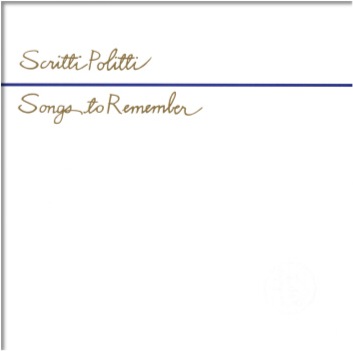 One of the thoughts I had when I started this blog was a semi-serious idea of trying to write about an asymmetry: I had been reading lots of Simon Reynolds, and was struck by a sense that while lots of late ’70s early ’80s new wave music was influenced by French Theory of a certain sort (all those art school boys and girls), French Theory itself is largely devoid of any pop sensibility at all (Roland Barthes is perhaps the exception who proves the general rule, and for that very reason, might just be the most interesting thinker of the whole lot).
Anyway, as I said, this is only a semi-serious, half-formed idea, which is what blog posts are for after all. Buy me a drink, or two, and I might be prepared to develop and defend some hypothesis of some sort around it. The canon of French Theory has impeccably modernist cultural reference points – Kafka, Boulez, Mallarmé, Artaud, that sort of thing. And a heavy investment in Kant’s Third Critique too. Not very ‘pop’ at all, really (maybe work on ‘Film’ is an exception, but actually, ‘Film’ is a terribly arty way of thinking about movies). Whatever hypothesis it is that I might want to defend should this thought ever become more than a half-formed one would be around the distinctiveness of ‘pop’ in relation to more serious sounding topics such as the popular, populism, the everyday, or the ordinary. None of which, however much you like them as concepts, have very much to do with fun. The semi-serious thought has to do with the idea that theories of culture, meaning, subjectivity and the like tend to be based on very select canons of favoured texts, which are thought to exemplify or allegorise or serve as best-case analogies for cultural processes in general. Or, just that it matters which cultural texts underwrite general theories of culture (should I admit that the only reason I know or appreciate anything about that canon of avant-garde modernism is because I once read too much Theory?).
 The reason I have been thinking about this recently is entirely frivolous. We are about to embark on our first overseas holiday with our children, to France, and part of my fatherly role in this is obviously to make sure we have things to listen to in the car – I’m the playlist monitor. So I have been trying to construct a ‘French Pop’ playlist, obviously. There are certain rules – it has to have about 14-15 songs on it, so it can be burnt to a disk for playing in the car; it has to be able to sustain the interest of a toddler and a 6 year old on a long journey (so it’s an ‘experiment’); it consists of songs we already have (with a couple of exceptions – I learnt some things doing this); and it is flexibly francophile rather than narrowly French (in the spirit of the Frenchness of French Theory).
Avoiding things like Michelle, Psycho Killer, Roxy Music’s Song for Europe, difficult songs by Throwing Muses, various Blondie/Debbie Harry possibilities, as well as anything by the Violent Femmes or St. Etienne, and fully aware that I am exposing something about my own tastes which is perhaps left private, here is the list:
- Get Lucky, Daft Punk
- Désenchantée, Mylène Farmer
- Ping Pong, Stereolab
- Le Freak, The Ukulele Orchestra Of Great Britain
- Spacer, Sheila B Devotion
- Lady Marmalade, LaBelle
- Tu veux ou tu veux pas, Brigitte Bardot
- Complainte Pour Ste Catherine, Kate & Anna McGarrigle
- La Danse De Mardi Gras, Steve Riley & The Mamou Playboys
- Un Gaou a Oran, 113 Clan, Magic System & Mohamed Lamine
- Marieke, Jacques Brel
- Non La Vie N’est Pas Triste, Martha Wainwright
- Bonnie and Clyde, Brigitte Bardot & Serge Gainsbourg
- Don’t Go, Nouvelle Vague (rather than this, which was vetoed as not age-appropriate).
- Ça plane pour moi, Plastic Bertrand
I’m not sure if the list is clarifying for me what exactly it is that my semi-formed hypothesis should be, other than to confirm that the lack of pop sensibility amongst a generation of French thinkers can’t be blamed on an absence of good pop. There is actually some Marx in there somewhere, as well as Cioran too, apparently, so something for the Theory-boys. As well as trying to be catchy, I’m assuming that listening to this as we drive across Normandy will help to refresh all those useful phrases one needs when holidaying in France: “Voulez-vous couchez avec moi, c’est soi?’
Why Theory? indeed.
Interview with Toby Miller
An open access interview at Communication and Critical/Cultural Studies with Toby Miller on cultural studies and communication studies, and the class politics of different versions of ‘the humanities’.
Ash Amin and Nigel Thrift, Arts of the Political: New Openings For the Left, reviewed by Dave Featherstone
Introducing ‘Participation Now’ 1.0 – a new Open University web resource for those interested / involved in participatory experiments and public action initiatives

Participation Now emerges out of several years’ research on publics, participation and engagement with research. It is a new web resource that aims to imagine, animate and support a public who are interested in and/or involved with the fast-changing field of public participation. Participation Now is also an experimental public engagement initiative, which is working to test-out, develop, evaluate and report back on experimental and participative ways of involving people in a field of research and practice.
“It will be hard to address the large number of problems we face the 21st Century without public participation in public life. However, pick up a newspaper or follow a debate on Twitter and you’ll get a sense that many of our established public organisations and forms of democratic participation are in crisis, and that our most familiar public forums and forms of belonging are being questioned. It’s in this context that we are seeing…
View original post 331 more words
Bio-social Methods Workshop Commentary and Presentations

 Bio-Social Methods for a Vitalist Social Science
Institute of Advanced Studies Workshop, University of Birmingham
16th July 2013
A workshop commentary written by Dr Bryony Enright is available here (PDF).
Some interesting quotes on the concept of the bio-social can be found here (Powerpoint).
Presentations and audio recordings of presentations will be added as available below:
 Nudging Into Subjectification (Powerpoint)
Dr John Cromby, Loughborough University (AUDIO)
 Porosity, Virality and the Study of Contagion (Prezi Presentation)
Professor Steve Hinchliffe, University of Exeter (AUDIO)
 Experimental Entanglements in Cognitive Neuroscience (LINK)
Dr Felicity Callard, Durham University and Dr Des Fitzgerald, Aarhus University
 Nanny, Nudger or Therapist? Therapeutic Approaches to Behaviour Change in an age of ‘Vulnerability’
Professor Kathryn Ecclestone, University of Sheffield (AUDIO)
 Using Mindfulness Training in Pro-environmental Behaviour Change (Powerpoint)
Rachel Lilley, Aberystwyth University (
View original post 53 more words
 Pop Theory