 “‘Take me. I’m yours – all of me is yours. Take me.”
Raymond Chandler, Playback, 1958.

“‘Take me. I’m yours – all of me is yours. Take me.”
Raymond Chandler, Playback, 1958.
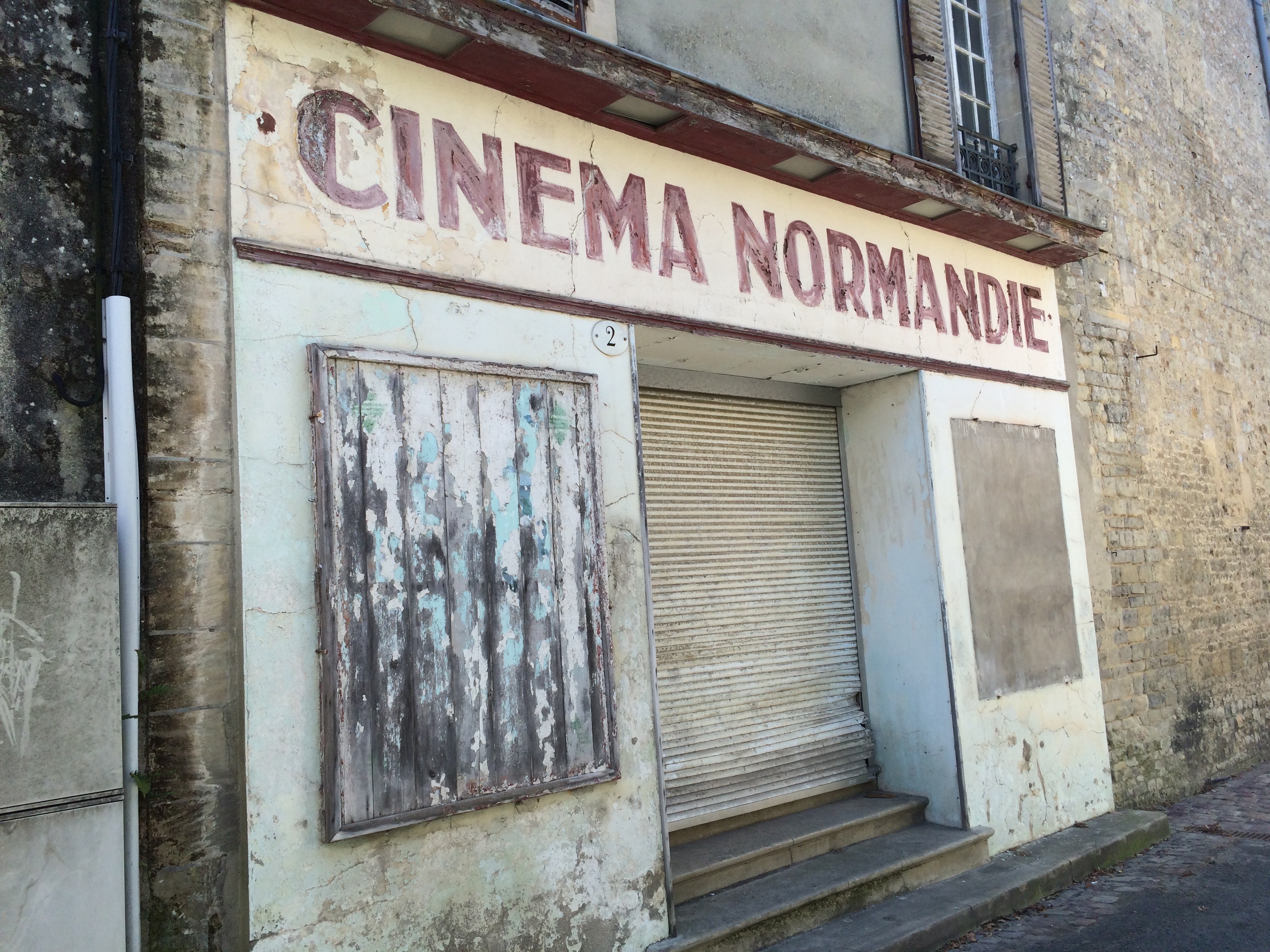 “Wonderful what Hollywood will do to a nobody. It will make a radiant glamour queen out of a drab little wench who ought to be ironing a truck driver’s shirts, a he-man hero with shining eyes and brilliant smile reeking of sexual charm out of some overgrown kid who was meant to go to work with a lunch-box. Out of a Texas car hop with the literacy of a character in a comic strip it will make an international courtesan, married six time to six millionaires and so blasé and decadent at the end of it that her idea of a thrill is to seduce a furniture-mover in a sweaty undershirt.”
Raymond Chandler, The Little Sister, 1949.
 “I think today there are much better film writers than I could ever be, because I never quite saw things in the terms of the camera, but always as dramatic scenes between people. I suppose you know the story of the writer who his racked brains how to show, very shortly, that a middle-aged man and his wife were no longer in love with each other. Finally he licked it. The man and his wife got into a lift and he kept his hat on. At the next stop a lady got into the lift and he immediately removed his hat. That is proper film writing. Me, I’d have done a four page scene about it. What his chap did took a few seconds.”
Raymond Chandler, 1957 (The Raymond Chandler Papers).
 “‘You really think that?’
She stared at me. I finished my glass and got my weak look on my face again. She ignored it.
‘Of course I think it’, she said. ‘And so do you.’
‘I think it’s a little more complicated than that.’
Her smile was cosy and acid at the same time. ‘I beg your pardon. I forgot for the moment you were a detective. It would have to be complicated, wouldn’t it? I suppose there’s a sort of indecency about a simple case.'”
Raymond Chandler, Farewell, My Lovely, 1940.
 “I hold no particular brief for the detective story as the ideal escape. I merely say that all reading for pleasure is escape, whether it be Greek, mathematics, astronomy, Benedetto Croce, or The Diary of the Forgotten Man. To say otherwise is to be an intellectual snob, and a juvenile at the art of the living.”
Raymond Chandler, ‘The Simple Art’ of Murder’, 1944.
 Election results are wonderful things for generating piles of interpretation, since they are so informationally thin (they only tell you how many people voted for each candidate in particular places, not why, or who they were, or anything else). Where would social science be without the secret ballot? But election results do provide just enough information to set-off all sorts of inferential flights of fancy, supported by waves of supplementary polling and survey evidence of different sorts. This might be one of the more important things that elections do for democratic politics – they generate deliberation after the fact, if not so much before! Getting your interpretation to stick is itself a political strategy, of course. The meaning of election results is nothing if not theoretically-overdetermined, one might say – give someone an election result, and they can use it to confirm their own favourite theory of what is going on in the world just now. It is even possible, for example, for some people to interpret Donald Trump’s election victory, secured quite legitimately by winning fewer votes than his opponent, but winning those votes in the right places, as “an unmistakeable rejection of a political establishment and an economic system that simply isn’t working for most people.” Never mind.
Anyway, on occasions like these, I tend to find myself thinking that I should either re-read, finish, or read for the first time certain things that I have kicking around the house, things like this:
Hannah Arendt, ‘Truth and Politics’, in Between Past and Future.
Ira Katznelson, Fear Itself: The New Deal and the Origins of Our Times.
Francis Fox Piven and Richard Cloward, Why Americans Don’t Vote.
Jan-Werner Muller, ‘Real Citizens‘, Boston Review.
Adam Phillips, Terrors and Experts.
Nick Clarke, Will Jennings, Jonathan Moss, Gerry Stoker, ‘Anti-politics and the Left’, Renewal, 24, (2).
David Blight, Race and Reunion: The Civil War in American Memory.
I was sad to hear that David Slater has passed away. In a parallel universe, we would have been colleagues, if only the University I worked for way back when had had the intelligence to hire David when they had the chance. I have always found him to be one of the most compelling critical thinkers in and around geography. He is among the few people to have written thoughtfully about the geographical resonances of democratic theory. His argument about ‘learning from other regions‘ was both a crucial moment in the reception of postcolonial thought in human geography, and remains highly relevant in the context of current debates about southern theory and decoloniality. The very first thing I ever read by him, when I was an undergraduate, on economism in development theory, remains in my memory as one of the smartest things I have ever read, a model of critical analysis, unashamed of its theoretical sophistication, to which we perhaps should all aspire.
 Just in time for anyone still wondering what they should pack to read by the beach this summer, here is a short paper by me entitled Towards a Geography of Injustice, available open access at the Finnish journal Alue & Ympäristö (Region and Environment – my paper is not in Finnish, just to be clear), which I’m told is “unofficially” the “critical geography journal of Finland”. This is pretty much the tidied up script of the Keynote Lecture I presented at the Annual Meeting of Finnish Geographers in Tampere back in October last year. I learnt lots and met nice people at the meeting, and thanks to Kirsi Pauliina Kallio for asking me to write the talk up properly.
This is a short and quite discursive version of only one part of a longer, and I hope deeper, argument about ‘the priority of injustice’ that I have been working out in my head while writing a book, which I think I have just completed this very week – it’s called, well, The Priority of Injustice. Somewhere between presenting a talk on ‘geography and the priority of injustice’ at Kentucky in April 2015, writing a first draft and then second draft in Vancouver last summer while on ‘research retreat’, and giving the Lecture in Tampere, I worked out what the book I have been writing was actually about – it’s about theories of democracy, substantively, I’ve always known that, but more specifically it’s about how to think about the vocation of thinking critically about democracy democratically, if you see what I mean. But it’s become a book about ‘the priority of injustice’- and this doesn’t mean favouring practice over theory, or even the empirical over the conceptual; it might mean not ever writing “(in)justice”, and not thinking of justice as an ideal; and not saying ‘post-political’; it might also mean thinking more about the meaning of domination, and freedom. Above all, it might mean thinking that politics is ordinary (but, obviously, in a not immediately obvious sense of ‘ordinary’….).
This particular paper is an attempt to summarise all of that, and connect it to some thoughts about how these matters are and are not addressed in GeographyLand.
Here is the link to the Policy and Politics blog post by myself and Nick Mahony, discussing our recent paper on marketing practices and public action….
By Clive Barnett and Nick Mahony
Market segmentation methodologies are increasingly used in public policy, arts and culture management, and third sector campaigning. As one element of the growth of…
 So, let’s re-cap:
As politics, this is wonderful, grubby, full of spite, so who could complain. ‘Democracy’ is a word being claimed by different sides in all of this, especially where it helps to close down an argument or potentially silence critics or de-legitimise opponents. It’s a very good word with which to do that. It does not belong to one side or the other, but different versions of what ‘democracy’ means are certainly at stake in this rolling drama (roughly speaking, narrowly narcissistic activist-centric ones versus compromised ‘polyarchic’ ones). But it’s politics, in the end. Properly political politics, too.

