
 Via Leiter Reports, a link to a short piece by the editors of a new Reader on Pragmatism, challenging the standard narrative of the ‘eclipse of pragmatism’ in post-WWII US philosophy – a narrative ascribed to the influence of Richard Rorty’s self-representation of his own post-Analytical apostacy, but also to books such as Louis Menand’s The Metaphysical Club and John McCumber’s Time in the Ditch which tell the story of this eclipse as political tales, and against which the emergence of ‘neo-pragmatism’ since the 1980s is usually asserted. In line with this argument, the Reader includes pieces by philosophers not usually associated with the ‘canon’ of philosophical pragmatism – Carnap and Quine for example; it also includes Richard Posner, who is often ignored in accounts of the resurgence of pragmatism (not least, for example, when pragmatism in human geography is being discussed; here is Rorty on Posner), and whose inclusion tends to play havoc with a conventional interpretation of the politics of pragmatism as naturally ‘leftish’ (although Posner has recently had a semi-conversion of sorts to a Keynsian-esque position on certain things).
Category Archives: Philosophy
On difficulty: Derek Parfit’s new book is published
 From Political Theory, news that Derek Parfit’s On What Matters, a two-volume work, has now been published. It is already being hailed as the most important work of moral philosophy since the 1870s. This is hardcore stuff, dealing with the fundamental issues of reason, rationality, and normativity.
Parfit’s classic Reasons and Persons is, I think, the most difficult thing I have ever read, or even tried to read. Back in the day, sceptics used to complain that French theory was willfully difficult compared to the clarity of ‘proper’ English language philosophy. I have always found this a bit disingenuous – it’s easy to read Continental Philosophy if you ‘grew up’ with it, as it were. And the sparse prose style of English-language ‘analytical’ style philosophy is its own sort of esotericism, especially once it’s couched within a broader frame of reference in which what’s at stake is often presumed in advance rather than explicitly signalled (the lack of referencing in this style of work is really an indication that it’s not trying to help the reader learn, unless they are already in the know; compare that to Derrida, who in his classic works actually just includes large extracts of Saussure, or Rousseau, so you get shown what it is they are saying that he is commenting upon – much friendlier, much better pedagogy).
I think the reason that a book like Parfit’s was so difficult was not intrinsic to it, of course, but because of my lack of feel for the context, the practice, of this sort of philosophical writing (the practice from within which one would be able to grasp not so much why this style of analysis matters, but what the point of it is meant to be). I actually think Reasons and Persons is fascinating – interesting stuff about the importance of thinking temporally rather than ‘spatially’ about the self, for example; its’ ‘atheism’ is clearly meant to be scandalous in a certain way. But it’s not part of a world that I inhabit – reading this sort of thing is like a hobby, in so far as it doesn’t really relate to the fields of work in which I am able to pass.
It’s also true, of course, that this style of philosophy is much more self-enclosed than ‘continental’ work – there is not really the same sort of secondary literature on a writer like Parfit which one finds on Foucault, or Derrida, or Deleuze (only very recently have publishers like Polity begun to publish critical introductions to thinkers like Cavell, Bernard Williams, Dummett, and the like). ‘Continental’ philosophy has always circulated, on the other hand, in translation – I don’t mean only, or even primarily, in terms of translations from one language to another – but in terms of the simultaneous circulation of the ‘original’ text (in translation) and a literature of both exegesis and critical commentary – Derrida-with-Culler, Derrida-with-Norris; Foucault via Edward Said; Foucault included in Dreyfus and Rabinow; Habermas via Held, or Giddens; Irigaray or Cixous or Kristeva via Toril Moi; pretty much everyone via Literary Theory. And so on.
If one were a card-carrying Foucauldian of a certain vintage, one might even suggest that these different styles of philosophical writing are defined by the very distinctive ‘author-effects’ through which key texts are disseminated and/or contained. It’s standard enough to observe that ‘Theory’ grew and developed through cultures of academic celebrity – a condition pilloried in turn by writers like David Lodge and Malcolm Bradbury (my favourite of this genre is his Mensonge). English-language philosophy has its own author-effects, no doubt, they are just very different – not least, this is a style of writing that is systematically self-effacing in certain ways (all those initials: how to tell that A.J. was Freddie and G.E.M. was Elizabeth?).
In fundamental respects, it seems to me, these two styles of writing are distinguished not least by their different relationships to space, dare I say – the problem with the ‘geographical’ framing of Continental versus Anglo/Analytical, apart from anything else, is that it suggests two fixed locations – but ‘continental’ philosophy, as Theory, is shaped by always being in movement, in translation, across language and discipline; a writer like Parfit, whose new book has actually been circulating in draft for some years (that’s why there is already an edited collection out about it, and critical commentaries in the newly published two volumes) writes into what would appear to be much more of a known than an imagined community, one where the personae of the philosopher is no less important, just not in the same way as it is for the genre characterised by multiple biographies of Foucault and fanzines, apparently, for Judith Butler.
So, the ‘difficulty’ is no doubt mine; perhaps I should just get another hobby (or who knows, maybe Parfit’s new book is much easier, I haven’t seen it – though I have read a rather forbidding essay on ‘normativity’ which I think probably makes up a chapter of it, which didn’t make me confident that this would be the case). But perhaps too, the difficulty is an index of the degree to which one of these genres has succeeded in its own popularisation – is indeed internally defined by this movement towards a certain sort of general reader, of an overly qualified sort, like me – compared to the other one, the one which is supposed to be defined by the clarity of its argumentative style, but seems content to circulate amongst a world in which in-jokes about High Table at All Souls can be made to carry the full weight of serious philosophical demonstration (see G.A. Cohen’s otherwise wonderful account of the political value of conservatism for the left).
Brains, breastfeeding, and behaviour change
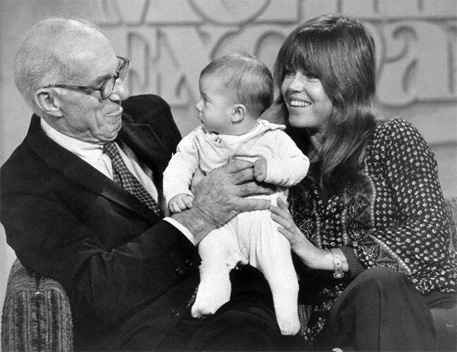 It’s been an interesting couple of weeks if you are interested in the popularisation of behaviouralism. A couple of weeks ago, there was the wonderful news story that seemed to suggest that babies who are breastfed suffer from fewer behavioural problems later in life than those who are bottle fed (this was quickly collapsed into a story about breastfeeding being the route to better behaved babies – not true in our case at the moment, since our breastfed baby is currently refusing to have anything to do with a bottle, which just isn’t good behaviour at all). This science story was fantastic precisely because the causality involved in the correlation was open to entirely different interpretations – it could be something to do with acids in breast milk; or bonding between mother and child.
This week, The New York Times’ pundit David Brooks has been in the UK, promoting his book The Social Animal, which makes strong claims about the importance of neuroscience, psychology and behavioural economics in establishing the non-rational factors which explain decision-making (in fact, Brooks’ version is really a rehashed version of the low-level conservative anti-rationalism that runs from Burke to Oakeshott; it also seems in part to be shaped by a concern to account for the failure of the US punditocracy of which he is a leading figure to notice that invading Iraq might not work out too well, oh, and that unfettered financial speculation tends to lead to catastrophic banking crises). Brooks got to trail his argument in The New Yorker earlier this year, where the Churchlands and David Eagleman have also been profiled recently – if nothing else, neuro-thought seems to have become something like the ‘spontaneous ideology’ of a certain field of academic-policy-punditry discourse in which the discovery that people don’t conform to the most abstract of models of rational utility maximizing seems to have come as a surprise (while we’re on the topic of The New Yorker and economists’ models of rationality, there is a fascinating series of interviews, from last year, by John Cassidy with various economists from the Chicago School – including Gary Becker, Richard Thaler, and Raghuram Rajan – which provides interesting insights into just where the differences between different understandings of rationality and non-rationality lie within this world).
The attention, and credulity, extended to Brooks this week reminded me of a line from a blog by Alice Bell which I think I have mentioned before, in which she refers to Nikolas Rose’s observation to the effect that neuroscientists themselves are highly sensitive to the mis-representation of their field, and that “if anything, the further away from researchers you get, the less reflexive you get”.
But anyway, what was my point? One of the features of the popularisation of brain-led behaviouralism in public culture – through more or less selective reference to cognitive psychology, evolutionary biology, behavioural economics, or neuroscience – is the degree to which it reproduces a deep, underlying individualism even as it seems to disavow certain understandings of individual rationality. This is most evident in the claim that various forms of action which, ordinarily, don’t seem that odd at all actually stand as proof of the fundamentally irrational, or non-cognitive, or emotional, or unconscious dynamics of human decision-making. This framing is indicative of the way in which the associational dynamics of action get folded back into an individualised model of action in specific academic fields, and certainly in popular representations of these fields. This is not my thought – it’s a recurring riff throughout Viviana Zelizer’s recent collection of greatest hits, Economic Lives, which I was speed-reading on a train a while ago now. Zelizer is keen to distinguish economic sociology and its attention to the social relations in which economic action is embedded from the approach of game theory and behavioural economics, which also breaks from excessively ‘rational’ models of rational utility. As she puts it, “game theory and behavioural economics involve modification, but not elimination, of economic models’ deep individualism” – and this is evident in the way in which categories such as emotion or irrationality effectively condense the relational contexts of action back into psychologise-able, model-able figures of explanation (Diane Coyle has an interesting, sceptical response from the perspective of an economist to Zelizer’s own project).
I’m still trying to work out how, exactly, to approach this whole set of debates in a way that doesn’t reproduce the in-built prejudices of ‘constructivist’ social theory (which would include most styles of self-styled ‘materalist’ approaches), which sees in all this simply the machinations of ‘power’ and or bad-ontology; and which acknowledges that a critical social science that doesn’t think it has anything to learn from these fields about rationality is probably doomed to moralistic irrelevance. I am beginning to get a sense of where exactly my discomfort lies, not only in relation to the popularisation of all this behaviouralist discourse, but also in relation to the established norms for being sceptical towards it. I was helped by attending part of, but sadly not all, of a workshop on the practice and theory of ‘nudge techniques’ at the OU earlier this month. This included an excellent introduction to the Mindspace report developed by The Cabinet Office and The Institute for Government in early 2010 which provides the framework for behaviour change initiatives in public policy in the UK.
One staple feature of these popular and policy discourses around behaviour change, nudging, and the like, is the claim that there are two systems shaping behaviour – a rational, reflexive, cognitive system; and an automatic system, of unconscious motivations. One interesting division within this field of policy discourse, it seems, is just how the relation between these two ‘systems’ is understood: one version of nudging assumes that government can manipulate ‘choice architectures’ not so much behind people’s backs, but by prompting them to re-interpret their actions in new ways – it assumes that beliefs, habits, feelings, can be apprehended cognitively as a route to changing them (and others presume that the in-built, automatic systems which guide people’s behaviour can be ‘attacked’ directly, without routing through any rational ‘system’ at all).
Nick Chater, of Warwick Business School, gave a very good Keynote at this workshop, in which he basically argued that effective nudging is quite difficult – on the grounds that the logical conclusion of an emphasis on the intuitive, unconscious, less-than-rational dynamics of human decision-making is that most beliefs and attitudes and habits are enmeshed in webs of relations with other actions, habits, and commitments, which makes changing any one really difficult – this is why nudging tends to focus on behaviours and decisions which are not strongly connected or embedded (e.g. rare decisions like organ donation or investing in a pension). Chater’s emphasis, then, was on the efficacy of nudge techniques, not their ethics. Of course, the ‘ethical’ worry shaping this debate follows in large part from the bifurcation between ‘rational’ and ‘automatic’ – the concern is shaped by worries over covertly shaping people’s choices in directions they might not otherwise have taken by doing things to them ‘under the radar’, as it were.
I think it’s interesting that this intuitive ethical worry is so central to debates about the use of behaviour change approaches, because it seems to get at an aporia at the heart of the ‘theory’ behind much of this discussion. Chater’s talk exemplified this – it focussed on that the sense that there is introspective depth to human behaviour was an illusion. Now, the substance of his account of the self is really about the temporalities which relate behaviours, habits, beliefs, attitudes, reflection, and so on – but the rhetoric of illusion, the sense of an inner self endowed with a rational will is a fiction, is telling nonetheless. It’s never quite clear in much of the discussion around these issues what attitude is held to the everyday, intuitive sense that we do tend to have of ourselves as having inner selves, able to introspectively reason about our actions (actually, sometimes it is clear, there is a strong strain of explicitly eliminationist neurophilosophy that sees all this as mere folk psychology ripe for correction). Am I in error to hold this belief about my actions, my behaviours and attitudes? Or, shouldn’t this same range of theoretical work be able to provide an account of how such beliefs and attitudes actually help constitute the intuitive, unconscious, embodied, non-cognitive capacities that they otherwise champion? Old uncle Habermas has pointed out the degree to which arguments which collapse normativity into simple models of scientific naturalism end up having to present the self-understanding of acting subjects as mere epiphenomena (see the essay ‘Freedom and Determinism’ in Between Religion and Naturalism).
There is a range of broadly ‘genealogical’ analyses of the emergence of these new styles of thinking about governing behaviour – I can think of Rose’s work on the brain sciences and the new susceptible subjects of public policy, the Soft Paternalism project at Aberystwyth, or work informed by affect theory which discerns the emergence of new anticipatory logics in security apparatuses or urban design. These types of study are good at identifying new political rationalities, if by that we just mean the ‘causal’ understandings of behaviour that shape various attempts to intervene in different social fields.
But the difficult question is what to make of the emergence of these new fields of neuro-enhanced, behaviouralist intervention, once the genealogical description is done. Here, I think there is a division amongst critical social scientists: you can interpret all this as rather sinister, being drawn into a trap laid down by the reflective/automatic binary, adopting an inadvertently rationalist ‘ethical’ position that one might not, otherwise, be inclined to endorse at all; or you can affirm the basic understanding of the non-rational, non-intentional, non-cognitive dimensions of action that informs behaviour change ideas, but with the help of a dash of affect theory, more or less inflected by psychoanalysis perhaps, but draw up a distinction between good and bad affect – extending credulity to the rhetorical deflation of intentionality and rationality in the new behaviouralism, but finding therein untameable resources for disruption and creativity. Both these styles of ‘critique’ end up leaving intact the claims of scientific authority upon which behaviour change discourse depends.
This is why I have found the Ruth Leys intervention in debates about affect theory so refreshing and though provoking – it does two things which seem to me to provide important resources for thinking through what a sustained critical engagement by social scientists and the humanities with a whole range of new scientific fields of the mind would look like: it identifies some key questions about experimental design, inference, and generalisation that should be asked of any scientific field when its’ ideas begin to travel; and it locates this style of questioning within broader philosophical debates about the relationship between normativity and naturalism. My sense is that this second set of philosophical debates in particular – ones in which the status and value of the concept of action is quite fundamental (not behaviour, not subjectivity, but action) – is where the deep ethical and political issues at stake for a critical engagement with the (social-)sciences of behaviour change, really lie. I’m not convinced that the current conventions of theory-formation in critical social science as I have learnt them are well placed to engage with these debates – conventions in which mention of intention, rationality, or reason are met with quizzical looks or confident dismissal. I’m still trying to unlearn these conventions.
Philosophy at The New York Times
The New York Times’ online philosophy blog, The Stone, which is moderated by Simon Critichley, which was started last year and provides a platform for philosophers to address issues “both timely and timeless”, has returned for another run.
Affect theory: Ruth Leys critique in Critical Inquiry
 A few months ago, back in what for me now seems ever so slightly like a previous life, I wrote a post about Ruth Leys and her work on the science behind the burgeoning field of affect theory. The paper mentioned back then, The Turn to Affect: a critique, is now published in Critical Inquiry. For anyone who is interested in the philosophical ideas raised by current debates about intentionality, embodiment, rationality, naturalism and the like – philosophical debates rather mangled in the canonization of ‘affect theory’ – Leys’ intervention should be essential reading. There are a few critical engagements with affect theory already – Constantina Papoulias and Felicity Callard’s great paper on the selective appeal made to scientific authority in some of this work, Claire Hemmings’ location of affect theory in a broader ontological turn in cultural theory, my own colleague Steve Pile’s effort to mediate between disputes over the relation between affect and emotions – but Leys zeroes in on some of the fundamental grounds of recent claims that affect theory constitutes a wholly dramatic innovation in cultural theory and philosophical thought. It works as a ‘critique’ by presuming that the claims made by adherents of affect theory – the main objects of Leys’ piece include Eve Sedgwick, Brian Massumi, Bill Connolly and Nigel Thrift – are indeed open to rational, measured assessment, not least in terms of the knock-down appeals in much of this work made to the apparently irrefutable evidence of neuroscience and certain strains of experimental psychology (I think in fact that one of the more interesting features of this field of research is the degree to which it systematically avoids argument – both in the exegesis of its own positions, and when challenged by those trying to engage this work in a critical spirit. This field of work would make a great appendix to Amanda Anderson’s The Way We Argue Now, but it would have to be called ‘the way we don’t argue with you because you obviously just don’t get it’). Nor, it should be said, do all variants of affect theory depend so heavily on this appeal to science-as-ontology – it’s not a feature, for example, of Lauren Berlant’s work (if you don’t count psychoanalysis as science).
Leys’ critique of affect theory focusses on 3 exemplary experiments which underwrite the external claim to scientific authority in much of this work, specifically the ‘basic emotions’ paradigm associated with Silvan Tomkins and Paul Ekman. She restores to view the sense of controversy around each one, the complexity of the findings, and their status as ‘cases’ – thereby raising the question of whether these fields can properly serve as the supports for claims made in affect theory – including the debates around the much-lauded ‘half second delay’ upon which writers such as Massumi and Thrift have staked strong claims for their anti-intentionalist visions. One of the more important aspects of Leys’ critique is the reminder that the experiments upon which much of this work alights tend to focus on particular sorts of embodied action (the hand movements involved in playing piano, throwing balls, that sort of thing), but abstract these from the wider “intentional structure or situation” in which such actions take place – in which they take on meaning as part of practices, if you like. The anti-intentionalist frisson of affect theory depends on generalizing up from what one might call ‘generic’ fragments of actions to make claims about the qualities of whole fields of embodied action. And it also depends, as Leys is also keen to point out in her essay, on a quite conventional dualistic separation of mind from body and brain. So it is, under the sway of this sort of theory, that the mind and associated concepts have come, once again, to be associated with ‘immateriality’. Affect theory, in its purest forms, tends to impute highly intellectualist views of meaning, signification, and mind to everyone else in order to make strong claims about the embodied and therefore non-intentional, non-rational qualities of affects.
The animating question behind Leys’ critique is “Why are so many scholars today in the humanities and social sciences fascinated by the idea of affect?” A good question indeed, and I’m sure there are many reasons. One version that occurs to me was triggered by
reading a piece by Michael Berubé recently about the legacy of the Sokal affair fifteen years on. Berubé’s main point was about how the ‘social construction of science’ position that was then a staple of the cultural left has now been adopted by climate-change sceptics on the American right. He didn’t say much about how cultural theory, in the period since this controversy, has also observably invested in various styles of scientism. The strands of affect theory which Leys pinpoints would be prime examples. Of course, the scientism often goes under the cover of ‘ontological’ claims – it is part of a more general drift of left theory towards seeking the foundations for the very possibility of radical change in deeper and deeper layers of covered-over ontological depth. Simon Critchley and Axel Honneth have discerned this trend towards the ontologization of politics, amongst others. ‘Affect’ might have become, at least in certain versions of the deployment of this concept, the prime example of this trend: understood as a surface for priming subjects behind their backs, before they know it, towards certain sorts of dispositions and responses, ‘affect’ is a medium for unrestricted discipline and accumulation – this is the bad politics of affect; at the same time, the same understanding of ‘affect’ as a figure of embodied, vital liveliness that escapes the strictures of mind, reason, and cognition means that it can also function as the name for an irreducible disruptive energy – this is the good politics of affect. Ben Anderson provides an excellent, concise articulation of both aspects of this understanding of the politics of affect, one in which Foucault is finally made safe for Marxism through the mediation of Toni Negri and an account of the real subsumption of labour to capital derived from Marx’s Grundrisse. Brian Massumi provides a briefer, more journalistic rendition of the same symmetrical understanding of the good-and-bad politics of affect in his reflections on recent ‘events’ – in a piece that reminded me that the only people who still believe in the concept of ‘mass media’ these days are theorists of ‘political affect’ like Massumi, Connolly, and John Protevi.
So, rather long-windedly, my point is that the ‘appeal’ of affect might be quite conventional, in so far as it sits within a quite standard assumption about the relationship
between Theory and Politics, and about Theory-as-Politics. The conception of subjectivity in this style of cultural theory is radically transformed, no doubt – but what remains in place, in what might in fact be a retrenchment, is the idea that the relationship of ‘culture’ and ‘power’ is always to be analysed primarily through the vector of reproduction. In this political imaginary, ‘power’ still fixes, naturalises, anticipates; and resistance always, forever, only, disrupts, interrupts, suspends. The emphasis on ‘plasticity’ and ‘becoming’ is the latest on a line of conceptualization which presumes that the most interesting thing one can do in political analysis is point out that things are made, constructed, composed, etc, and therefore, it is assumed to follow, can and should be changed.
As a move within the history of cultural theory, affect theory in its most anti-representationalist, anti-intentionalist variants at least, renders impossible the analysis of the ways in which ‘consent is won’ that might still represent, and here I am just following Berubé again, the single most important theoretical achievement and challenge of what we probably now have to call old-fashioned cultural studies. The most strongly politicized versions of affect theory are formally identical to a Chomsky/Herman style of the mass mediated manufacturing of consent (again, this seems a significant difference from the Berlant-style of affect theory – in which the emphasis is on trying to think about feelings of and for attachment which cannot be reduced to the machinations of power, discipline, or ideology – feelings that are ‘ordinary’, a word that Berlant uses a lot and which marks an affinity with a philosophical current closer to Ruth Leys’ position than that of the über-Marxism through which the ‘politics of affect’ has been most strongly articulated).
One of the peculiar achievements of affect theory is to make possible once again cultural analysis from the armchair (or cinema seat), in so far as it rests on a systematic refusal to countenance that people’s own viewpoints on their own actions and practices can count for much. The dualistic presentation which opposes affect and emotion to belief and rationality means that these two sets of attributes now get divided between expert knowledge which is available to the expert analyst, on the one hand, and the unknowing actors responding to affective triggers on the other. Affect theory redistributes the unreflective and reflective aspects of action so that all of the reflection now stands on the side of the theorist, rather than being folded together ordinarily in practice, reflection and learning. This strong version of non-representational affect theory really depends on squeezing some interesting ideas into a frame in which the primary objective is to show how Theory cashes-out as having some big-P political value – another sense in which this range of work is more continuous with other traditions of cultural theory than is often acknowledged. The judgement of the theorist, in affect theory, can be substituted for the self-understandings of actors on the grounds that affects exceeds and/or subtends epistemologically held beliefs – this is a risk, of course, that all theories of ontological depth, fundamental causes, or unconscious processes run when they are translated into politically inflected cultural analyses. Something which remains to be addressed by adherents to strongly political versions of affect theory is just what is at stake in the project of correcting for overly cognitive, minded views of action – is it correcting other theories? If so, the problem is that affect theory, non-representational theory, and related styles of cultural theory depend too heavily on straw-figures of their own construction to get any traction. But sometimes, often perhaps, there is a slippage towards the sense that it is ordinary people’s ordinary understanding of themselves and others and what can be imputed to the mind – as intentional, potentially responsible, actors, for example – which is the target. In this, affect theory converges with a broader field of current popular scientific discourse about psychology and the brain – which as Alice Bell has commented has become like ‘the weather’ as a topic of shared conversation – in galloping towards questionable conclusions.
Leys also observes that affect theory is associated with a particular privileged aesthetic, one which accords primacy to the integrity of personal responses, and invests strongly in a Deleuzian inspired model of intensities. The elevation of ‘the image’ into the central category of cultural analysis is testament to this aesthetic – Leys’ paper suggests an interesting relationship between the investment in an avant-garde model of Film and the centrality of images to the experimental fields of psychology and neuroscience upon which affect theory draws.
The final ‘method effect’ which Leys’ paper throws light upon revolves around the vocabulary of layers and levels which is characteristic of affect theory – this architectonic of layering is central to the lessons drawn and claims made about the temporality of embodiment, cognition, intentionality and action – and is another aspect of this work which Leys helps to unpick by restoring a sense of context to the scientific sources of some of these arguments.
So, in short – if this range of work is of any interest, you should read the Leys essay. I understand that Connolly has a response forthcoming in a subsequent issue of Critical Inquiry, with a reply-to-the-response from Leys.
Charles Taylor in conversation
A series of podcast interviews with Charles Taylor at the CBC programme Ideas – if you’re interested in ‘malaise’.
Geography and ethics: placing life in the space of reasons
 Following on from a recent post about the first of three progress reports on Geography and Ethics for Progress in Human Geography, the second of these is now published on-line here – it will be published in a print edition subsequently. This report considers the relevance to geography and cognate fields worried about ‘space’, which have tended recently to derive ‘ethics’ as a kind of excess from poststructuralized ontologies, of discussions amongst philosophers who don’t normally show up under the heading of ‘Continental Philosophy’, who have been busy debating issues of naturalism, intentionality, mindedness, embodiment, and normativity in interesting and challenging ways – thinkers like John McDowell, recently in debate with Hubert Dreyfus, Robert Pippin, Robert Brandom, Stanley Cavell. This range of work focuses on the ordinary ways in which normativity inhabits and shapes our practices – so it overlaps in some interesting ways with the social theory projects of, for example, Andrew Sayer, Axel Honneth, and Luc Boltanski, and some others, floating around at the edges of geography debates, but again, not quite managing to become central to those debates – I’ll try to explain how and why in the final one of these reports, which I have to write later this year. And try to do so in about 3000 words. Here is the abstract for the second piece:
“Discussions of ethics in recent human geography have been strongly inflected by readings of so-called ‘Continental Philosophy’. The ascendancy of this style of theorizing is marked by a tendency to stake ethical claims on ontological assertions, which effectively close down serious consideration of the problem of normativity in social science. Recent work on practical reason emerging from so-called ‘Analytical’ philosophy presents a series of challenges to how geographers approach the relationships between space, ethics, and power. This work revolves around attempts to displace long-standing dualisms between naturalism and normativity, by blurring boundaries between forms of action and knowledge which belong to a ‘space of causality’ and those that are placed in a ‘space of reasons’. The relevance of this blurring to geography is illustrated by reference to recent debates about the relationships between rationality and habit in unreflective action. Ongoing developments in this tradition of philosophy provide resources for strengthening a nascent strand of work on the geographies of practical reason that is evident in work on ethnomethodology, behaviour change, and geographies of action.”
Geography and ethics: justice unbound
 The first of my three ‘progress reports’ on Geography and Ethics is now published in Progress in Human Geography. This first one is dubbed ‘justice unbound‘, and discusses recent literature on justice and injustice in and around geography and related fields – including Sen’s recent book, G.A. Cohen’s leftist riposte to Rawls, Nancy Fraser, and Iris Marion Young . It was written before recent books by Danny Dorling, Ed Soja, Susan Fainstein were published, but these otherwise different works sort of confirm the point I am trying to make in this piece – that it might be worthwhile to think through the idea that injustice is the medium of justice (the line is J.M. Berstein’s), without thinking that this absolves us completely from engaging with normative reflection on what these terms mean. It’s not meant as a warrant for assuming that we all just naturally know injustice when we see it.
Anyway, as I say, this is the first of three of these reports; the second is already done, the final one I’ll do later this year. I have ended up not quite writing about ‘geography and ethics’, not least cos most of what I know about ethics is part of that poststructuralist strain of thought that Jeff Popke had already reviewed rather thoroughly as the previous ‘incumbent’ of this role; partly because it might be more interesting to think about how normative practices are an ordinary aspect of how life hangs together, rather than thinking of ethics as an extra special ‘responsibility’ that requires a special effort to pull off; and partly because I said ‘yes’ when invited because I wanted to write about some overlaps between social theory, political theory, and moral philosophy that I find intriguing for no other reason that they don’t quite show up in geography-land despite being on the edges of conversations which take place there. I think their not showing up has something to do with the degree to which Theory in geography has drifted into such a resolutely ‘metaphysical’ register, in the sense of this term that someone reminded me this week Ian Hunter uses to describe the genealogy of contemporary Theory-land. But that’s another story.
New online journal: The Art of Theory
Via Political Theory, a new online journal called The Art of Theory (great name), first issue includes an interview with Michael Sandel, and an essay by Sharon Krause on moral sentiment and human rights. It promises to be “a journal of essential political questions and candid interviews with leading scholars”, and is run by doctoral students from polisci and political theory.
My Daily Me
These are the three things that caught my eye during a 5 minute scroll through Twitter this afternoon, while very definitely not working: George Steiner reviewing a French book about American theory-wars about French Theory – Steiner is a smart grump on these matters; an essay on book hoarding [they aren’t just objects, they are pieces of one’s mind]; and Christopher Newfield reflecting on the ongoing unmaking of the Public University in the USA. I think I need a hobby.
 Pop Theory