
Todd Gitlin has a blog post on ‘the perils of public intellectualizing‘, taking as his case Anthony Giddens and his foray into Libyan affairs in the mid-2000s. Gitlin includes a link to two pieces from 2006 and 2007, which provide further context to the gobbet posted on Progressive Geographies the other day. Robert Putnam also has a piece, not quite a mea culpa, on his encounter with Gaddafi, which echoes Barber‘s sobering evaluation of the prospects for democracy in Libya.
Category Archives: Blogs
Deliberately Considered
Via Gone Public, news of a new blog set up by Jeffrey Goldfarb, author of the very wonderful The Politics of Small Things. Deliberately Considered aims to address contemporary issues in, well, a considered and deliberate way:
“Our task will be to respond to the events of the day by putting them in larger historical and theoretical contexts. We are dedicated to lending perspective by considering both what is close to home in the everyday life of ordinary people and what is happening elsewhere in other parts of the world, as well as analyzing what happens on the central political stage of American and global politics. We will consider problems with careful thought and with the longer, rather than the shorter, run in mind. We will not be primarily concerned with who’s up and who’s down or tendentious polemics, but rather with trying to understand the promise and perils of our politics and culture, exploring alternatives to prevailing social wrongs. We will deliberately consider the problems of our times.”
Theory in the streets
 A feature of much of the instant commentary on political events from Tunisia to Egypt, Bahrain to Libya has been a focus on those aspects of these processes that can be grasped even if you don’t know much, if anything, about these places. This is partly what is going on around all the discussion of the role of new media in facilitating and translating contestation across the Middle East – this is the aspect of these events can is familiar even from a distance. Indeed, it’s the aspect that makes these events accessible in new ways, in certain respects, while occluding aspects that are not so amenable to being communicated through these mediums.
So, rather than focus on what is most comforting about these events – the degree to which they might confirm a certain predisposition amongst a digitally wired intellectual strata of the importance of being digitally wired, I wonder if there aren’t things about them that might unsettle received wisdom. I wonder in particular if they might unsettle at all any of the conventions of contemporary ‘Theory’? This might appear a rather obscure concern, but it’s been interesting me this week as the figure of Gene Sharp, political theorist of non-violence, has been profiled in a range of after-the-fact reflections on political upheaval in Tunisia and Egypt in particular. Sharp was mentioned in a New York Times article about these revolutions, and was then the subject of a follow-up profile. Interviews and blog notices about his influence in shaping the non-violent strategies of protestors and with links to key publications have followed.
I particularly liked the blog posts which wondered aloud who Gene Sharp was, since he doesn’t seem to figure in a canon of contemporary political thinkers. In fact, Sharp is often a focus of attention when non-violent political action shakes more or less dictatorial, more or less authoritarian regimes around the world – he is credited with influencing non-violent political movement from Burma to Zimbabwe, Iran to Eastern Europe (there is an ultra-leftist riff on the blogosphere that Sharp is just an agent of the CIA, on the grounds that the events in which his influence is so often found tend to be supported also by the US government or US-based democracy promotion programmes).
What is interesting, theoretically, about Sharp’s analysis of non-violent political action, which informs the practical strategies picked up in such diverse contexts, is a conceptualization of power as being based on consent and obedience, not premised on violence. This might sound familiar – it is a Gramscian shibboleth to contrast coercion and consent after all. But in Sharp’s work, it is the basis of a pluralist understanding of the different ways in which power structures seek and secure consent – without reducing all of these to some fundamental substance in violence and coercion. It’s this difference between power and consent that underlies Sharp’s strategic understanding of the potential of non-violent action, which has clear resonances with Arendt’s account of concerted public action, as mobilising a fundamentally different register or mode of action than that of authoritarian or dictatorial regimes. The sense that power is not reducible to violence is also found in Arendt, even in Foucault. But its remarkably common in contemporary political theory and cultural theory alike to elide this difference, and to presume that in fact violence is the substratum of all power relations, or that apparent consent is really just the product of manipulation and manufacture – i.e., just a cover for coercion, which is not, one might suppose, what Gramsci was actually getting at. The failure to think through the political implications of the fact that consent has to be won is the focus of Michael Bérubé’s book The Left at War, and John Brenkman’s The Cultural Contradictions of Democracy, great books which seriously think through the limitations of conventions of current theoretical genres in light of the spiralling politics of violence of the last decade.
The influence of Sharp’s work, and the examples of non-violent political action with which his name is often associated, is a powerful rebuke to the metaphorical over-inflation of ‘violence’ in so much contemporary theory, whether in notions such as ‘symbolic violence’, or the ontologization of violence that runs from Sorel through Fanon to Agamben. It also stands in contrast to the current excitement around The Coming Insurrection, the anarcho-communist text that has become central to the case of the Tarnac 9 (0r 10) in France since 2008, and garnered lots of attention, and a translation with Semiotext(e), as a startling new and original conceptualization of the ‘politics of neocommunism’, as one contribution to a renewed Marxism-beyond-class (what would be the point of Marxism without class?). Interpreted by the French authorities as a manual for terrorism, it’s also been described as ‘elitist revolutionary strutting‘ and identified as really just a symptom of the absurdities of a failed lineage of left theory. It’s certainly odd to find a text which identities a new subject of political revolution – ‘youth’ – but has recourse to such a resolutely middle-aged, crotchety analysis of generalised alienation. It is also notable, in contrast to the theory of non-violent political action currently being enacted in the world, how far this style of political analysis depends on drawing symmetries between the modes of action of ‘the powerful’ and those who challenge them – the theoretical significance of the rhetoric of war, attack, and confrontation in this document lies here, I think, in this moral and political failure to be able to think of politics outside of a logic of mimetic hostility. And of course, whereas Gene Sharp’s name keeps coming up when it is realised that non-violent political action is strategic and organised, the analysis of a communism-to-come that is a purely immanent resonance with the current system requires no attention at all to the hard work of political action.
New online journal
Via OLP & Literary Studies, news of a new online humanities journal, nonsite.org. Editors include Ruth Leys, Walter Benn Michaels, and Robert Pippin. This is how the editors situate the journal:
“nonsite.org emerges in part out of interest in a set of theoretical topics – the ontology of the work of art, the question of intentionality, the ongoing appeal of different and sometimes competing materialisms – and in part out of opposition to the dominant accounts of those topics”.
I think the focus on intentionality is particularly interesting – a future issue is promised on this topic.
‘From the blogosphere to the street’
 Continuing the theme of how to understand the role of new media in helping to explain events in Egypt, the SSRC’s Immanent Frame blog site has two new excellent pieces by anthropologists, which place these practices in broader contexts, written by Charles Hirschkind and Farha Ghannam. Read together, they do a nice job of emphasizing two things: how new media practices like blogging are embedded in wider media ecologies, relating to and reconfiguring other media forms and practices, particularly of news making; and the important relationship between these reconfigurations of media publics and the politics of occupying and contesting urban public spaces.
What do ‘media’ do?
 Following my post on the reporting of events in Egypt, Alex Marsh sent me a link to this think-piece by BBC correspondent Paul Mason, Twenty reasons why it’s kicking off everywhere, which seeks to draw some general lessons from recent protest events in places as diverse as Greece, Ireland, North Africa and the UK. The piece has since been published in The Guardian, and has attracted some attention, not least as indicative of a BBC policy of encouraging journalists to engage in more detailed discussions via blogging.
Mason’s piece treads between a focus on ‘technology’ and a more interesting discussion of some of the sociological aspects of this range of events – the emphasis on the role of young, relatively highly educated people is surely correct. There is an inevitable journalistic emphasis on the newness of all of this, and the default assumption remains that this is really a story about how ‘technology’ transforms the conditions of political action. The geographer Tim Unwin has a list of various reports that address what he himself calls “the agency of mobile ‘phones and the use of social networking environments over the Internet” in shaping political upheaval in Tunisia, Egypt, and beyond. His last comment is important: “Much research needs to be undertaken on the real role of ICTs in these ongoing political processes. What seems apparent, though, is that many participants do indeed believe that these technologies are helping them achieve their objectives.” A certain view of the potential of digital communications is no doubt an important part of the ‘spontaneous philosophy’ of contemporary activism. Likewise, Mason’s think-piece refers in passing to how “activists have read their Chomsky and their Hardt-Negri”. I’m not so sure this necessarily means “they have a better understanding of power”, but in so far as it is true, it does certainly mean they are likely to have a particular, well-formed view of how power operates, for better or ill. But it seems to me that both of these aspects of activist self-understanding – of ‘communications’ and of ‘power’ – are more interesting if they are understood as internal dimensions to this form of organisation, without requiring anyone to affirm the ‘objective’ validity of either of these views of how political action unfolds. The focus on the importance of new media in much of this reporting and commentary allows a narrative framing in which politics is rooted in a generalised but unformed sense of ‘grievance’ rooted in ‘poverty’ and ‘oppression’ which is then given expression by new communications opportunities – Manuel Castells neatly summarises this narrative in his comments on all this.
In short, there is a particular concept of the mediating work that ‘media’, old and new, perform in much of the commentary on the role of social media and digital technology in contemporary politics – they can be ascribed so much importance by virtue of being attributed a merely mediating function. Amongst other things, what disappears from view from this perspective is the different practices that different communications technologies help to configure – twitter and facebook are playing different roles in contemporary events in the Arab world to that played by Al-Jazeera. While much of the commentary out there is about how new media changes how politics is done, my sense is that the real imperative behind much of this kind of commentary is the attempt to understand the changed conditions under which news is made, and indeed, the changed conditions under which academic expertise about complex situations can be articulated in real-time (and there might be interesting elective affinities between certain self-understandings of activism and the focus of media reporting on individualising effects of new media).
For an antidote to some of the more detached commentary on events in Egypt and Tunisia, there are some interesting debates going on amongst anthropologists, which provide much more depth of understanding than is found in much of the technology-focussed discussion. There are a couple of more circumspect reflections on the role of media in these political events. One of these pieces makes the point that the focus on the new mediums of political change is a recurrent feature of reporting and commentary on these types of dramatic political events: “This is an evergreen story…The interest that’s focused on social media now, ten years ago was focused on web portals, before that it was focused on email and list-serves, before that it was television.” And in this respect, there is an interesting archive of reportage and commentary on the protests around the contested Iranian election in 2009, described by some as a ‘twitter revolution’, which two years on is an interesting case-study of how the global news narrative of politics as technological expression unfolds and then unravels over time.
Democracy Live
 I came across an interesting theory blog the other day, called GonePublic, which belongs to Noelle McAfee, and focuses on links between philosophy, political theory and contemporary public life. She has a new book out, which I had not come across before, called Democracy and the Political Unconscious, which I haven’t yet read, but which sounds interesting in its emphasis on the relationships between collectively felt trauma and the challenges of building and sustaining democratic cultures. Her site also has a link to a recently published collection, Democracy in What State?, which includes contributions by some of the grandees of ‘continental-style’ political philosophy – Ranciere, Zizek, Badiou, Agamben, Nancy. Should make interesting reading, given the decided ambivalence about ‘democratic’ values one might impute to at least one or two of these thinkers. And while I am on the subject of things I haven’t read properly yet, there is also an interesting looking essay in Political Studies by Andy Dobson on Democracy and Nature, that thinks through the relevance of Latour’s provocations about nature and democracy by emphasising the importance of practices of listening as well as the well-trodden emphasis on speaking in recent democratic theory.
I stumbled across these references a week or so ago, and remembered them this week while finding myself watching a lot of day-time television, in that zonked-out, sleep-deprived way that one does in the first few days after the birth of a new child. We have sat glued to images of protest and violence in Cairo and other Egyptian cities. I wonder which, if any, of them would be most helpful for understanding what is going on there. Between them, these theoretical works look like they cover the shared terrain of cutting-edge democratic theory these days, which revolves around a couple of intertwined issues: how best to think of the mediums of inclusive democratic politics – in terms of deliberating, representing, and/or other modes of more or less embodied action; and how to square these images of how democratic politics should be best practiced with a more worldly acknowledgement that democracy is rarely founded democratically, but is shaped at its origins often by violence, trauma, and suffering. Of course, there is a style of theorising about ‘the political’ that presents these two sides as standing in a starkly contradictory, or aporetic relationship, so that democracies are always tainted at source by foundational violence. This serves as a way of reconfiguring some quite old-fashioned images of messianic revolution with ideals of democratic politics. Alternatively, there is an Arendtian vision in which the sorts of street protests going on in Egypt this last week or so are examples of a mode of collective, public action that is constitutively opposed to violence and yet is the very source of democratic energies.
Now I don’t know very much about Egypt, and am not inclined to over-interpret events there just for the sake of theoretical point-scoring. But watching these events, distracted by more real personal events and from a distance, I have been struck by how at times like this what you really want is contextual, social-scientific forms of analysis rather than interpretative political theory. And, it’s also useful to have some sense of how things might be theorised by those more familiar with these contexts than the usual theory-suspects.
One of the riffs this past couple of week about Egypt, and before that about Tunisia, has been about the importance of social media like twitter and facebook in coordinating the protests and collective mobilizations that have shaken authoritarian regimes. To a large extent I think, this sort of emphasis is really an index of a culture of journalism that doesn’t know very much about the places where dramatic news events often take place, and is therefore forced to fall back on a familiar narrative line. Malcolm Gladwell has a neat little blog post on this theme here, in which he points out that the fact that the fact that events in Egypt have been partly shaped by the use of new media might be far down the list of relevant factors worthy of attention. His point is that the fascination with the mediums through which contemporary collective action is made possible, with the ‘how’, tends to distract attention from the content, from the ‘why’ of such action. There is a kind of flattening effect of this sort of news narrative, in so far as it makes political revolutions in Tunisia just another version of half-hearted online petition exercises led by government in the UK or the latest smart viral marketing campaigns of this or that underground pop song. The focus on the medium is not only exaggerated, as Gladwell suggests, but tends to obviate the need for any deeper analysis of why political events like this take place at all – I have actually learnt very little about Egyptian politics after a week of watching blanket news coverage from there.
Of the things I have had time to read on this issue, I enjoyed this piece on why the narrative that paints Egypt in 2011 as potentially a re-run of Iran in 1979 doesn’t hold up really helpful, precisely because it provided a basic outline of the social and organisational context in which these events are unfolding. It reminded me too of an old media studies analysis of the importance of tape cassettes to the Iranian revolution. Maybe each political revolution has its own iconic ‘new media’ technology?
And the cassettes example isn’t as old sounding as it may appear. The anthropologist Charles Hirschkind has a detailed ethnographic account of the importance of taped sermons in shaping contemporary Islamic public spheres, in The Ethical Soundscape. One reason why this account resonates is that it reminds us that there is more to ‘media’ than just communicating – the ongoing importance of this media technology, in Hirschkind’s account, lies in the practices of self-sustained by a culture of listening, of being devout, of cultivating a particular spiritual and public ethics of life.
Hirschkind’s account of the practices of contemporary public life in Islamic societies like Egypt and Iran suggests a much more nuanced understanding of ‘public space’ than one often finds in spatial disciplines like geography or urban studies, which have a tendency to fetishize ‘real’ public spaces. I suppose the centrality of Tahrir Square to the events in Egypt in the last week might seem to confirm this emphasis. But I wonder. This seems to be an example of a struggle of over a specific site, as a symbolically important location rather than a site of real power, the control of which projects or reaches beyond its coordinates in space. A year or so ago I listened to a talk, at a workshop in Rome on political agency, by the Egyptian academic and activist Heba Raouf Ezzat, who talked about the vibrant but furtive quality of the political public sphere in Egypt. She recommended the work of Asef Bayat, who has written about new ‘post-Islamic’ social movement politics and the ordinariness of political action in the Middle East. Bayat has also written about the figure and reality of ‘the Arab street’, which he reconstructs as a complex of ideas and practices about the force of popular opinion, the fragility of state power, and the calibration of formal political processes to material conditions of life (what Africanist political theorists might call ‘the politics of the belly’). Bayat has updated this analysis of the new Arab street in the last week in relation to events in Tunisia and Egypt.
Between them, these sorts of analyses of the spaces of political action are helpful in indicating the extent to which democratic energies might be understood as urbanized in certain respects without forcing one to fetishize a particular romantic image of the city as the scene of political life. There is an urbanity to the movements for change in Egypt, Tunisia, Iran and elsewhere, it seems – in so far as they are peopled by labour activists, and professional classes, by women’s organisations, as well as by varieties of religious activism which are resolutely modern in their concerns and maybe often even ‘secular’ in their form. And it seems too there might be something resolutely urbanized about the ‘conjunctural’ factors at work in these recent events – the central importance of economic grievances over unemployment and food prices is indicative of the interplay between spatially extensive infrastructures of provisioning upon which contemporary urban living on the scale of a city like Cairo depends; and more contained, lived and shared experiences of stunted citizenship.
Universities and their public purposes
 Nigel Thrift, sometime geographer and all round theorist, who is now Vice-Chancellor at Warwick, has a short note on The Chronicle of Higher Education blogsite WorldWise note on the complexity of the tensions shaping Higher Education today. Apart from the slightly sneering dismissal of ‘critique’ as a posture to adopt in relation to current changes to University financing in the UK context, this is a rather succinct summary of the complex relations into which ‘The University’ is woven. It is also a useful reminder of the degree to which the transformations triggered by post-election decisions in the UK are part of rather longer, more broadly shared processes of reconfiguration in global higher education. One thing that Thrift’s list of tensions brings out is how they all revolve around the basic tension of being (at least in part) publicly funded institutions which are expected to or aspire to deliver a complex and contrdictory range of public ‘goods’ – world class research, economically useful teaching and learning, social mobility, relevant solutions to all sorts of worldly problems. Rather than there being a single model of ‘the public’ to which Universities are expected to be responsive and accountable, Thrift’s list of tensions indicates the diverse range of public purposes and constituencies which have a stake in the future of higher education. Anyway, Thrift promises future posts focussing in more detail on these different tensions, which should be interesting to follow.
Geography without scruples
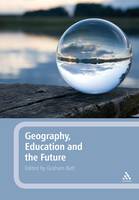 Here is a new book of conceptually sophisticated, research-informed essays about the place of geography education in schools in the UK. It is the product of the geography Education Research Collective (GEReCO), a group of scholars working on researching geography and education issues. I am not part of this group, I should say, but was invited to write a short commentary on some of the essays. Geography’s place in the school curriculum is constantly changing, it seems – sometimes bemoaned for being marginalised, although now suddenly defined as a ‘traditional’ academic subject as part of Michael Gove’s re-definition of standards around the so-called ‘English bac’. There is a vibrant on-line community of geography teachers and education researchers engaging in these issues – amongst others, I like the blog developed by John Morgan and David Lambert, Impolite Geography.
‘Big Cuts, Big Society’
 My colleague at the OU, Nick Mahony, has just posted an invite to contribute to a new blog hosted by the Centre for Citizenship, Identities and Governance (CCIG), discussing ‘the politics of the present’, focussing initially on the theme of ‘Big Cuts, Big Society’ – see: http://www.open.ac.uk/ccig/dialogues/blogs/big-cuts-big-society
 Pop Theory