Are We There Yet? Or, is this what fieldwork feels like?

UntitledI have just returned from Johannesburg, a city I have not been to since 1997, when I first went to South Africa. I had a nice time, and as ever, I learnt a lot in a  short space of time by being in a very different place. I have spent lots of time in South Africa in between that first trip and now, but apart from going in and out of the the airport and a brief day-trip in the early 2000s, not any time in Jo’burg. So it was an occasion for reflecting on what it is I have been doing coming and going to South Africa in the meantime.

I remain unsure whether or not the time I have spent in South Africa counts as ‘fieldwork’, a rather precious idea in GeographyLand, the everyday world which I inhabit. Does visiting other people’s countries and finding things out about them counts as ‘fieldwork’? I certainly think I have done ‘research’ in South Africa (actually, mainly, in Durban), but I’m still not sure why I am meant to think that the quality or significance of research is meant to depend on the implied sense of immersion or exposure associated with the idea of fieldwork.
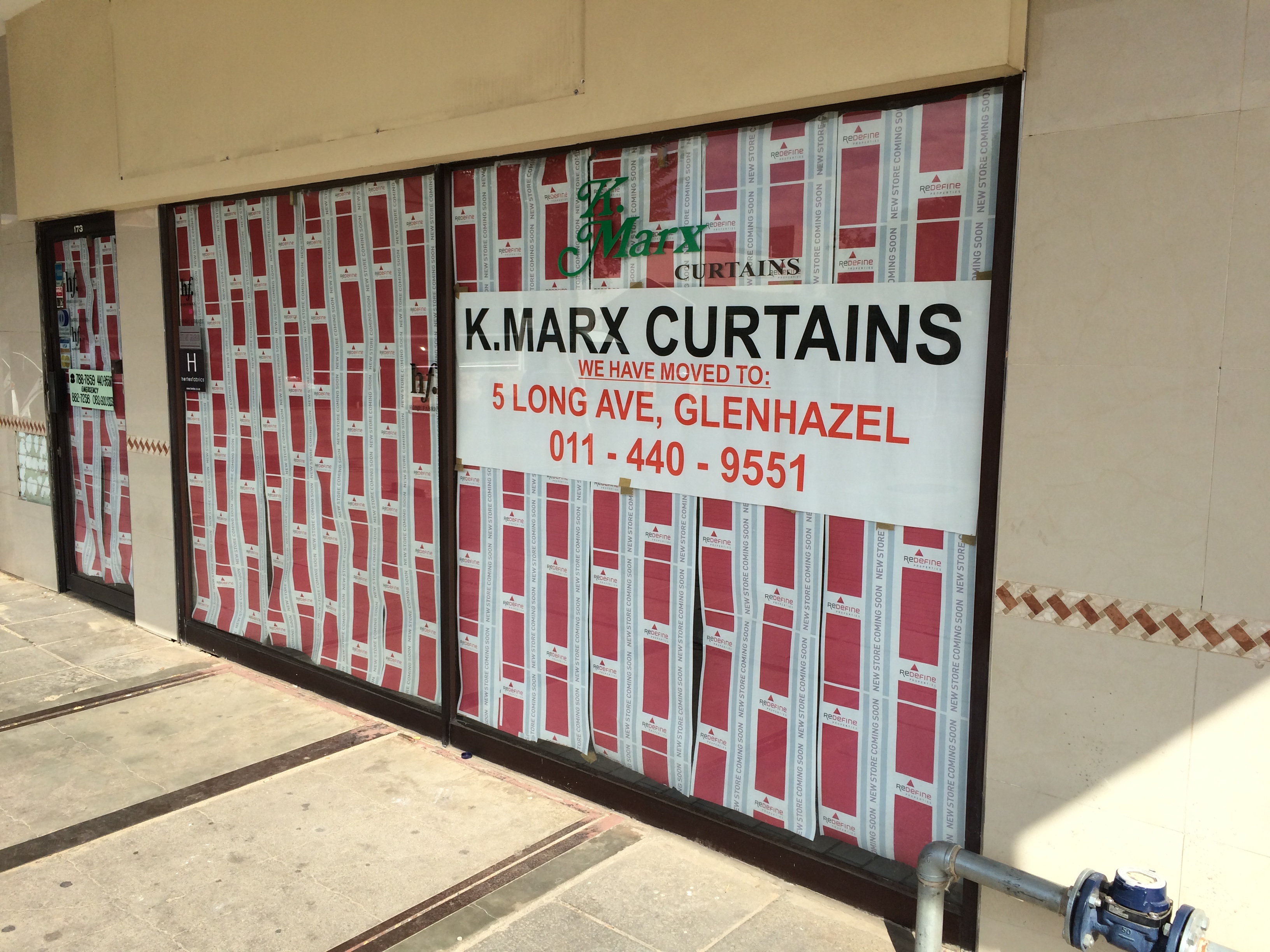
IMG_0791I have been to South Africa 17 times in the last 19 years (it’s a long flight, you have time to count these things…). Adding up all those trips, which have been as long (or not?) as 3 months and as short as a week, I have spent almost a whole year of my life there since 1997. These trips have been funded by ‘seed’ money from the University of Reading, the OU, Exeter (and who knows what grew from that money), and by proper grown-up research funding from the British Academy, and especially from the Leverhulme Trust (an historically ambivalent source of funding for African research, it should be said). Some of these trips have been associated with formal research projects, some of them with conferences, and some of them just occasions to go and meet people and find things out. And it should be said that pretty much anything I have learnt while in this other place has been dependent on the generosity of South African academics, activists, lawyers, policy makers, journalists, and the like – generosity with their time, their insight, and their own analysis of the world they live in. ‘Being there’ turns out to be an opportunity to listen to the testimony others.

Actually, the more I go to South Africa, the less and less I think of it as a place in which to pretend to do ‘research’ – I initially went to do research on media policy, on my own, in my own name; but then I ended up collaborating with other people, which seems the only reasonable way of proceeding – in my case, falling under the spell of Di Scott, and then being part of a multi-person project on democracy in Durban with all sorts of other nice and smart people, and more recently accidentally conjuring writing projects with Sue Parnell and a shared project with Sophie Oldfield. Along the way, I have passed through all sorts of spaces of research knowledge: hotels, apartments, different cities, taxis, bookshops, beaches, living rooms, offices, bookshops, coffee shops, libraries, bookshops, shopping malls, bookshops in shopping malls. I have gone from researching media policy to researching urban-based environmental politics, using ‘methods’ including interviewing to watching TV and listening to the radio, to using more or less formal ‘archives’, on one occasion delivered in person as a pile of paper, on another accessed by being ushered into a cupboard at the SABC.

I’ve actually learnt a lot about Theory across all these visits, in a weird inversion of Paulin Hountondji’s account of Africa’s ‘theoretical extraversion’ – about the way that ideas of the public sphere, or governmentality, or class, or decolonisation, amongst others, resonate and settle in a place like South Africa. Most recently, this has been my main excuse for visiting, to learn more about how ‘urban theory’ circulates through and emerges from South African situations.

So, anyway, I wonder still why it is that time spent in South Africa should present itself (to me, but also to others faced with me) as a source of something like ‘field’ experience in a way that, for example, time spent in the USA seems not to. I have, I think (I know), actually spent more time in the States as an adult than I have in South Africa, including a whole year of immersive ethnographic observation of GeographyLand at Ohio State. I have an American sister. I’ve walked pretty much the entire length of Peachtree Street (although not all at once). But none of that is translatable into a claim of professional expertise about American life and culture and politics in the way that, I suspect, time in South Africa could be. And in saying that, I know it is the case because I have a distinct sense that I have not been very good at constructing an aura of either ‘developmental’ or ‘ethnographic’ or ‘(South) Africanist’ expertise on the basis of all that time in South Africa.

And now back to life in Swindon. A non-city much the same age as Durban, half a century older than Johannesburg, and about 300 years younger than Cape Town. But no less weird than any of them.
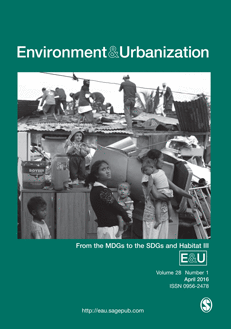
Environment and Urbanization Issue on the New Urban Agenda

To coincide with an event at the IIED today focussing on the likely outcomes of the Habitat III process, and assessing the so-called ‘new urban agenda’, all of the papers in the April 2016 issue of Environment and Urbanization are freely available between the 5th and 12th May (including the previously advertised paper by myself and Sue Parnell on the place of urban theory in current global urban policy debates). The issue includes a series of papers on the theme From the MDGs to the SDGs and Habitat III. Further details and reflections on the event will be posted on the IIED website in due course. 

Urban Theory in the New Urban Agenda

eanduThe latest issue of Environment and Urbanization contains a collection of papers examining different aspects of the emergence of the so-called ‘new urban agenda’ in global development policy, titled From the MDGs to the SDGs and Habitat III. It includes the paper by myself and Sue Parnell, ‘Ideas, implementation and indicators: epistemologies of the post-2015 urban agenda‘ which tracks some of the intellectual influences circulating around these worlds of policy-making and agenda-setting (Sue also has another piece tracing the longer history of global urban development agendas in World Development).

To repeat a previous invitation, if you would like a copy of our paper, do let me know and I will forward it along. Once more, here is the abstract for the paper:

“The success of the campaign for a dedicated urban Sustainable Development Goal (SDG) reflected a consensus on the importance of “cities” in sustainable development. The relevance accorded to cities in the SDGs is twofold, reflected both in the specific place-based content of the Urban Goal and the more general concern with the multiple scales at which the SDGs will be monitored will be institutionalized. Divergent views of the city and urban processes, suppressed within the Urban Goal, are, however, likely to become more explicit as attention shifts to implementation. Acknowledging the different theoretical traditions used to legitimize the new urban agenda is an overdue task. As this agenda develops post-2015, the adequacy of these forms of urban theory will become more contested around, among other concerns, the possibilities and limits of place-based policy, advocacy and activism; and ways of monitoring and evaluating processes of urban transformation along multiple axes of development.”

Urban Theory and the Urban SDG

IMG_3127Sue Parnell and I have a paper, “Ideas, implementation and indicators: epistemologies of the post-2015 urban agenda, forthcoming in Environment and Urbanization, in a special issue dedicated to exploring the significance of the so-called ‘urban SDG’ and the associated ‘new urban agenda’ associated with the Habitat III conference later this year. Our paper explores the intellectual background to the campaign that culminated in the inclusion of the ‘urban’ goal (Goal 11, which commits to making cities “inclusive, safe, resilient, and sustainable”).

If you’d like a journal-ready copy of the piece, let me know. Here is the abstract of our paper:

“The success of the campaign for a dedicated urban Sustainable Development Goal (SDG) reflected a consensus on the importance of “cities” in sustainable development. The relevance accorded to cities in the SDGs is twofold, reflected both in the specific place-based content of the Urban Goal and the more general concern with the multiple scales at which the SDGs will be monitored will be institutionalized. Divergent views of the city and urban processes, suppressed within the Urban Goal, are, however, likely to become more explicit as attention shifts to implementation. Acknowledging the different theoretical traditions used to legitimize the new urban agenda is an overdue task. As this agenda develops post-2015, the adequacy of these forms of urban theory will become more contested around, among other concerns, the possibilities and limits of place-based policy, advocacy and activism; and ways of monitoring and evaluating processes of urban transformation along multiple axes of development.”

Andy Merrifield on Europe’s New Urban Question

Here is Andy Merrifield on ‘Europe’s New Urban Question’, speaking at Kentucky a month or so ago.

Changing imperatives of urban thought in South Africa

IMG_3313I have been meaning to congratulate Sophie Oldfield, of Geography at the University of Cape Town and the African Centre for Cities, who has been awarded British Academy Newton Advanced Fellowship. The fellowship involves a collaboration between UK and non-UK universities, in this case between Sophie at UCT and me at Exeter. The project, South African Urban Imperatives Past, Present and Future: Theory Building with Knowledge Beyond the University, has various strands, with an over-arching focus on  exploring the changing notions of commitment and engagement in urban scholarship in South African over the last 40 years or so. It’s very much a development of Sophie’s challenging research work on the difficult politics of engagement between academy and activism. I’m really looking forward to working together with Sophie on the various aspects of this project over the next couple of years.

Here is the abstract for the overall project:

“The Fellowship starts from the premise that urban scholarship has been central to defining the strategic possibilities of political change and socio-economic development in South Africa for 40 years, either side of the transition from apartheid to democracy. The Fellowship focuses on the distinctive imperatives of engagement that shape South African urban scholarship. These include practices of activism, consultancy, forms of co-production, and more conventional forms of academic expertise and critique. The Fellowship will focus on the reorientation of urban social science in post-apartheid South Africa, in light of changing societal imperatives of development, reconciliation, and transformation. In so doing, it will draw into view the ways in which academic knowledge articulates diverse forms of non-academic knowledge that express diverse interests and needs.”

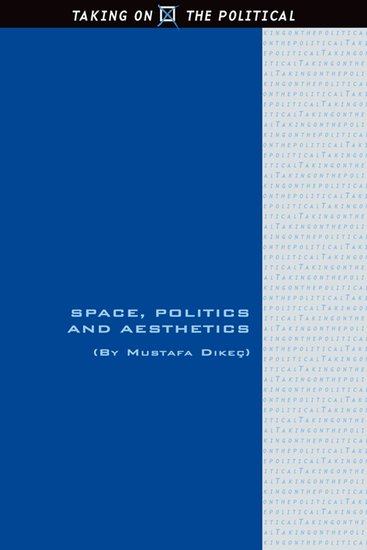
Space, Politics and Aesthetics: New book by Mustafa Dikeç

9780748685974I took part in a ‘conversation’ on the theme of Spaces of Democracy yesterday at UCL, organised by Liza Griffin and others, one of a series of events co-organised by the Bartlett School and the OU’s OpenSpace research centre. The other participants were Erik Swyngedouw and Mustafa Dikeç. I gave a potted version of the argument of the book I’m meant to be writing, in response to the question ‘Does democracy need the city?‘.

Mustafa has a new book hot off the presses, Space, Politics and Aesthetics, about thinking spatially about politics alongside Arendt, Nancy, and Ranciere. There is already one review available here.

Doing Theory Slowly: more on media, practices and urban politics

9484-aldabra-giant-tortoise-1920x1200-animal-wallpaperFollowing up on the link to the Society and Space page with the podcast of a discussion between myself, Scott Rodgers, Allan Cochrane and Tim Markham, I thought it would be useful to recall the ‘arc’ of the conversations that Scott, Allan and I have been having since 2007. The podcast mentions the idea of ‘slow theory’ (an idea we might have stolen from a former OU colleague, Mike Saward), which is one way of capturing the process of collaborative thinking that we have been involved in that time.

– This all started when Scott was an ESRC-funded post-doc at the OU, from 2007-8, and then in turn working at CCIG at the OU.

-As part of the initial project, we held a workshop on the theme of Mediapolis, in June 2008.

– That generated the first published output of the collaboration, an edited section of the International Journal of Urban and Regional Research in 2009, containing papers on the connections between urban thinking and media thinking by Gary Bridge, Kurt Ivesen, Kevin Ward, and ourselves (here and here).

– Then, in 2009, we organised a set of sessions at the Annual Meeting of the Association of American Geographers, on the theme of ‘Where is urban politics?’.

– This was the basis of the Symposium of the same title in IJURR, published at the end of last year.

– The Society and Space paper on Mediated practices and urban politics is something we have been working on across these other activities, and has gone through various iterations. This paper is our attempt, I guess, to draw together the animating concerns that the three of us have bought to the collaboration.

– The podcast is a record of us talking through some of the background hang-ups that shape the paper.

Overall, I think that’s a decent return on the initial ‘investment’ – not so much in terms of quantity of outputs, but certainly, for me, in terms of the quality of the ongoing discussions we have engaged in while organising, convening, editing and writing together.


Media Practices and Urban Politics: A Conversation about Slow Theory

Details below of a podcast, focussing on a recent Society and Space paper on media practices and urban politics. The paper itself is available on open access for the next month.

Power and Space in the City

Details here of a series of workshops on the theme of Power and Space in the City, organised by Liza Griffin and others at the Bartlett School and the OU.