Where can I find real democracy?

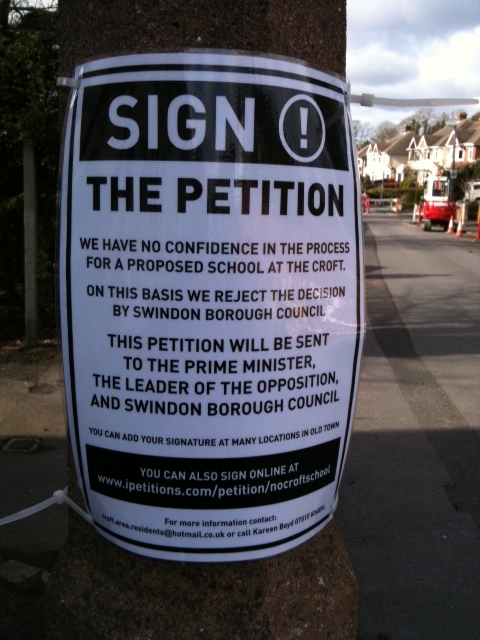
Simon Critchley has a short piece in The Guardian today, on the lessons and future of the Occupy movement and the Arab Spring. It argues that these events show us that ‘true politics’ involves two things – ‘a demand that flows from the perception of injustice’; and ‘a location where that demand is articulated’. There is, he concludes, therefore ‘no poitics without location’.

I’m interested in this sort of argument, and its appeal to these contemporary events, because they resonate with some of my own intellectual predispositions, yet I find something troubling about them (I’ve been trying to express some of the worries while e-chatting recently with Mark Purcell at Paths to the Possible about some of these things). I like the idea that politics, of the sort we like at least, democratic-y politics of a more or less radical sort, arises from a ‘felt sense of injustice’ as Honneth puts it somewhere, and have been trying to write about this idea and how it might be used to think about the relationships between democracy, place and space. So I keep writing papers which have titles like ‘locating democracy’, but the point of them is that actually (democractic) politics doesn’t have a location at all, it’s dispersed across different spaces; it might not even have a proper relation to any specific spatial figure of whatever sort.

Critchley’s piece is just one example of a range of academic commentaries which tend to repeat fairly uncritically the self-representation of activists about the political forms of Occupy, Indignados, and other movements – that these really are the emobodiment of a genuine re-birth of direct, consensual democracy stripped of the parasitical intrusions of representative politics. That’s what ‘real democracy’ turns out to mean.

I think it should be possible to affirm one’s solidarity with these movements without necessarily reiterating these claims without question. It should be possible to analyse the rhetoric and practice of anti-representation in these movements – ‘no parties, no banners’ – as a phenomenon worthy of investigation, not just present such claims as a matter of fact. Jodi Dean and Jason Jones have a really interesting piece on the question of how to think representation in relation to OWS, and it’s one of the few things of it’s sort that I can think of (it’s part of a special edition on the topic of ‘in defence of representation’). I’ve just started reading Pierre Rosanvallon’s Democratic Legitimacy, and it seems to me, for example, that these movements might fit quite well into his genealogy of the emergence of new modes of democratic legtimacy based on values of proximity and presence – my point being that what is required is an analytic imagination that can recognise the emergence of new forms without simply reproducing simplistic dualisms between direct and representative democracy which, while politically effective perhaps, don’t have much interpretative purchase if you think about it for a moment.

Back to Critchley; his piece starts out with a standard narrative device, we’ve all done it: power, as the ability to get things done, has become spatially divorced from politics, the means of getting things done (a globalization cliché he draws from Bauman). Well, maybe, maybe not, but even if this were the case, it would seem to require some thought about how poloitics can be re-spatialised to match the scaling up of power – an argument made by various traditions of thought, including plenty of geographers, and a staple of David Held-style cosmopolitanism. This is easier said than done in theory and practice no doubt, and the diagnosis might just be flawed anyway. But what I’m not sure about is whether Critchley’s conclusion from his starting point follows at all – that the divorce means we need to think about ‘true politics’ in terms of the figure of location. Something seems to get to go astray in the reasoning that starts by saying that power and politics have become too distant from one another and end up by saying that the most effective response is to take a stand in one place (after all, the most interesting aspect of these movements might well be not their ‘occupation’ strategies per se, but the movement of the strategies – that’s why they are called movements).

The attachment to location seems to have something to do with Critchley’s chosen view of contemporary protest movements as embodying values of directness, horizontality, assembly – it’s just one example I think of more general intellectual ‘moment’ in which the idea of true politics and real democracy has become associated with an image of the spaces of politics and democracy as real, physical places of co-presence and gathering together.

If one goes back to Critchley’s point about demands and injustice, then the figure of location seems, again, not to be quite adequate. If demands need to be articulated, then I’m not sure they need a location at all – a specific point, a localisation in space and time. They are, after all, articulated – a demand has a spatiality that is open to connection, combination, joining up. Not one of punctual presence or location. The space of demands generated by injustice is strung out, not gathered together.

Which doesn’t mean that ‘real spaces’ aren’t important. I just think it might be better to think of these spaces of demonstration as enacting a demonstrative force that is better thought of in terms, say, of the idea of spaces of address developed by Kurt Ivesen‘s work on public space. Or of locations as starting places, temporary stopping points. Which might well be move akin to the political geography of ‘occupying’. Even then, though, there might be pause for thought – Crtitchley ends with a call to move on and apply the force of this ‘true politics’ to the London Olympics, a recommendation which might well suggest a form of politics reduced to the purely tactical, tracking the eventalization of the world wrought by spectacular capital with events of its own. So much for getting things done.

And one final thought – Critchley is one of my favourite thinkers, his book on ethics and deconstruction was a fundamental influence on my thinking as a graduate student. It’s one place, though not the first (that was an essay by Nancy Fraser) where I remember learning about the importance of Claude Lefort to a whole strand of French thought that at that time was still being rudely called postmodern. I just wonder, remembering those things I learnt from reading Critchley back then, whether an analysis of true politics and real democracy that rests on the idea that power and politics have become divorced hasn’t lapsed into a certain sort of romantic amnesia about which it should really know better. Conceptually, normatively, the idea that power and politics should be married together, as it were, might be only rather ambivalently ‘democratic’, at best. Which isn’t to say that they should be separated, it’s just that what matters is the quality of the relationship. And conceptualising that relationship, its optimum shape, needs better analysis than can be provided by claims about the importance of location or the form of ‘true politics’.
Tony Bennett on Rancière’s authority

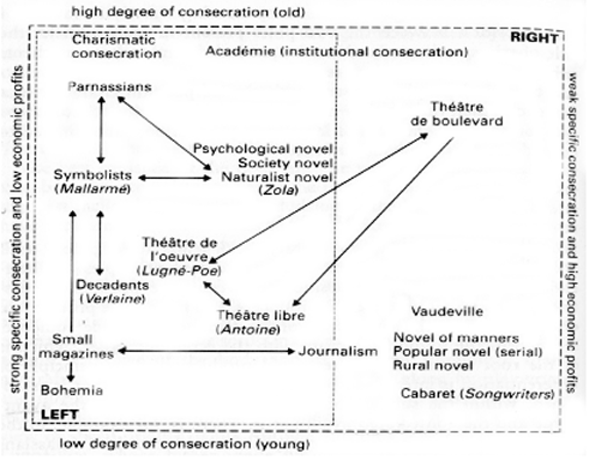
Just came across a rather good essay on Guided Freedom by Tony Bennett, picking apart  the authority ‘tricks’ which underwrite Rancière’s elevation of a good-old fashioned model of Kant’s aesthetic judgement into an account of political equality and freedom. Particularly welcome is its bringing into view “the kind of authority Rancière deploys against that of the sociologist and the empirical disciplines more generally”.

My favourite line: “… Rancière lives in a metaphysical glasshouse that is of a distinctively Christian construction …”. Which is not quite as dismissive as it might sound, or not in the direction you might think at least – amongst other things, Bennett’s piece is a nice reminder of how this strand of theory manages to re-centre a resolutely parochial style of thinking about politics, culture and critique into a universal ideal, and manages to disavow its own ‘conditions of possibility’ in so doing.

Local politics II: does politics only happen occasionally?

Kurt Ivesen, over at the Cities and Citizenship blog, posted a comment on my post about local politics in Swindon last week, which I have been thinking about for a week or so, busy with other things. I haven’t had many comments, so thanks, Kurt, you’ve made me think. But not change my mind…

Kurt raises a couple of substantive issues about different meanings of ‘the post-political’, and the use and mis-use of Ranciere on this topic:

“I think I would make a distinction between post-politics as a condition (i.e. “society these days is post-political”) and post-politics as a tendency or strategy. For me, the problem is when the concept is applied in the first way. And I think it can be kinda useful when applied in the second way.”

That seems fair enough, certainly arguments about post-political conditions seem dull and uninteresting and easily refuted empirically, and are unimaginative conceptually. But I’m still not convinced by the idea of post-politics in the second sense, especially not when informed by Ranciere’s style of political philosophizing. Kurt says that for Ranciere post-politics is “a characteristic of various attempts to put decisions beyond the realm of politics that we see going on around us all the time.” Now, of course, everything turns on what you think counts as politics in deciding whether certain strategies are moves within political games, or moves beyond them. I don’t really see why one should suppose that efforts by political actors (acting strategically to further their own interests and bolster those of their constituencies), to shape the terms of debates, to move issues and decisions out of fields of more-or-less deliberative, more-or-less participatory, more-or-less inclusive, more-or-less contestatatory forums should be thought of as a moving beyond politics, of post-politicization at all. It’s just one set of political strategies that might be pursued. The post-political diagnosis, in the second sense that Kurt endorses, seems still to depend on a rather narrow understanding of what politics is, or more precisely, what it should be – it’s an understanding of politics so narrow as to disallow the ‘political’ status of bargaining or deal-making, administrative rule-making, judicial decision-making, clientalism and patronage, the sorts of forms of ordinary graft and ‘corruption’ dubbed “political society” by Partha Chatterjee, the forms of strategic disorder discussed by Patrick Chabal in his account of African politics – none of these seem to accord with the criterion of the properly political as defined by Ranciere.

On Kurt’s reading, Ranciere might have inflected my little vignette about local politics in Swindon a little differently: “In the story above, sure, there might indeed be politics, and I agree that it would be wrong to characteriseSwindonas a ‘post-political town’. But it seems to me that there is a post-political tendency in the story too. Like when the wind-turbines are supported by both Tories and Labour alike because “there is no alternative” if we want to keep the plant competitive. Isn’t this an attempt to take the decision out of the realm of democratic decision-making and into the realm of economic necessity? And isn’t part of the movement against them a struggle to make the decision a political decision to be settled democratically, as opposed to a managerial one? As such, could some concept of ‘post-politics’ help in unpacking what is going on in Swindon and elsewhere?”

Actually, on reflection, prompted by Kurt’s questions, this seems to me a pre-eminently political story, all the way down. Above all, I see no reason to suppose that the efforts of political parties to frame issues in particular ways, to their advantage, and to define some interests as trumping others (i.e. the ‘general’ interests of the whole town in the success of Honda, somewhat differently understood no doubt by Tories and Labour; against the ‘narrow’ interests of local residents living close to the plant), is a sign of a move towards post-politics – it might be a sign of a reconfiguration of politics, but that’s a different sort of analysis entirely. That’s what political parties do, it’s what they are for, it’s what makes them political actors in the first place. And I’m not sure that the equally routine form of campaign by local residents against the wind turbines does really qualify as full-on dissensual action of the sort that Ranciere takes as the model of ‘democratic’ politics. An analysis that sees only post-politics or de-politicization in this sort of fairly ordinary example seems to me to be missing an awful lot of what makes politics political.

So, I remain unconvinced of the utility of this approach – it seems to turn on a conflation of politics with democracy, both rather narrowly defined, and rather weirdly defined too, by reference primarily to a generalised Kantian model of sublime experience (the last recourse for a whole host of French theorists of a certain generation and broadly shared political trajectory). If one thinks of the world divided between forces of order and disruption, constituted power and constituted power, or similar conceptual pairs, then I guess the seeming absence of dissensual disruption is always likely to look like hegemonic reproduction, the routines of ‘police’, the on-set of the post-political.

There is actually a shared spatial and temporal imagination across a set of currently fashionable theoretical approaches to ‘the political’, which might be usefully interrogated. For example, at what ‘scale’ is it assumed that ‘the sensible’ is partaged, so to speak? Are there local formations of the sensible; national ones? And likewise, over what temporal scale is dissensual-democratic-political action enacted – can it endure, be sustained over time, be institutionalised and maintain it’s status as dissensual-democratic-political action? Above all, is it possible to rule dissensually? Imagine that. Because, after all, democracy may or may not ‘mean equality’ (actually, doesn’t it imply equality, of a certain sort, which is not quite the same as ‘democracy means equality’). But it certainly seems to imply ruling and being ruled.

Local Politics I: Take This Town

Two years into the Swindon stage of my life-long ethnography of the M4 corridor (eight years in Reading, eight in Bristol; where next?), and I’m growing fonder of the place. There is in fact, as my OU colleague Allan Cochrane reminded me before we moved here, a venerable tradition of urban studies research on Swindon – by Michael Harloe in the 1970s (a ‘town in transition’ then, an aspiring transition town now); subject of one of the ESRC Locality projects in the 1980s (Swindon really did have a proper ‘growth coalition’, once upon a time, apparently; and also an active Communist Party); and further work by Martin Boddy and others, who went so far as to suggest that Swindon might be the ‘city for the twenty-first century’. Not quite a ‘school’ like LA or Chicago’, not even the sustained history of case work that exists on places like Vancouver, or Columbus Ohio, or even Durban; in fact, Swindon is not even an ‘ordinary city’. It’s not a city. It’s a town. Very much so, a town.

It’s not a ‘post-political’ town, mind.

There is lots of politics here. And it’s not hidden, it’s quite open, and very much part of a vibrant little local public sphere.

One story rumbling through the local press (OK, the one local paper, the Swindon Advertiser, or ‘the Adver’) is about the plan for the Honda plant on the outskirts of town, one of the main employers and key to the economic success of the town over the last two decades, to build wind turbines on its site. This has aroused opposition from residents living close by to the plant. But the plan is supported both by the controlling Tory group on the Borough Council, and also by the opposition Labour group, on the grounds that it’s important to keep the Honda plant competitive (the Swindon plant lags behind other Honda plants on renewable energy targets, apparently).

None of this is necessarily is out of the ordinary (it fits with the image of local policy and political elites that emerges from those academic analyses of Swindon’s post-war development), it’s the sort of issue one can find all over the place (and it’s likely to become more common if and when proposed changes to planning regulations are introduced).

There is another story running alongside this one, which revolves around Honda’s relationships with UNITE, the union which represents some 1000 ‘associates’ at the plant. For some months, there has been noises about Honda seeking to de-recognise or minimize the influence of the Union at the plant.

The union story in particular has been very publicly sustained by reporting in the Adver, very sympathetic reporting one should say, that led in turn to a story with a slightly different inflection on BBC’s Points West yesterday.

As I say, none of this is terribly novel, although the juxtaposition of the wind turbines story and the union story is revealing of some of the ordinary political tensions that revolve around this kind of locally embedded link in a ‘global’ production system. I have been struck by the quality of the reporting on these sorts of issues in the local paper – which retains a much more obvious ‘civic’ orientation than I remember being the case with the equivalent daily papers in Bristol or Reading.

So, local politics, for local people only perhaps, but lots of it, and you don’t even have to look that hard to find it. No sign of the post-political, not here.

Concrete utopias

I spent a couple of days earlier this week attending a seminar on ‘the post-political city’. Lots of interesting talks about new forms of political action from around the world, yet all strangely framed by the idea that the world has been progressively ‘de-politicized’. There is something wonderfully self-confirming about the post-political narrative – on the one hand, it bemoans how there isn’t enough ‘proper politics’ these days; then, when you find examples of more or less contentious politics going on, this just confirms that the energy of ‘proper politics’ will always erupt against strategies of de-politicization which are meant to be all pervasive. All of which seems to confirm a suspicion that Zizek, Badiou, Ranciere and others behind the post-political analysis have managed to generalise a particular sort of personal disappointment into a broad claim about de-politicisation as a worldly condition, and in the process managed to get people to think that the only thing that counts as ‘real’ politics is a remarkably narrow strand of the totality of contemporary and historical collective action. I talked about how the post-political theme continues longer trends that can be found in discussions of the concept of ‘the political’, and if I had the time I would have said something a little more constructive about theorising politics ordinarily and how this might inform the analysis of urbanisation and politics. But I didn’t get the chance to spell that bit out – it will have to wait for another occasion.

The one thing I got from the seminar was a thought about why lots of ‘civic’ engagement these days does, in fact, openly describe itself as ‘not political’ – a few speakers mentioned this in passing. There are at least a couple of things going on here, I think: one, saying your campaign/organisation isn’t ‘political’ might be a good way of mobilising and enrolling certain types of people; two, of course, the same line might be an effective way of accessing corridors of power, by avoiding the appearance of being ‘partisan’. So, it’s obvious that this is a strategic line. Interesting, and worth thinking more about, but hardly evidence of the ‘post-political’, not as theorised by the neuvo-communists at least – there is, of course, a website enabling you to actively sign-up to be Post-Political, in this alternative sense. It’s a rhetoric of being anti-politician, while affirming a whole range of spaces of collective engagement beyond party politics and elections – hardly an indication of de-politicization.

The post-political analysis remains tied, of course, to an image of proper politics as all about fundamental ruptures. There is an interesting contrast with the style of political analysis found in Erik Olin Wright’s Envisioning Real Utopias, which I managed to read last week sort of accidentally. It’s the culmination of a long-running project on the topic of Real Utopias, that has generated various other edited collections on deepening democracy, basic income, and other topics – all focussed on examples of institutional or organisational experiments in reviving, extending or inventing egalitarian, participatory political forms. It’s resolutely Marxist, but also convincingly egalitarian and democratic in a way in which evades recent ‘communist chic’ literature (it’s also been the subject of an attack by Russell Jacoby in Dissent, which sort of counts as a badge of radical honour I think).

Wright argues that a critical, emancipatory social science should be able to address three issues: an effective critical diagnosis (e.g. what is wrong with capitalism?); a persuasive and justifiable account of workable alternatives; and a convincing theory of transformation. His book is organised around these three dimensions. The book also acknowledges Wright’s attachment to Analytical Marxism (or no bullshit Marxism if you prefer) – it’s actually a rather good advert for this tradition of thought, if that is what it is. This aspect is evident in various ways: a style of functionalist argument in places; a disavowal of the labour theory of value, of course; and perhaps most tellingly, a consistent working through of the what the rationalities of unintended consequences means for visions of radical politics. Apart from the sustained attention to examples of experimental institutional design in democratic politics and economic practices, what is most interesting about Wright’s analysis is how he re-frames the temporality of radical change from these ‘rationalist’ premises – it leads him to reject strongly ‘ruptural’ images of social change, and focus more attention on ‘interstitial’, pre-figurative activities – hence the focus on ‘real utopias’. Not to everyone’s liking, I would suspect, but I find this a rather compelling type of analysis of how serious social theory can challenge the imaginations of political activism in genuinely critical and constructive ways.

Wright’s book is similar in one sense, at least, to Samuel Moyn’s genealogy of the contemporary politics of human rights, The Last Utopia. Moyn probably has a different set of political affiliations to Wright, I would guess. But both focus in on the images of time that underwrite different imaginations of political change. They both locate transformative political action in institutional innovations which are far less than revolutionary too.

Moyn’s argument is that human rights is a very recent political discourse, from the 1970s and after, and not to be conflated with a continuity to ‘rights of man’ discourses. It is, more to the point, he argues, a discourse and movement that is resolutely post-utopian – which is informed by much of the same moral energy that informed previous ‘revolutionary’ models of politics but without the messianic belief. It’s an interesting argument, one informed by a strand of the same thinking about ‘the political’ that the post-political analysis comes from too, but with rather different political, and methodological, resonances – Moyn is a historian of ideas, translator and commentator on that strand of French theory about the political that includes Pierre Rosanvallon and Marcel Gauchet, and Pierre Clastres. In Moyn’s narrative, human rights as a contemporary movement is distinctive because it breaks the link between rights claims and state sovereignty – here is a sense throughout that this might qualify as a ‘post-political’ movement in a certain sense; but on the other hand, the emphasis is on this movement as rather effective organisationally, and not least in shaping global governance and legal regimes. After all, letter-writing might be just as effective a way of staking a claim to public space as protesting in a street or public park.

Moyn is also the editor of a new journal called Humanity, and has a blog too, both of which focus on this same set of issues – I guess the key difference between the ‘post-political’ analysis which sees depoliticization everywhere and this sort of work is the genealogical emphasis on the emergence of new forms of public action, not simply an ontologized lament for the decline of proper politics, understood in an entirely a priori fashion. Moyn has a piece in Dissent earlier this year in which he works through his own thesis about the newness of human rights with reference to the Arab Spring – which he sees as a version of an older, ‘rights-of-man’ style set of claims, shaped by claims for national citizenship and supposing sovereignty of the nation-state. It’s an interesting argument, not sure I wholly believe it, but it makes clear an aspect of the book more generally – the sense that it is the geographical framing of claims that distinguish the content of contemporary human rights discourses from previous discourses of universalism.

Injustice in democratic theory

I have a new paper in Geoforum, just published online, titled Situating injustice in the geographies of democracy. It will be included in a special issue on space, contestation and the political, coming out of a workshop held in Zurich back in 2009, organised and now edited by Dave Featherstone, Benedikt Korf, Joris Van Wezemael. I’m not sure exactly when the whole issue will go live. My paper argues that contestation is rather more important to critical theories of deliberative democracy, broadly defined, than is usually acknowledged, and that it is understood in this work in ways that promise a more modest approach to thinking about the geographies of democratic politics than one finds in approaches that adopt a priori conceptions of what counts as ‘political’. It is one of a series of things I have been writing for the last couple of years on the topic of ‘all affected interests’, exploring how this idea from political science and political theory might be re-interpreted as the basis for thinking about geography and democracy; it’s the first of these pieces to actually get out into the world.

Rancière at criticism


Via Continental Philosophy, here is an audio of Jacques Rancière, talking about the relationship of critical theory and contemorary social movements. It’s only 20 minutes long, but it’s a concise little summary of his position, mainly being rude about what he sees as the sellinof out of the emancipatory promise by current critical theorists, though its unclear sometimes exactly who he has in mind. There is a swipe at the ontological flights of fancy of Sloterdijk, and a slightly more sustained reference to Boltanski and Chiapello’s account of the spirits of capitalism.

His basic argument is that various facets of classical critical theory are now deployed in an inverted way, so that the main objects of criticism in analyses of consumerism or commodity culture are now the subjects of these processes, ordinary people themselves. The main object of critique, Rancière suggests, has become the ignorance and culpability of ordinary people.

This rings true for me, I think it is a feature of a great deal of contemporary theory, forced to find some ‘political’ purchase for its culturalist analyses, to end up focussing on how people have been ‘got at’ in one way or another, and to lament their susceptibility (this is also a feature of many ‘moralised’ fields of social science, on climate change and environmental issues, on behaviour change, on global poverty).

Rancière proposes an alternative, quite old fashioned model of critique, derived from Kant – critique as the reflection on and elaboration of the conditions of possibility of emancipatory action. That’s much the same concept of critique you find in ‘third generation’ big-C, big-T Critical Theorists like Nancy Fraser and Axel Honneth.

Rancière’s version of this Kantian model of critique is notable of course because of the emphasis he places on the principle of equality of intelligence or competence, specifically of aesthetic judgement. This is the principle contravened by scholastic disdain for ordinary consumer entertainments and commodity cultures.

Rancière’s point against Boltanski and Chiapello seems, however, to replay an older division between a more sociological take on aesthetic discourse, that emphasises aesthetics as a discourse of distinction and differentiation, and a more populist affirmation of the universality of aesthetic competence (in Anglo cultural studies, see Paul Willis or Tony Bennett might stand for different positions on this). Rancière implies that the identification of two styles of critique of capitalism, a social and an aesthetic one, by Boltanski and Chiapello replays a bourgeois disdain for the aesthetic competencies of working people. I’m not sure this is convincing. The sociological analysis of the differentiating deployment of aesthetic values is normally animated by exactly the sort of universalist, egalitarian commitment that Rancière affirms – it’s perhaps less prone to the philosophical presumptions that his egalitarian account of aesthetics reproduces.