Geography Matters!

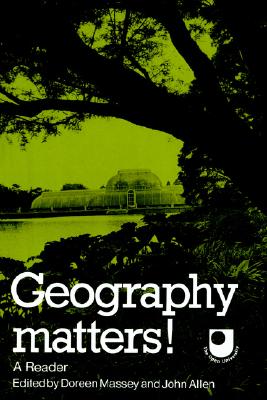
A shout-out for Geography Matters, the Facebook page looked after by my colleague Melissa Butcher, designed as “a site for promoting geography research and teaching”, not only, it should be said, the research and teaching of geography at the OU. It’s more like a ‘hub’ for things of interest, geography-wise. The place to go if you’re looking for geography-friends.
Amongst other things, you will find a link there to the website of another of my colleagues, Joe Smith, introducing 10 short films on climate change.

Culture and Climate Change

A new publication, a joint product of a collaboration between the OpenSpace Research Centre at the OU and the Ashden Trust, on the cultural politics of climate change, including contributions from my OU colleagues Joe Smith and Nigel Clark, plus scientists, activists, journalists, and others – short essays and dialogues.

Teaching at a distance

A few months ago, Dan Weinbren, who is heading up the History of the OU project, posted a wonderful archive film clip of a real, live course team meeting – from 1976. The course team is one of the central organisational forms of OU-style distance education, although they have changed a bit – as Dan noted, there was a lot of smoking going on back then.

Things change, things stay the same…

Course teams are now technically ‘module teams’, and we don’t smoke anymore, not the in the meetings. The OU Social Science Faculty Facebook page has just posted a set of photos providing a ‘sneak peek’ at the course team I’m currently part of, which is producing a new social science module due for its first outing in 2012. If you do this course, you might find out why smoking no longer goes on inside the meetings, but outside in designated boxed-off spaces.

You can play spot the difference if you like. Obvious things, apart from the smoking, is a lot less denim in 2011, less facial hair too. There seems to be plenty of coffee in both meetings (or maybe tea in the 1970s), but larger cups in 2011. The great mystery, of course, is just whether the 1970s really were that brown compared to the light, airy shininess of 35 years later. Or is that something to do with advances in technology?

Towns on TV

For those of us who live in towns, not cities, news of a forthcoming BBC/Open University TV series on Towns, presented by Nicholas Crane – the first of four programmes will be broadcast on Thursday 28th July at 9.00pm on BBC2. Colleagues from the Faculty of Social Sciences Gerry Mooney, Matt Staples, and Geoff Andrews have helped with the academic input to the series, which includes such places, towns, as Perth, Totnes and Ludlow (but not Swindon). There is an associated booklet with the series, and other online resources, which can be accessed via the OU’s OpenLearn site – the series will have its own site which goes live the day before the first showing on July 27th. The series and these associated materials explore the many of the ways in which towns have come to be the places they are today; places that, while shaped by often very different histories, are also looking towards futures that might be very different but which are all characterised by uncertainty.”

Workshop on the Politics of Participation

Crisis of Participation; Participating in Crisis – 12 April 2011

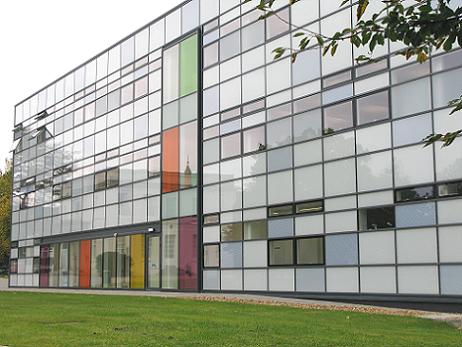
The Open University, Walton Hall, Michael Young, Rooms 1-3, Milton Keynes, MK7 6AA
http://www3.open.ac.uk/contact/locations.aspx

One-day workshop organised by the Publics Research Programme (Centre for Citizenship, Identities and Governance, The Open University) in collaboration with Jenny Pearce (Professor of Latin American Politics and Director of the International Centre for Participation Studies, University of Bradford).

Workshop rationale
Just as publics are increasingly solicited to participate in solving the economic, social and political problems of various contemporary crises, so many existing forms of public participation seem to be straining under the tensions and antagonisms they are expected to contain. Crisis of Participation; Participating in Crisis is a one-day workshop intended to inaugurate conversations about the contemporary places, problematic roles and possible futures of public participation.

The idea is to come at the overarching theme from three perspectives: (i) contemporary art practice, critical social theory and popular culture/politics; (ii) critical social policy and governance; iii) development studies. These are three ways of cutting into debates about contemporary public participation in politics that have so far not sufficiently been brought into relation. The aim of this workshop is therefore to generate some new ways of viewing, engaging with and intervening in what’s going on.

Programme

10:15 -10:45          Welcome and coffee

10:45 -11:00          Introductions (Dr. Nick Mahony, Prof. Jenny Pearce and Prof. John Clarke)

11:00 -13:00          Panel 1:  ‘Participating in crisis: public creativity’

Dr. Jeremy Gilbert (University of East London),
‘The desire for participation’;

                              Cecilia Wee & Sonya Dyer (Curators/organisers, ‘If Not, Then What?’ Chelsea Programme/Chelsea College of Art & Design)
‘Participatory creative practice in a climate of dissent’

Dr. Deena Dajani (The Open University)
‘Crisis of Representation: Gender and Participation in the 2007 Jordanian Parliamentary Elections’

13:00 -14.00          Lunch

14:00 -15:45          Panel 2:  ‘Crisis of Participation: the contemporary politics of public action’

Prof. Jenny Pearce (University of Bradford)
‘The Twist in the Participatory Turn’

Prof. Marilyn Taylor (University of West of England)
‘Community Organising and the Big Society: is Alinsky turning in his grave?’

Prof. Helen Sullivan (University of Birmingham)
‘Does a ‘big society’ demand a limited localism?’

15:45 -16:00          Tea

16:00 -16.30          Reflections, identification of key themes and next steps

16:30                     Depart

RSVP: If you would like to attend please e-mail: Socsci-ccig-events@open.ac.uk (Sarah Batt, Research Secretary, CCIG, a.s.c.batt@open.ac.uk, Tel: 01908 654704).  For further information please contact Nick Mahony, (n.mahony@open.ac.uk) / CCIG website: http://www.open.ac.uk/ccig/

Sarah Batt
Research Secretary, ICCCR and CCIG
The Open University
Faculty of Social Sciences
Research Office
Walton Hall
Milton Keynes
MK7 6AA

Tel:  +44(0)1908 654704
Fax: +44(0)1908 654488

http://www.open.ac.uk/icccr/
http://www.open.ac.uk/ccig/

Oecumene: Citizenship after Orientalism

The website for the Oecumene research project based at The Open University, led by Engin Isin, is now up and running. The project has its own blog, and you can sign up as an ‘Oecumene Affiliate’ to keep up to date and become involved.

This is how the project is described:
“Oecumene: Citizenship after Orientalism focuses on the tension between two different institutions: citizenship, the process by which belonging is recognised and enacted, and orientalism, the process by which European political institutions are considered originary and primary. What connects citizenship to orientalism is that citizenship has been historically seen as a Judeo-Christian institution contrasted against Buddhism, Confucianism, Islam, and Hinduism. The project revisits questions of citizenship as political subjectivity in ‘orientalized worlds’ through genealogical investigations without orientalist assumptions. The aim is not only to uncover citizenship practices that remained either invisible or inaudible in other worlds but also to explore the possibilities of a renewed and expanded understanding of European citizenship.”

What is ‘public’ about the Public University?

 I was visiting UCL yesterday, where students are involved in an occupation as part of the ongoing campaign against the Coalition’s pernicious policy of higher education funding (we don’t have one at the OU, cos there aren’t any students at Walton Hall). These occupations are interesting not least because they are seeking to directly shame the VCs of individual institutions, who as a collective group have proved horribly supine in their response to the government’s decision to allow an increase in fees AND to slash public funding in support of teaching of all but a select ‘strategic’ subjects. The last few weeks have exposed clear divisions within the University sector, with representatives of the Russel Group and other research intensive institutions quietly accepting proposed changes as inevitable, while the most forceful criticisms of these proposals, and defence of the public value of higher education beyond the personal benefit derived by individual students, have been made by articulate VCs from institutions such as the University of Central Lancashire and Canterbury Christ Church. This division is so clear that it has generated a debate about whether the Universities UK, the umbrella representative body for the whole sector, has lost its legitimacy as an effective representative by adopting such an accommodating tone – you can track the tensions in recent articles and letters in the Times Higher.

All of this will come to a head this week when the Commons gets to vote on the tuition fees proposals. But one of the more important aspects of this campaign is the way that it has very quickly exposed fault lines around the terms in which the politics of newly austere public sphere is going to be fought out: on the one side, a set of arguments which invoke particular images of ‘fairness’ and focus all the attention on the idea of higher education as a system distributing benefits upon differentially advantaged individuals (on this criterion, of course, there are aspects of the current proposals that are easily commended – the OU has loudly celebrated the equalization of treatment of part-time students as potential high education debtors); on the other side, an argument about the public good of higher education residing in various collectively bestowed, and collectively enjoyed benefits which are more than the aggregate of all these personal benefits. The best thing I have read on this issue is Stefan Collini’s critique of the perfect-market idiocy that informs the Browne Review (whose membership is indicative of a shift in the ‘public’ quality of these sorts of reviews). Collini points out that the headline coverage of the Browne Review, and the protests and campaigns since too, has been on the issue of fees increases; and he elaborates on how there is a much more fundamental aspect of the Review, which is its proposed (and largely accepted by the Coalition) ‘dismantling of the public character of higher education’, which he describes as ‘breathtaking’ in its scale. The emphasis of Collini’s analysis on defending the public quality of higher education in a broad sense has quickly found expression in a newly established Campaign for the Public University. In a letter published in The Times earlier this week, the broader issue is clearly stated: “The issues at stake for the future of higher education are not only to do with the proposed increase in student tuition fees. We believe that the public university is essential both for cultivating democratic public life and creating the means for individuals to find fulfilment in creative and intellectual pursuits.” The letter also refers to the results of rather extensive research survey undertaken by Ipsos MORI on behalf of HEFCE and also published last week, which, to cut a long story short, showed rather widespread support amongst the public for government investment in higher education and a broad appreciation of the varied benefits (economic and non-economic, individual and collective) of higher education. The OU currently has a research centre, CHERI, which also focusses on exploring and promoting the public dimensions of higher education, engaging in empirical research but contributing to conceptualizations of the place of higher education in reconfiguring the public sphere – partly through links with CHERI, some of us hosted Craig Calhoun at the OU earlier this year, whose talk about the changing public status of Universities now seems even more pertinent than it did back in March – you can see the lecture here.

The only thing that worries me about the tone of debate at the moment around these issues is the danger that certain aspects of a rather tired Two Cultures debate are already being reproduced, so that ‘the public’ benefits worth defending from the more extensive marketization of higher education end up being represented in terms of the apparently non-instrumental value ascribed to ‘the humanities’. I think that path threatens to undermine much more expansive, inclusive understandings of the public qualities of higher education, by just reproducing some hoary old (class-bound) stereotypes about ‘really useless knowledge’ being the embodiment of the public value of University life. I think the challenge is to acknowledge and defend a pluralist range of ‘uses’ and ‘instrumentalities’ that higher education helps to sustain.

Fair is Fair

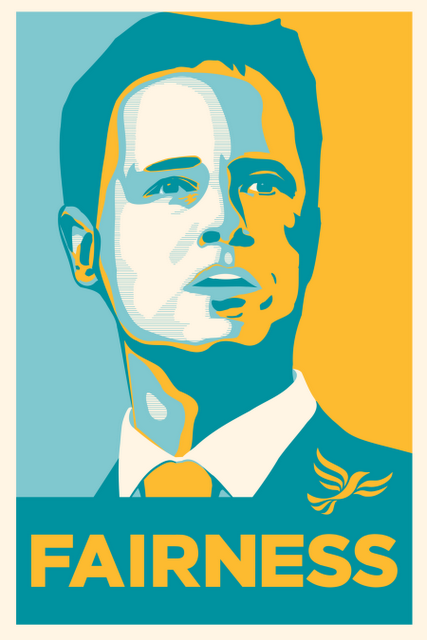
Everybody’s talking about fairness, these days, as my colleague John Clarke observes. It’s been a central and recurring motif in discussions of the end of universal child benefit, the Browne review of higher education funding, and Nick Clegg’s announcement of the Pupil Premium. All this fairness talk is part of general break-out of explicitly normative political discourse in the last 6 months, or at least the surfacing of themes which have been floating around for a while – The Big Society, with it’s Burkean heritage and ‘Red Tory’ sheen of radicalism is just one example; Ian Duncan-Smith’s catholic inflected social justice agenda is another; David Willets’ account of intergenerational justice yet another, the latter two more obviously having policy relevance than Cameron’s more flaky sounding Big Society.  A key question here is whether it is wise to think of these discourses as simply ‘cover’ for spending cuts, simply means of legitimating more fundamental decisions.

John worries that fairness is too airy, lacking the incisiveness of a value like equality for example. I’m not so sure. Firstly, I think fairness is a term through which intuitive values of equality and justice is ordinarily expressed – these aren’t opposed terms at all. John Rawls’ egalitarian liberalism revolves around a notion of fairness, for example (a rather opaque account admittedly). But the principle of ‘from each according to ability, to each according to need’ also expresses an egalitarian sense of fairness. I think the intimate relationship between fairness and from abstract notions of equality or justice is worth considering more carefully as the politics of ‘the new politics’ begins to unfold, starting tomorrow with the comprehensive spending review. Last week, The Guardian’s right-wing provocateur Julian Glover managed to concoct a mean-spirited response to the ECHR’s report, How Fair is Britain?. What exercised Glover was precisely the coupling of fairness with equality in this report, leading him to argue that since fairness is a woolly idea, and since it is too easily mistaken as ‘equality’, we should do away with both notions. Glover’s self-serving argument elicited a debate , which underscored again the close relationship between these two different values.

My point is that we might do well to take seriously the different meanings of fairness, and attend to their changing deployment in public culture and in different contexts. But more than this, might usefully think of this break-out of fairness talk not so much as merely ‘legitimating’ economic decision-making, but as a form of justificatory discourse – in the sense that justificatory practices are understood by economic sociologists such as Luc Boltanski, Eve Chiapello, and Laurent Thévenot, as crucial mediums for the coordination of social life. From their perspective, justificatory discourses need to be understood as exerting real constraints on the exercise of unfettered capitalist logics, and as indices of fields of contestation and critique to which selective responses are made. From this sort of perspective, all this fairness talk is notable precisely because it is an index of the terrain of conflict and contestation to which an emerging, half-baked political programme feels itself obliged to respond in the hope of circumventing other modes of critique. Fairness is not meaningless, and certainly not an empty signifier. It has as set of intuitive associations, which the Coalition is doing its best to both make use of and control. David Cameron talks of fairness as ‘giving people what they deserve, and what people deserve depends on how they behave’. This definition ties fairness to a notion of individual responsibility, but it articulates a broader sense of fairness having to do with desert – an idea that is easily inflected in egoistically ‘meritocratic’ ways for sure, but which is also open to re-inscription.

So fairness might be worth taking more seriously than the urge to question all this woolly moralism leads us to think it should, if only because this is one terrain in which ‘the new politics’ is about to be articulated – not just spending cuts, but the coming debate about electoral reform too. It’s not the only one, of course, and there is no good reason to restrict oneself to the terms laid down by those in formal political control of events. In this respect, too, though, it is notable that there are some funny things happening in political discourse just now. For example, the reaction to the announcement of the end of universal child benefit by right-wing columnists in The Daily Mail and The Daily Telegraph is interesting not least because the challenge to the narrowly ‘transactional’ view of fairness expressed by Osborne and Cameron at the Tory conference was presented through a clear statement of a principle of public value – the defence of ‘stay at home mums’ receiving child benefit irrespective of personal or household income levels was made in the name of the principle that engaging in an activity that benefitted the collective life of the community deserved reward and support. This is a gendered, nationalistic, paternalistic vision of public value, no doubt, but a vision of public value it certainly is – it is in marked contrast to the ruling principle behind the Browne review of higher education, for example, which confirms an already evident drift to thinking of the public function of Universities primarily in terms of the efficiency with which they distribute private benefits to those who pass through their doors – a trend tracked by OU colleagues in the Centre for Higher Education Research and Information, and theorised by Craig Calhoun. If the ‘stay at home mum’ logic was applied to higher education, the proposals for University funding would look markedly different. All of which is to suggest that one task for a critical response to ‘the new politics’ of spending cuts, austerity, re-moralisation of the poor, electoral reform, and much else is to carefully track the modes of justification presented for different decisions, for it is here that one will be able to track the genealogies of vulnerability to which this idiosyncratic political project is responding and the opportunities for opposition it is helping to generate in its wake.

‘Big Cuts, Big Society’

My colleague at the OU, Nick Mahony, has just posted an invite to contribute to a new blog hosted by the Centre for Citizenship, Identities and Governance (CCIG), discussing ‘the politics of the present’, focussing initially on the theme of ‘Big Cuts, Big Society’ – see: http://www.open.ac.uk/ccig/dialogues/blogs/big-cuts-big-society