
Almost Famous

jhbThe Sociological Review blog has a series of articles on what it calls Superstar Professors, including commentaries on thinkers such as Zizek, Giddens, and Bauman. There are some interesting thoughts raised in the posts published so far, including reflections on the relationship between MOOCs and academic celebrity, and on the relevance of recent debates in the sociology of ideas (the work of Cimic, Gross, and Baert for example) in accounting for the ‘success’ of certain strands of thought.

There is, though, a rather predictable tone to these pieces, in which the apparent ‘rise’ of ‘star authors’ is taken as a sign of standards of ‘scholarship and intellectual quality’ being undermined by the unfortunate pressures of commerce and the market. It’s actually a recurrent problem of trying to analyse seriously the relationship between ‘thought’ and its conditions, this temptation to fall back on a style of evaluation in which one identifies the instrumental and strategic calculations that shape academic life in an act of disapproving exposure.

I have an amateurish interest in these things, partly related to some current thinking about how to research the living histories of ideas, partly as a more general interest in understanding cultures of theory. Long ago, Murray Low and I wrote a paper in which we tried to conceptualise the relationship between what was then called French Theory and the changing dynamics of academic publishing (in the interim, one might be inclined to extend the analysis to investigating the formation over the last two decades of ‘Continental Philosophy’ as the name for a serious, canonical field of intellectual curiosity, as distinct from a term of abuse). Slightly less long ago, I also did some work on the complex relations between commercial dynamics, public institutions, and cultures of aesthetic evaluation that shaped the formation of a canon of post-colonial African literary writing.

I tend now to think of those projects as part of a wider, long standing interest in understanding the variable formation of public life. One thing I take for granted, on the basis of things learnt from these projects certainly, but it’s also a pretty basic feature of any decent account of the concept of the public sphere, is that the relationship between public life and markets, public life and commercial practices, public life and processes of exchange, is an internal, constitutive, and integral one. Contradictory, no doubt, often tragic in a Habermasian kind of way, but nevertheless, a type of relationship which requires a rather more careful style of analysis than the one provided by simple claims that the standards of intellectual life are menaced by such worldly matters. 


Bite Size Marxism

“Ever since Luxemburg put into question the completion of real subsumption by suggesting it was nothing more than a heuristic device Marx employed to totalize capitalism, thinkers outside of Euro-America have, in one way or another, underscored a conception of the social that embodied an uneven mix of practices of prior modes of production alongside the newer innovations of capitalism”

Harry Harootunian, 2015, Marx After Marx: History and Time in the Expansion of Capitalism.

Bite Size Methods

“Finding something is easy: it’s knowing that you ought to have looked for it that is hard. You search for known items only once you have done all the real work. In the really important cases, you search for known items only once you already know what they are going to say. In short, if we knew ahead of time what the questions were and what books probably answered them, there would be no reason to do the research.”

Andrew Abbott, 2014, Digital Paper: A Manual for Research and Writing with Library and Internet Materials.

Bite Size Criticism

“T]his is how American folk music works. Forgetting and disappearance are the engines of its romance. They are the motor of the will in the music to create characters, to insist on their mystery and to resist the impulse of society at large to turn the music into social science – or what the late Harlem critic Albert Murray called “social science fiction”.”

Griel Marcus, 2015, Three Songs, Three Singers, Three Nations.

The Politics of the Global Challenges Research Fund

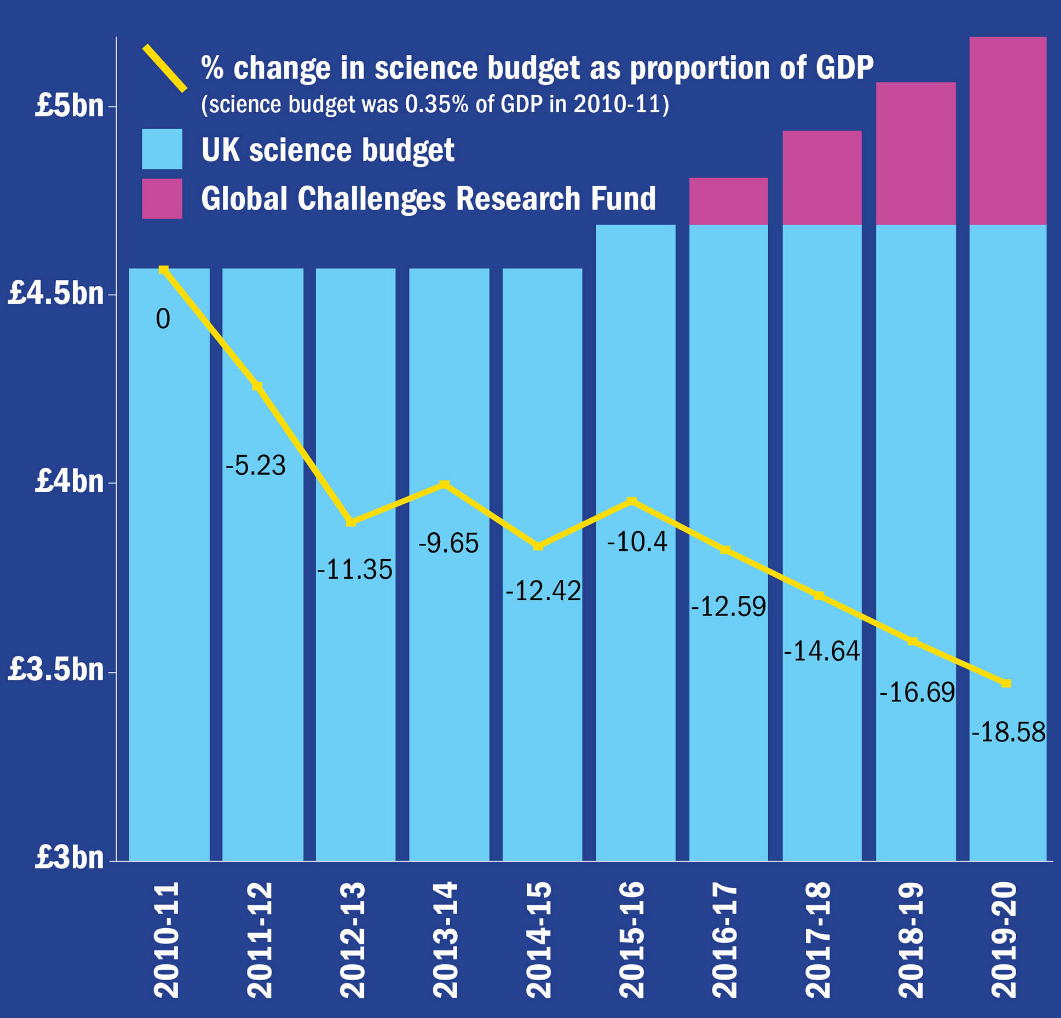
Screen Shot 2016-05-24 at 16.14.24In UniversityLand in the UK, alongside various worries about the TEF, OfS, and UKRI (try to keep up) generated by the government’s Higher Education white paper, there is also a sudden flurry of notice being taken of the Global Challenges Research Fund (GCRF). This was formally announced before Christmas in George Osborne’s Spending Review. It is now officially launched as “a new Resource funding stream” (see the RCUK’s brief  on the GCRF).  That’s how it is being presented at University level, by research and funding councils, and in cross-University partnerships. The GCRF is part of the UK science and research budget, so it belongs to the Department of Business, Innovation and Skills (BIS), according to whom “It provides an additional £1.5bn of Resource spend over the next five years to ensure that UK research takes a leading role in addressing the problems faced by developing countries. This fund will harness the expertise of the UK’s research base to pioneer new ways of tackling global challenges such as in strengthening resilience and response to crises; promoting global prosperity; and tackling extreme poverty and helping the world’s most vulnerable.” That all sounds nice, doesn’t it.

Oh, by the way, the key thing to remember is this: “GCRF is protected science spend that is also part of the Government’s pledge to allocate 0.7% of Gross National Income to Official Development Assistance (ODA).”

hirschman-300x400

Maybe I’m just a cynic, but it does seem to me that there are a number of issues around the GCRF that deserve a little more honest acknowledgement before everyone (individual researchers, research teams, departments, whole Universities) rushes-off to re-brand themselves as international development specialists (I’m not one, so I’m not being defensive). The GCRF is a deeply political initiative, in the sense that it involves all sorts of pitfalls and risks and likely unintended consequences that need some thinking through by those being enrolled into the agenda of which it is a part. In fact, the GCRF is ‘political’ in at least three related senses:

  1. First, the GCRF is quite explicitly a re-direction of government spending on ‘international development’ away from the Department nominally charged with that area, DFID, to BIS, the department that is responsible for science, innovation and research (but which would also really like to not spend much money doing very much at all). It is one part of a dispersion of spending on development and aid across a larger number of departments, while allowing the government to remain committed to the principle spending 0.7% of national income on official development assistance (ODA) (a commitment which is itself, of course, the target of ongoing right-wing campaigning, directed primarily against DFID; this is a rather important context for the re-configuration of aid policy by the current government). The headline story from the November spending review was that the science budget did much better than expected, with a real term protection over the next five year period. But this commitment depends on various things being ‘tucked under’, as they say, including the GCRF – it’s not new money for science at all, it is DFID’s money handed over to BIS. Depending on how you look at it, the GCRF is either a very clever and quite open accounting scam, or it is a rather wonderful example of having your cake and eating it – an austerity shaped cake with ODA-shaped sprinkles on top.
  2. So, everyone knows all this, but the point is that the GCRF is part of a concerted reconfiguration of the way in which UK government development funding is organised. The reconfiguration is shaped by an approach now enshrined in the new  UK Aid Strategy, which seeks to ‘tackle global challenges in the national interest’. This actually means a refocusing of aid policy around concerns with security, crisis, and emergency. Again, none of this is a secret, it’s all quite well-known. Somebody, somewhere is no doubt already writing the critique of this new policy. In terms of the GCRF specifically, a £1.5 billion pot of money dedicated to ‘ODA’-relevant research has the potential to fundamentally reorient the ethos, one might say, of UK scientific research. On the other hand, it also looks like a move to direct more ‘development’-related spending to the UK. GCRF is explicitly premised on the idea that “research directly and primarily relevant to the problems of developing countries may be counted as ODA. The costs may still be counted as ODA if the research is carried out in a developed country.” That’s why everyone is so much more excited about this than they have been by the Newton Fund, which is much more explicitly about the difficult work of building partnerships and capacity with international collaborators (and the GCRF is a lot more money than Newton). Whether and how GCRF will help generate capacity-building elsewhere, rather than the requirement to meet ODA criteria being met by standard ‘impact’ models, is just one dimension of the future politics of the GCRF. On the one hand, then, GCRF redirects ‘development’ money to UK institutions; on the other hand, this money comes with very thick strings attached (apart from everything else, the GCRF is also just one example of a widespread and disturbing move to centralize strategic decision-making about what counts as science that is evident elsewhere in government higher education policy).
  3. As I say, all of this is publicly known, although it seems to me interesting how little of this context is being acknowledged as the GCRF is rolled-out. There is some growing awareness of what it all might imply. In one interpretation, for example, the GCRF has been identified as ‘hoovering up extra science cash’ for ‘developing world problems’. That’s true in a sense, although as already indicated, the ‘extra cash’ was always already development-related money. No one is actually taking money away from non-ODA-able research funds for the GCRF – it’s that any extra money the science budget is getting, to make it appear as if it is ‘protected in real terms’, is actually coming from DFID’s coffers, without actually being administered by DFID (My point is not that DFID is a model of idealistic efficiency.  There is already a rather contested institutional field assessing whether international aid strategy does any good (see the ICAI website). This field is only likely to get a lot more complicated when it’s not primarily focussed on the accountability of DFID). There is a bit of a Duck-Rabbit issue here: rather than thinking of the GCRF as ‘a new funding stream’, it might be better to acknowledge that it effectively obliges a significantly greater proportion of science and research to get engaged with the world of international development issues. This is where the more mundane, but very real politics of the GCRF is going to unfold: no doubt there will be an initial rush to re-badge current research as ODA-compliant (by Universities and funders and government departments), but over the more medium term this all implies either very significant transformations in how research agendas are shaped and delivered, or, an ongoing finessing and revision of ODA criteria to justify, nationally and internationally, the redistribution of money away from traditional fields of development policy. That’s a politics already going on, and it is evidenced by the recurring theme of ‘uncertainty’ and ‘need for clarification’ in the commentaries around the GCRF ever since the November spending review. 

It seems likely that an awful of people in British Universities are suddenly going to be learning about the SDGs, scurrying around to find people in their institution who have ever visited Mali or Cambodia, and, I suspect, engaging in more or less unreconstructed paternalistic and patronising ‘development-speak’. It’s best not to be too credulous about the public statements about tackling extreme poverty and helping the most vulnerable – if Universities are going to be drawn much more holistically into the world of international development policy, driven by nice-sounding funding streams, then they are, of course, going to be drawn into a world that is complex, and grubby, and deeply compromised (‘Aid as Imperialism’, anyone?). There is, of course, a very real politics of development assistance already, that lots of people in Universities might hopefully be about to learn a little bit more about.

Be careful what you wish for!

Are We There Yet? Or, is this what fieldwork feels like?

UntitledI have just returned from Johannesburg, a city I have not been to since 1997, when I first went to South Africa. I had a nice time, and as ever, I learnt a lot in a  short space of time by being in a very different place. I have spent lots of time in South Africa in between that first trip and now, but apart from going in and out of the the airport and a brief day-trip in the early 2000s, not any time in Jo’burg. So it was an occasion for reflecting on what it is I have been doing coming and going to South Africa in the meantime.

I remain unsure whether or not the time I have spent in South Africa counts as ‘fieldwork’, a rather precious idea in GeographyLand, the everyday world which I inhabit. Does visiting other people’s countries and finding things out about them counts as ‘fieldwork’? I certainly think I have done ‘research’ in South Africa (actually, mainly, in Durban), but I’m still not sure why I am meant to think that the quality or significance of research is meant to depend on the implied sense of immersion or exposure associated with the idea of fieldwork.

IMG_0791I have been to South Africa 17 times in the last 19 years (it’s a long flight, you have time to count these things…). Adding up all those trips, which have been as long (or not?) as 3 months and as short as a week, I have spent almost a whole year of my life there since 1997. These trips have been funded by ‘seed’ money from the University of Reading, the OU, Exeter (and who knows what grew from that money), and by proper grown-up research funding from the British Academy, and especially from the Leverhulme Trust (an historically ambivalent source of funding for African research, it should be said). Some of these trips have been associated with formal research projects, some of them with conferences, and some of them just occasions to go and meet people and find things out. And it should be said that pretty much anything I have learnt while in this other place has been dependent on the generosity of South African academics, activists, lawyers, policy makers, journalists, and the like – generosity with their time, their insight, and their own analysis of the world they live in. ‘Being there’ turns out to be an opportunity to listen to the testimony others.

Actually, the more I go to South Africa, the less and less I think of it as a place in which to pretend to do ‘research’ – I initially went to do research on media policy, on my own, in my own name; but then I ended up collaborating with other people, which seems the only reasonable way of proceeding – in my case, falling under the spell of Di Scott, and then being part of a multi-person project on democracy in Durban with all sorts of other nice and smart people, and more recently accidentally conjuring writing projects with Sue Parnell and a shared project with Sophie Oldfield. Along the way, I have passed through all sorts of spaces of research knowledge: hotels, apartments, different cities, taxis, bookshops, beaches, living rooms, offices, bookshops, coffee shops, libraries, bookshops, shopping malls, bookshops in shopping malls. I have gone from researching media policy to researching urban-based environmental politics, using ‘methods’ including interviewing to watching TV and listening to the radio, to using more or less formal ‘archives’, on one occasion delivered in person as a pile of paper, on another accessed by being ushered into a cupboard at the SABC.

I’ve actually learnt a lot about Theory across all these visits, in a weird inversion of Paulin Hountondji’s account of Africa’s ‘theoretical extraversion’ – about the way that ideas of the public sphere, or governmentality, or class, or decolonisation, amongst others, resonate and settle in a place like South Africa. Most recently, this has been my main excuse for visiting, to learn more about how ‘urban theory’ circulates through and emerges from South African situations.

So, anyway, I wonder still why it is that time spent in South Africa should present itself (to me, but also to others faced with me) as a source of something like ‘field’ experience in a way that, for example, time spent in the USA seems not to. I have, I think (I know), actually spent more time in the States as an adult than I have in South Africa, including a whole year of immersive ethnographic observation of GeographyLand at Ohio State. I have an American sister. I’ve walked pretty much the entire length of Peachtree Street (although not all at once). But none of that is translatable into a claim of professional expertise about American life and culture and politics in the way that, I suspect, time in South Africa could be. And in saying that, I know it is the case because I have a distinct sense that I have not been very good at constructing an aura of either ‘developmental’ or ‘ethnographic’ or ‘(South) Africanist’ expertise on the basis of all that time in South Africa.

And now back to life in Swindon. A non-city much the same age as Durban, half a century older than Johannesburg, and about 300 years younger than Cape Town. But no less weird than any of them.

Bite Size Theory

“The extensiveness of power and its intensity are usually assumed to be conversely related, increase one and the other diminishes or lessens. No such assumption holds, however, when topology enters the frame. Reach, when grasped topologically, is more about presence than distance; it is intensive rather than extensive, a relational arrangement where power composes the spaces of which it is a part by stretching, folding, or distorting relationships to place certain outcomes within or beyond reach.”

John Allen, 2016, Topologies of Power: Beyond Territory and Networks.

Bite Size Methods

“I’ve avoided judgments about the adequacy of any mode of representation, not taking any of them as the yardstick against which all other methods should be judged. Nor have I adopted the slightly more relativistic position that, while the jobs to be done may differ, there is a best way of doing each kind of job. That isn’t relativistic asceticism on my part either. It seems more useful, more likely to lead to new understanding of representations, to think of every way of representing social reality as perfect – for something. The question is, what something is it good for?”

Howard Becker, 2007, Telling About Society.

Environment and Urbanization Issue on the New Urban Agenda

To coincide with an event at the IIED today focussing on the likely outcomes of the Habitat III process, and assessing the so-called ‘new urban agenda’, all of the papers in the April 2016 issue of Environment and Urbanization are freely available between the 5th and 12th May (including the previously advertised paper by myself and Sue Parnell on the place of urban theory in current global urban policy debates). The issue includes a series of papers on the theme From the MDGs to the SDGs and Habitat III. Further details and reflections on the event will be posted on the IIED website in due course. 

A selective résumé

SB

I picked up this great story about a Princeton professor, Johannes Haushofer from Facebook (thanks Sue), who has posted his CV of Failures. It’s an idea prompted by Melanie Stefan. I have to admit that I have been thinking along these lines recently, not because I’m overcome by a great sense of failure, or an urge to ‘fail better’ even, but just because I have got to that stage of life where it occurs to me that the things I work on, research, and publish about don’t quite ‘scan’ directly from a linear set of projects funded, grants awarded, previous books written,. They only really make sense in relation also to the shadow world of failed bids, rejected papers, cancelled courses. I’ve reflected on this sort of thing before, provoked by Ivan Vladislavic’s lovely idea of a loss library. As for a CV of my own failures, well, that would be too long.