What is ‘public’ about the Public University?

 I was visiting UCL yesterday, where students are involved in an occupation as part of the ongoing campaign against the Coalition’s pernicious policy of higher education funding (we don’t have one at the OU, cos there aren’t any students at Walton Hall). These occupations are interesting not least because they are seeking to directly shame the VCs of individual institutions, who as a collective group have proved horribly supine in their response to the government’s decision to allow an increase in fees AND to slash public funding in support of teaching of all but a select ‘strategic’ subjects. The last few weeks have exposed clear divisions within the University sector, with representatives of the Russel Group and other research intensive institutions quietly accepting proposed changes as inevitable, while the most forceful criticisms of these proposals, and defence of the public value of higher education beyond the personal benefit derived by individual students, have been made by articulate VCs from institutions such as the University of Central Lancashire and Canterbury Christ Church. This division is so clear that it has generated a debate about whether the Universities UK, the umbrella representative body for the whole sector, has lost its legitimacy as an effective representative by adopting such an accommodating tone – you can track the tensions in recent articles and letters in the Times Higher.

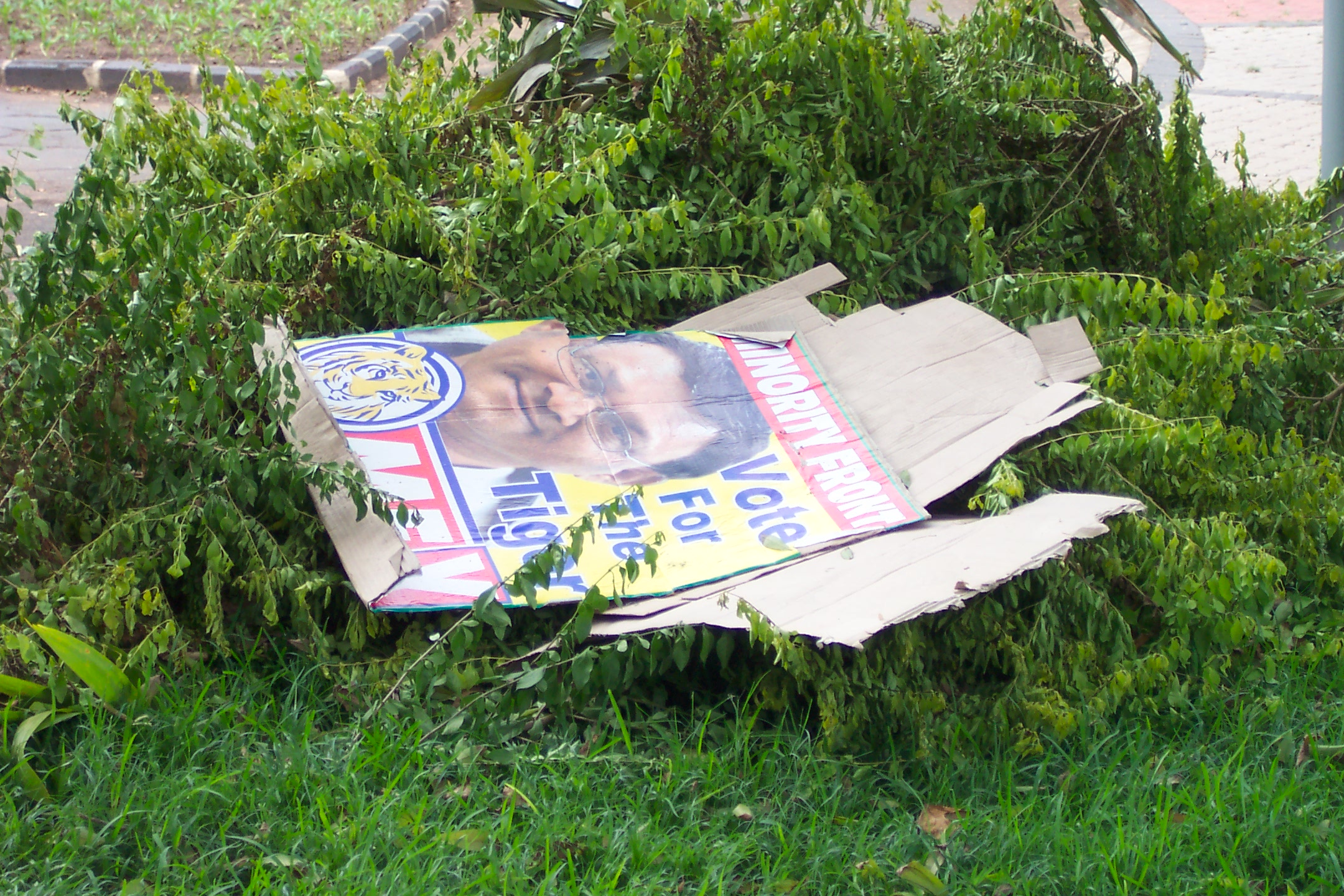
All of this will come to a head this week when the Commons gets to vote on the tuition fees proposals. But one of the more important aspects of this campaign is the way that it has very quickly exposed fault lines around the terms in which the politics of newly austere public sphere is going to be fought out: on the one side, a set of arguments which invoke particular images of ‘fairness’ and focus all the attention on the idea of higher education as a system distributing benefits upon differentially advantaged individuals (on this criterion, of course, there are aspects of the current proposals that are easily commended – the OU has loudly celebrated the equalization of treatment of part-time students as potential high education debtors); on the other side, an argument about the public good of higher education residing in various collectively bestowed, and collectively enjoyed benefits which are more than the aggregate of all these personal benefits. The best thing I have read on this issue is Stefan Collini’s critique of the perfect-market idiocy that informs the Browne Review (whose membership is indicative of a shift in the ‘public’ quality of these sorts of reviews). Collini points out that the headline coverage of the Browne Review, and the protests and campaigns since too, has been on the issue of fees increases; and he elaborates on how there is a much more fundamental aspect of the Review, which is its proposed (and largely accepted by the Coalition) ‘dismantling of the public character of higher education’, which he describes as ‘breathtaking’ in its scale. The emphasis of Collini’s analysis on defending the public quality of higher education in a broad sense has quickly found expression in a newly established Campaign for the Public University. In a letter published in The Times earlier this week, the broader issue is clearly stated: “The issues at stake for the future of higher education are not only to do with the proposed increase in student tuition fees. We believe that the public university is essential both for cultivating democratic public life and creating the means for individuals to find fulfilment in creative and intellectual pursuits.” The letter also refers to the results of rather extensive research survey undertaken by Ipsos MORI on behalf of HEFCE and also published last week, which, to cut a long story short, showed rather widespread support amongst the public for government investment in higher education and a broad appreciation of the varied benefits (economic and non-economic, individual and collective) of higher education. The OU currently has a research centre, CHERI, which also focusses on exploring and promoting the public dimensions of higher education, engaging in empirical research but contributing to conceptualizations of the place of higher education in reconfiguring the public sphere – partly through links with CHERI, some of us hosted Craig Calhoun at the OU earlier this year, whose talk about the changing public status of Universities now seems even more pertinent than it did back in March – you can see the lecture here.

The only thing that worries me about the tone of debate at the moment around these issues is the danger that certain aspects of a rather tired Two Cultures debate are already being reproduced, so that ‘the public’ benefits worth defending from the more extensive marketization of higher education end up being represented in terms of the apparently non-instrumental value ascribed to ‘the humanities’. I think that path threatens to undermine much more expansive, inclusive understandings of the public qualities of higher education, by just reproducing some hoary old (class-bound) stereotypes about ‘really useless knowledge’ being the embodiment of the public value of University life. I think the challenge is to acknowledge and defend a pluralist range of ‘uses’ and ‘instrumentalities’ that higher education helps to sustain.

Globalizing Responsibility

A new book, Globalizing Responsibility: the political rationalities of ethical consumption, co-written by myself and three colleagues – Paul Cloke, Nick Clarke and Alice Malpass – has just been published. It comes out of an ESRC/AHRC funded project on Governing the subjects and space of ethical consumption that we all worked on together, and which formally ended back in 2006. But these things take time to come to full fruition (we have another book in the pipeline).

The book sets out to analyse various ethical consumption practices from a political perspective. By this, I mean it tries to understand them as forms of political mobilisation, campaigning, lobbying, and so on – not in the sense of evaluating them from a pre-established position of what counts as politics or what makes politics more or less progressive – but in terms of trying to understand how these sorts of activities are indicative of changes in the way politics gets done now. It is based primarily on case studies undertaken in and around Bristol in the mid-2000s, especially focussing on fair trade campaigns of different sorts, and tries to make sense of the local dynamics of global solidarity politics. Theoretically, the book works through various approaches to understanding this sort of activity, including accounts of neoliberalization, governmentality theory, theories of practice, social movement theory, and theories of consumerism.

We have a couple of nice endorsements on the back cover, one from the geographer Peter Jackson at Sheffield: “Based on original research and innovative thinking, this profound and insightful book challenges conventional thinking about ‘ethical consumption’.  Approaching the subject as a distinctive form of political mobilisation, Globalizing Responsibility shows how our everyday consumption practices are related to wider narratives of social justice and collective responsibility”; and one from Rob Harrison of Ethical Consumer Magazine: “‘By viewing ethical consumption patterns as a political phenomenon, the authors deliver a far deeper understanding of this growing movement than a whole raft of marketing and business literature which has gone before.”

So if anyone is still stuck for gifts to put under the tree this festive season, this comes just in the nick of time.

Fair is Fair

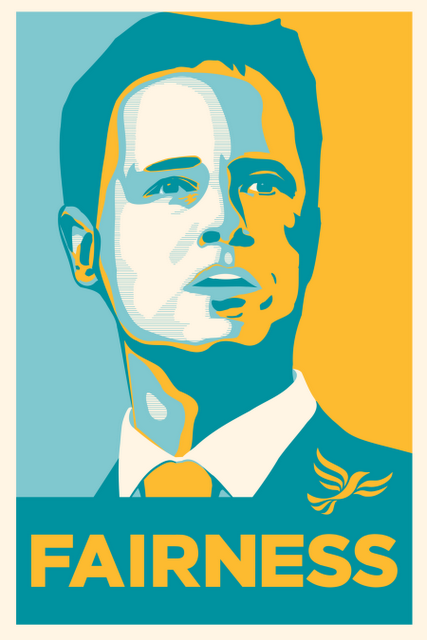
Everybody’s talking about fairness, these days, as my colleague John Clarke observes. It’s been a central and recurring motif in discussions of the end of universal child benefit, the Browne review of higher education funding, and Nick Clegg’s announcement of the Pupil Premium. All this fairness talk is part of general break-out of explicitly normative political discourse in the last 6 months, or at least the surfacing of themes which have been floating around for a while – The Big Society, with it’s Burkean heritage and ‘Red Tory’ sheen of radicalism is just one example; Ian Duncan-Smith’s catholic inflected social justice agenda is another; David Willets’ account of intergenerational justice yet another, the latter two more obviously having policy relevance than Cameron’s more flaky sounding Big Society.  A key question here is whether it is wise to think of these discourses as simply ‘cover’ for spending cuts, simply means of legitimating more fundamental decisions.

John worries that fairness is too airy, lacking the incisiveness of a value like equality for example. I’m not so sure. Firstly, I think fairness is a term through which intuitive values of equality and justice is ordinarily expressed – these aren’t opposed terms at all. John Rawls’ egalitarian liberalism revolves around a notion of fairness, for example (a rather opaque account admittedly). But the principle of ‘from each according to ability, to each according to need’ also expresses an egalitarian sense of fairness. I think the intimate relationship between fairness and from abstract notions of equality or justice is worth considering more carefully as the politics of ‘the new politics’ begins to unfold, starting tomorrow with the comprehensive spending review. Last week, The Guardian’s right-wing provocateur Julian Glover managed to concoct a mean-spirited response to the ECHR’s report, How Fair is Britain?. What exercised Glover was precisely the coupling of fairness with equality in this report, leading him to argue that since fairness is a woolly idea, and since it is too easily mistaken as ‘equality’, we should do away with both notions. Glover’s self-serving argument elicited a debate , which underscored again the close relationship between these two different values.

My point is that we might do well to take seriously the different meanings of fairness, and attend to their changing deployment in public culture and in different contexts. But more than this, might usefully think of this break-out of fairness talk not so much as merely ‘legitimating’ economic decision-making, but as a form of justificatory discourse – in the sense that justificatory practices are understood by economic sociologists such as Luc Boltanski, Eve Chiapello, and Laurent Thévenot, as crucial mediums for the coordination of social life. From their perspective, justificatory discourses need to be understood as exerting real constraints on the exercise of unfettered capitalist logics, and as indices of fields of contestation and critique to which selective responses are made. From this sort of perspective, all this fairness talk is notable precisely because it is an index of the terrain of conflict and contestation to which an emerging, half-baked political programme feels itself obliged to respond in the hope of circumventing other modes of critique. Fairness is not meaningless, and certainly not an empty signifier. It has as set of intuitive associations, which the Coalition is doing its best to both make use of and control. David Cameron talks of fairness as ‘giving people what they deserve, and what people deserve depends on how they behave’. This definition ties fairness to a notion of individual responsibility, but it articulates a broader sense of fairness having to do with desert – an idea that is easily inflected in egoistically ‘meritocratic’ ways for sure, but which is also open to re-inscription.

So fairness might be worth taking more seriously than the urge to question all this woolly moralism leads us to think it should, if only because this is one terrain in which ‘the new politics’ is about to be articulated – not just spending cuts, but the coming debate about electoral reform too. It’s not the only one, of course, and there is no good reason to restrict oneself to the terms laid down by those in formal political control of events. In this respect, too, though, it is notable that there are some funny things happening in political discourse just now. For example, the reaction to the announcement of the end of universal child benefit by right-wing columnists in The Daily Mail and The Daily Telegraph is interesting not least because the challenge to the narrowly ‘transactional’ view of fairness expressed by Osborne and Cameron at the Tory conference was presented through a clear statement of a principle of public value – the defence of ‘stay at home mums’ receiving child benefit irrespective of personal or household income levels was made in the name of the principle that engaging in an activity that benefitted the collective life of the community deserved reward and support. This is a gendered, nationalistic, paternalistic vision of public value, no doubt, but a vision of public value it certainly is – it is in marked contrast to the ruling principle behind the Browne review of higher education, for example, which confirms an already evident drift to thinking of the public function of Universities primarily in terms of the efficiency with which they distribute private benefits to those who pass through their doors – a trend tracked by OU colleagues in the Centre for Higher Education Research and Information, and theorised by Craig Calhoun. If the ‘stay at home mum’ logic was applied to higher education, the proposals for University funding would look markedly different. All of which is to suggest that one task for a critical response to ‘the new politics’ of spending cuts, austerity, re-moralisation of the poor, electoral reform, and much else is to carefully track the modes of justification presented for different decisions, for it is here that one will be able to track the genealogies of vulnerability to which this idiosyncratic political project is responding and the opportunities for opposition it is helping to generate in its wake.

Vote early and vote often

The response to the election of Ed Miliband as new leader of the Labour Party was interesting not least because it was the occassion for various commentators to articulate their views on what counts as properly ‘democratic’. Julian Glover is The Guardian‘s resident apologist for the coalition, in the sense that he keeps writing these pieces which try to articulate the idea that the coalition reflects some sort of ‘intellectual powerhouse’ rather than, say, a political deal (what would be wrong with admitting this?). Today Glover came up with a very weak argument against equality, on the grounds that any argument which prioritises this value “overlooks the possibility that the actions needed to compel equality may be seen as unfair by those who do not benefit from them”. Er, yes, I suppose they might. This might be true of people earning lots of money who don’t want to pay higher, progressive taxes, just as it might be true of white South Africans benefitting from apartheid who might not have welcomed the onset of a new democratic dispensation. Glover goes on to claim that “An equally valid idea of a fair society may be one in which people are given the space and the right to strive for inequality: advantage achieved by their own efforts”, and then admits that this might all sound “horribly right wing“. It actually just sounds a bit dim (not much intellectual power-housing going on in this sort of argument), although it is certainly provocative to read Glover at the moment because he seems to be trying to articluate a kind of Nozickian-style hyper-individualistic take on coalition spending plans as not just unfortunate necessities but as positively welcome. Each to their own, I suppose, and Glover’s perspective does at least have the advantage of suggesting that ‘the Big Society’ idea at least has some intellectual substance to it compared to what passes as ‘orangist’ Liberal Democract thinking – it reminds one of how far the Big Society narrative departs from a fully-loaded ‘liberal’ individualism of the sort ascribed to ‘Thatcherism’, how far Cameron’s rhetoric for a long-time has been geared to transcending the burden of ‘there is no such thing as society’, and how far the Big Society is properly part of a ‘conservative’ tradition of thought with some intellectual weight.

Anyway, where was I? A few weeks ago, Glover described Ed Miliband’s victory as ‘peculiar and undemocratic’, without quite explaining why. It might have been peculiar, certainly, in so far as electoral college arrangements always generate some oddities; but the ‘undemocratic’ charge seems peculiar itself. Firstly, Ed Miliband won within the rules, of course, which no one contested. Secondly, though, the results indicate that Ed Miliband would actually have ‘won’ the election on just about any electoral system one can think of, if the ‘bias’  built into the unequal loading of the three-way division of the electoral college system between Labour MPs and MEPSs, party members, and members of affiliated organisations is lifted and one only looks at total number of individual votes casts for the Labour leader: he would have won under a first-past-the-post system counting first preferences (the system the Tory party uses); and he would have won under an alternative vote system which counted each indivual vote cast equally too (the system the Liberal Democrats use). It was only close because the votes of those individuals most likely to vote for Ed Miliband were systematically discounted in the electoral college system – quite legitimately, of course (the real issue in all this is whether one thinks trade union members should be enfranchised in this particular electoral system; and more broadly, this episode exposed the deeply undemocratic attitudes of many commentators to the position of trade unions in functioning liberal democracies).

Anyway, somehow Glover’s hyper-individualism seems connected for me with a certain sort of self-righteousness that is associated with current arguments about electoral reform, in which it is widely presumed that proportional representation is the preferred ideal against which any other alternative voting system is an unfortunate, temporary compromise. But what if PR harbours a horribly thin, de-racinated conception of political life, in which all that matters about politics is being counted as an individual bearer of opinions? There are other values worth considering, and across the spectrum from Tory (and not so Tory) worries about representing geographical communities to genuine concerns about accountability and efficiency, these seem worth acknowledging. I have always had a soft-spot for electoral geography, a much maligned field which actually has really interesting things to say about the politics of Politics, and one thing this field reminds us of is that ‘choosing an electoral system‘ is always a thoroughly interested, grubby, political act. We are about to experience, in the UK, at least 9 months of public debate about the fairness of different models of voting, and it will be interesting to see which democratic values are given most prominence as we publicy learn more about the pros and cons of different voting systems – the deafult assumption of ‘proportionality’ bundles up just some of the relevant values, certainly, but while it appears to be intuitively the most ‘fair’, it also tends to cover a series of mathematical problems which means that no purely proportional system is really possible, and might even mean that any imaginable democratic system must always contain an element of electoral dysfunction. The point of all this, I think, apart from any interest one might have in social choice theory or rationality, is that the mathematics of democracy reminds us that there is always a politcal, normative excess in any discussion of ‘fair’ procedures of the sort to which we are about to be subjected. Let’s see how much of this excess is allowed to be clearly articluated these next few months (this excess is precisely why elections are the place where the ‘the political’, in the sense this idea is conceptualised by post-structuralists like Mouffe or Ranciere, is routinely exposed and made public).

And, on a sort of related issue, there is a new podcast interview with Michael Dummett, on Frege, on philosophy bites. Dummett is one of the grand old men of English-language, Analytical philosophy, but kind of interesting despite that (!) – an anti-racist campaigner (who has reflected on the relevance or not of Frege’s anti-semitism for interpreting his philosophy), and author of an important theory of voting in precisely that same tradition mentioned above. A different model of engaged intellectual from the one we have inherited from the ‘Coninental’ tradition.

‘Big Cuts, Big Society’

My colleague at the OU, Nick Mahony, has just posted an invite to contribute to a new blog hosted by the Centre for Citizenship, Identities and Governance (CCIG), discussing ‘the politics of the present’, focussing initially on the theme of ‘Big Cuts, Big Society’ – see: http://www.open.ac.uk/ccig/dialogues/blogs/big-cuts-big-society

Does size matter? Beyond ‘neoliberalism’

I attended a day-long seminar this week honouring the work of my colleague at the OU, Janet Newman. One theme of the day was how to understand the new political context in the UK, one of impending public expenditure cuts, lots of talk of ‘The Big Society’, and the coalition stoking ‘blame the poor’ rhetoric to justify fundamental restructuring of welfare regimes. What struck me over the course of the day was how the task of grasping this new political ‘conjuncture’ remains horribly constrained by the inherited academic conceptualisation of ‘neoliberalism’ that has held such sway over the last decade amongst critically-inclined, lefty social scientists [and critical theories of neoliberalism and neoliberalization are very much a product of the 2000s, something which itself seems worth reflecting on – as simple descriptive term, ‘neoliberalism’ has been around a long time, and we all know what it means – but the formalization of grand explanatory theories around this name seems a much more recent phenomenon].

Amongst those who pioneered the development of theories of ‘hegemonic neoliberalism’, the new situation post-2008 has already been dubbed ‘postneoliberalism’. This is hilarious in its own way, but it is in line with a longer tradition in this neo-Gramscian strand of thought of always ensuring that any awkward real-world facts are rapidly taken to confirm the basic understanding of neoliberalization as involving a straightforward shift from ‘state’ to ‘market’. My favourite example of this theoretical sleight of hand is the conceptual distinction between roll-back and roll-out neoliberalism, as a way of suggesting that even when states were being expanded into new areas and government expenditure was growing, this was all still an expression of logics to reduce the state and expand markets – I have discussed the ways in which strand of theory retreats from serious social theory in an essay on publics and markets published earlier this year. Postneoliberalism as a term seems to acknowledge that something might have changed in modes of economic governance over the last couple of years, but that ‘post’ ensures that the basic understanding of neoliberalization in the 1980s, 1990s, and 2000s remain intact. Perhaps we should just describe what we are about to experience in the UK as ‘roll-back-again neoliberalism’.

One notable thing about these Marxist accounts of neoliberalization is the way in which they hold to the same zero-sum understanding of the relationship between markets and states that one can find in classic right-wing, conservative and monetarist thinking. Aditya Chakrabortty noticed in The Guardian this week how George Osborne’s account of the deficit crisis revolves around the rhetoric of public sector borrowing ‘crowding out‘ private sector activity, in a direct echo of high monetarist theories of the 1970s and 1980s. But what is noticeable about debates which revolve around the size of the state, shrinking public spending, or the Big-ness or not of Society is precisely how they all revolve around the idea that it is the size of the state relative to markets and ‘civil society’ that most matters. But as Raymond Plant observes in his new book on The Neo-liberal State (Oxford University Press, 2010),  if it makes sense to talk of a neo-liberal political philosophy then not only should this be seen as first and foremost a theory of the state [one which privileges a particular account of the rule of law], not a theory of markets as preferable to the state, but in this strand of thought [in which Oakeshott is as important as Hayek, and Friedmann hardly figures], it is not the size of the state that really matters. It is the character of the state, specifically with regard to the attitude to pursuing putative common goals, that matters most.

The point of all this is to suggest that in large part, the politics of deficit reduction, public sector austerity, and welfore reform under politically conservative regimes, now as in the 1980s, in so far as it does indeed revolve around understandings of the optimal size of the state, is probably not best seen as a simple projection of a single coherent ‘neo-liberal’ programme of the sort imagined by Marxist theorists. Of course those same theorists would acknowledge all this under the sign of ‘contradiction’, but this is really just a cover for the intellectual blinkers which enable any and all counter-evidence to be subsumed into a morally coherent but empirically immunized narrative of neoliberal ‘hegemony’.

One cost of the hegemony of these theories of neoliberal hegemony amongst leftist academics is an inability to think seriously about what markets might be good for, two decades after the flourishing of debates about ‘market socialism’. Of course, there is plenty of interesting work, mainly from economic sociologists, which provides much more pluralist accounts of the intellectual agendas often subsumed beneath the term neoliberalism – Marion Fourcade‘s work on professional economics, for example; or Viviana Zelizer’s challenge to the anti-market moralism of Polanyi, which is so important to critical theories of neoliberalism (see Phillipe Steiner in Theory and Society, (2009) Volume 38, Number 1, pp, 97-110). But this work does not, of itself, challenge the chilling effect that Marxist accounts of neoliberalism have, certainly in the academic fields I have been circulating in over the last decade, which continue to press any and all signs of pluralism and multiplicity into a singular narrative of complicity or selling-out.

What is most surprising about the continuing credulity extended to these critical theories of neoliberalism and neoliberalization is these approaches actually display such a limited view of ‘politics’. Of course, these theories stake their primary claim on understanding neoliberalism as a political process, and also on uncovering this fact as itself a political gesture in itself. But this really just means that for these theories, ‘the state’  acts directly to secure the interests of Capital – either through policy and governance initiatives, in neo-Gramscian versions, or as purveyor of ‘ideology’ in David Harvey’s version. These theories of neoliberalism, which as I say flourished in the 2000s, are pale echoes of the analysis of ‘Thatcherism’ developed by Stuart Hall amidst debates of the 1980s – this account was just one part of an extended attempt to grasp political change as embedded in broader socio-cultural as well as economic transformations. It was Michael Foot who once argued that the real author of the ‘neoliberal’ transformations wrought on  the British economy and British society in the 1980s was not Thatcher, Hayek, or Friedman, but Enoch Powell (Foot’s good friend), principled defender of sound money and fiscal prudence as well as populist race-baiter. Powell hardly features in the narratives of neoliberalization developed by Marxist and Foucauldian theorists, and not the least reason for this is that these approaches have little feel for the contingencies of political process: they either present policy-centric visions of the unfolding of neoliberal logics, or stress the contingent outcomes of technological devices and assemblages. Neither has any feel for the broad sense of social change one finds, for example, in Rick Perlstein’s Nixonland, Jefferson Cowie’s Stayin’ Alive, or Andy Beckett’s When the Lights Went Out. These aren’t ‘theory’ books of course, but in reconstructing the turbulent crossings of conservative, radical, individualistic, anti-authoritarian cultural politics in the 1970s, they succeed in unsettling critical narratives of neoliberalization. At the very least, they suggest the need to think more seriously about the possibility of popular neoliberalism, with all the unsettling implications this notion has.

Theories of neoliberalism have, indeed, had a chilling effect on critical social theory over the last decade, ensuring that attempts to acknowledge the determinate effects of other processes in shaping political outcomes and possibilities is always swamped within a discourse of complicity and hegemony. Notions of ‘postneoliberalism’ are just the latest efforts to maintain this grip by seeming to acknowledge change while putting beyond criticism previous formulations of neoliberalism and neoliberalization. Perhaps it’s time to recognise that one reason it is so difficult to think about the politics of the current conjuncture is precisely because this style of thinking, which continues to serve as the horizon for these efforts, has never been able to think seriously about politics in anything other than highly scholastic terms: as an effect of policy, an expression of intellectual programmes, or as a process of ideology.

Slow Work in Progress

I have been on leave the last couple of weeks, though not quite on holiday. I’ve been decorating various rooms of our house, sanding walls, filling holes, painting. So I have been in the house for two weeks, apart from forays to Swindon’s enormous B&Q for supplies. I have ended up listening to an awful lot of radio as a result, which has become a project in itself. There is BBC Radio 6 of course, thankfully saved, but actually quite difficult to listen to all day – too much ‘mortgage indie’. Oddly, I did end up listening to 4 days of county championship cricket, an unexpectedly exciting end of season round of games – I can’t ever remember first class county cricket being broadcast on the radio, but digital radio makes is possible. I suppose, when I think of it, this wasn’t really broadcasting, not even narrowcasting, rather something like sliver-casting.

Between these delights, I have been catching up with some favourite podcasts, or experimenting with some new ones. I usually only listen to these in the car on the way to work, and over the summer haven’t really kept up the habit. I first started listening to podcasts regularly in 2008, during the US Presidential election, and it’s election time again in the US, so I have been listening to various things to keep up – Slate’s weekly Political Gabfest is fun in an anguished liberal sort of way, and there are now a couple of podcasts which provide regular highlights from progressive/liberal radio and TV in the US – the Best of the Left podcast, and Democracy Now! I have also discovered Stephanie Miller, who is a bit like John Stewart on speed, without the pretence of exasperated moderation. More soberly, The New Yorker has a great weekly podcast The Political Scene, and The Nation’s Chris Hayes has a regular podcast The Breakdown. These provide my sources for up to date analysis of the currently ever more bizarre world of US politics. There isn’t anything I know of which does the same sort of thing in the UK – The Guardian’s Politics Weekly is very good, but in general this medium of public debate doesn’t seem well developed in the UK. Maybe because we don’t have a madly partisan media scene. Yet.

These sorts of podcasts work well because they have a regular rhythm to them, updated daily or weekly, and none of them is too long – an hour or so at most, for the ‘magazine’ style podcasts. The other podcasts I have been listening to these last couple of weeks, and which I sometimes listen to in the car, are more resolutely academic. I feel I should listen to these ones more often than I do, but actually after two weeks of trying, I have decided that many of them do not really suit the ‘medium’ of the podcast as well as they might. There are some exceptions, but these prove the rule – Philosophy Bites, which consists of short, 15 minutes or so of interviews with philosophers talking big philosophy – Pat Churchland on ‘eliminative materialism’ , Galen Strawson on conceptions of the self. Nigel Warburton and David Edmonds, who host Philosophy Bites,  have an interesting podcast about podcasting here. The OU also has a great list of podcasts, some of which are bespoke course materials, some of which are ready-made for iTunesU. These shows work because they are relatively short, and often take the form of the interview or round-table discussion. There are some longer ones – Canadian educational broadcaster TVO has Big Ideas, which seems to be mainly lectures by academics – I listened this week to a great talk by the late Gerry Cohen, using Olivia Newton-John to elaborate on his distinctively radical understanding of conserving existing values, and Toby Miller laying out a great agenda for studying the environmental impacts of cultural practices. Australian public radio has The Philosopher’s Zone, which is more interview based. And Julian Baggini, editor of The Philosopher’s Magazine, has a magazine style monthly podcast as well.

These podcasts all work well. I’m not so sure about all of the stuff you can access on iTunes mind. Lots of the content available on iTunesU seems to be there for promotional or recruitment purposes, without a lot of thought being put in to making material interesting. The OU has a big presence on iTunesU [I’m even on it], but this material is well produced with an eye to the nature of the medium being used. On the other hand, while you can download lots of famous people talking and lecturing from UC Berkeley or Oxford, much of this material is just recordings of seminars or lectures, which means that you don’t get the benefit of any visual aids people might be using, and the overall lesson I learnt from two weeks of trying to listen to these sorts of podcasts was that the academic lecture, as a communication form, really is pretty dysfunctional.

One of the first things I listened to over the course of my two weeks of decorating was David Byrne on TEDTalks, reflecting on how far different styles of music are generated in symbiotic relationship with the architectural spaces of performance, recording, and listening. I think you might extend the same sort of idea to thinking about how well different styles of talk-heavy analysis – of news, cinema, or philosophical concepts – translate to platforms that are beyond-radio, as it were. Lectures work in so far as they literally have a captive and immobile audience. But the academic podcasts which work are shorter, less analytical, and tend to work more as ‘tasters’ than substitutes for reading – they are better attuned to the spaces and rhythms in which one might find oneself listening to them, in the car, or standing on a ladder with a paint brush in your hand.

Back to work now – writing/reading/thinking work, that is, not painting/listening work.

The politics of behaviour change

Another plug, this time for a Theme Issue of the journal Environment and Planning A, on the topic of Ethical Foodscapes. I was asked to write a short commentary on the papers in this collection, and ended up using this an excuse to try to say something coherent about ‘the politics of behaviour change’ – the papers in the collection all engage, in different ways, with ongoing attempts to influence individual patterns of consumption by fiddling with the backgrounds of food practices. This is just one field in which the issue of how and whether to influence people’s conduct to achieve various ‘public goods’ has become central to contemporary politics and governance. There is a great research project investigating this phenomenon, based at Aberystwyth, on the time-spaces of soft paternalism. Behaviour change is all over the place these days – in climate change debates, in obesity agendas, amongst the Research Councils who fund science and social science in the UK – it’s all the rage in policy circles, not just in government but also amongst think-tankers and NGOs. The House of Lords Select Committee has just announced an inquiry into how ideas about behaviour change are working in government. What I find most interesting about all this is the challenge this seems to present to styles of ‘critical’ social science analysis – Elizabeth Shove has an interesting reflection on this issue, also in Environment and Planning A earlier this year, which focusses on how ‘attitude-behaviour-change’ models of governance tend to marginalise insights of social theory. It is interesting, certainly, to track the ways in which certain scientific and social scientific fields are being ‘sourced’ for authoritative models of how to intervene to bring about social change – the most obvious example being the selective use of neuroscience, along with the popularisation of behavioural economics by Thaler and Sunstein’s Nudge. There is a cross-over here between academic research fields and popular discourse too; think of Malcolm Gladwell’s books, the success of Freakonomics, or my favourite, Simon Kuper and Stefan Szymanski’s Soccernomics – a book which uses simple statistical analysis to develop some interesting explanations and make some entertaining predictions about how success in national and international football is determined (interestingly, this book was published in the UK under the title Why England Lose: And other curious phenomena explained – the difference in the title between the UK and US version is indicative of the current popularity of this style of popular social science beyond any particular specialised interest).

There is an easy default position that this style of thinking about influencing people is inherently sinister, since it explicitly seeks to get at people through less-than-fully-rational means – by either designing change into infrastructures, or by deploying affective styles of communication. This seems to circumvent a basic principle of persuading people of the reasons to change through rational argument. Behaviour change initiatives are all about ‘manipulating’ the contexts in which people exercise choice and discretion. They seem to be designed to confirm the model of ‘governmentality’ developed by Michel Foucault, of a mode of power which works by shaping the contexts of individuals’ conduct without directly intervening in that conduct. Of course, the question that Foucault doesn’t  necessarily help us with is how to know when it is a problem that your conduct is being configured, ‘nudged’, in certain ways, and when it isn’t. There is a tendency of course to read Foucault as a theorist of social control, but I think the proliferation of behaviour change initiatives is one occasion to re-visit the ‘politics’ of using Foucault. The anthropologist James Ferguson has recently argued that  there is a real political stake at play in seemingly arcane differences between conceptualisations of neoliberalism as a hegemonic project of class-power, informed by Marxist theorists such as David Harvey, and  neoliberalization as a contingent assemblage of varied ‘arts of government’, informed by governmentality theory, in the work of Aihwa Ong for example. One reason not to reconcile these approaches – not to think that Foucault provides a nice micro-analysis of the ‘how’ of neoliberalism, while Marxism still holds the secrets to explaining the real interests driving the ‘why’ (an argument made by Bob Jessop) – is because the governmentality approach draws into view the ‘critical’ imperative to think through the possibilities of alternative ‘arts of government’. Quite a lot of sexy theory these days doesn’t like to do this, preferring stylized images of contestation and disruption.  This is why the default reading of behaviour change, as a sinister way of controlling people’s actions in the interests of more neoliberalism, more consumerism, more responsibilization, doesn’t seem convincing to me – it seems to close down the more difficult form of analysis which would ask about the possibility of using devices and discourses of ‘behaviour change’ for different purposes, or in more democratically accountable fashion.