David Slater

I was sad to hear that David Slater has passed away. In a parallel universe, we would have been colleagues, if only the University I worked for way back when had had the intelligence to hire David when they had the chance. I have always found him to be one of the most compelling critical thinkers in and around geography. He is among the few people to have written thoughtfully about the geographical resonances of democratic theory. His argument about ‘learning from other regions‘ was both a crucial moment in the reception of postcolonial thought in human geography, and remains highly relevant in the context of current debates about southern theory and decoloniality. The very first thing I ever read by him, when I was an undergraduate, on economism in development theory, remains in my memory as one of the smartest things I have ever read, a model of critical analysis, unashamed of its theoretical sophistication, to which we perhaps should all aspire.


Towards a Geography of Injustice

IMG_0166Just in time for anyone still wondering what they should pack to read by the beach this summer, here is a short paper by me entitled  Towards a Geography of Injustice, available open access at the Finnish journal Alue & Ympäristö (Region and Environment – my paper is not in Finnish, just to be clear), which I’m told is “unofficially” the “critical geography journal of Finland”.  This is pretty much the tidied up script of the Keynote Lecture I presented at the Annual Meeting of Finnish Geographers in Tampere back in October last year. I learnt lots and met nice people at the meeting, and thanks to Kirsi Pauliina Kallio for asking me to write the talk up properly.

This is a short and quite discursive version of only one part of a longer, and I hope deeper, argument about ‘the priority of injustice’ that I have been working out in my head while writing a book, which I think I have just completed this very week – it’s called, well,  The Priority of Injustice.  Somewhere between presenting a talk on ‘geography and the priority of injustice’ at Kentucky in April 2015, writing a first draft and then second draft in Vancouver last summer while on ‘research retreat’, and giving the Lecture in Tampere, I worked out what the book I have been writing was actually about – it’s about theories of democracy, substantively, I’ve always known that, but more specifically it’s about how to think about the vocation of thinking critically about democracy democratically, if you see what I mean. But it’s become a book about ‘the priority of injustice’- and this doesn’t mean favouring practice over theory, or even the empirical over the conceptual; it might mean not ever writing “(in)justice”, and not thinking of justice as an ideal; and not saying ‘post-political’; it might also mean thinking more about the meaning of domination, and freedom. Above all, it might mean thinking that politics is ordinary (but, obviously, in a not immediately obvious sense of ‘ordinary’….). 

This particular paper is an attempt to summarise all of that, and connect it to some thoughts about how these matters are and are not addressed in GeographyLand.

Seeing Like a Market and its Problems

UntitledFinally, a paper co-written by myself and Nick Mahony entitled ‘Marketing practices and the reconfiguration of public action‘ is published, in print, in Policy and Politics. It was made available online almost exactly a year ago. One of the odd things about the drawn-out rhythms of academic publishing is the tendency to be presented with previous versions of your own self. The paper arises out of a small research project on market segmentation methodologies that Nick and I worked on together when both at the OU. The Report from that project was published by the National Co-ordinating Centre for Public Engagement.

The new paper develops a more theoretically oriented argument about how to interpret the increasingly widespread use of a range of marketing technologies in non-commercial fields, including the public sector, by charities, by political consultants, and in the third sector. So, in that respect, its part of an ongoing argument I have been making (both in publications and on this blog) about the limits of standard ways of using concepts such as governmentality and neoliberalism in critical social science.

It is also, I can now see, now it is finally done and dusted, one of a series of ‘occasional papers’ in which I have tried to make use of the idea of  ‘problematization‘ to reframe the ways in which one might pursue the vocation of ‘critique’, including pieces on ideas of security and public life in Dialogues in Human Geography, a more  theoretical treatment of how this idea helps us read Foucault in nonsite.com, and an ongoing effort to use the ideas to make sense of the proliferation of urban concern across any number of fields.

So, anyway, one more time, here is the abstract of the Policy and Politics piece:

“Market segmentation methodologies are increasingly used in public policy, arts and culture management and third sector campaigning. Rather than presume that this is an index of creeping neoliberalisation, we track the shared and contested understandings of the public benefits of using segmentation methods. Segmentation methods are used to generate stable images of individual and group attitudes and motivations, and these images are used to inform strategies that seek to either change these dispositions or to mobilise them in new directions. Different segments of the population are identified as bearing particular responsibilities for public action on different issues.”

Are We There Yet? Or, is this what fieldwork feels like?

UntitledI have just returned from Johannesburg, a city I have not been to since 1997, when I first went to South Africa. I had a nice time, and as ever, I learnt a lot in a  short space of time by being in a very different place. I have spent lots of time in South Africa in between that first trip and now, but apart from going in and out of the the airport and a brief day-trip in the early 2000s, not any time in Jo’burg. So it was an occasion for reflecting on what it is I have been doing coming and going to South Africa in the meantime.

I remain unsure whether or not the time I have spent in South Africa counts as ‘fieldwork’, a rather precious idea in GeographyLand, the everyday world which I inhabit. Does visiting other people’s countries and finding things out about them counts as ‘fieldwork’? I certainly think I have done ‘research’ in South Africa (actually, mainly, in Durban), but I’m still not sure why I am meant to think that the quality or significance of research is meant to depend on the implied sense of immersion or exposure associated with the idea of fieldwork.

IMG_0791I have been to South Africa 17 times in the last 19 years (it’s a long flight, you have time to count these things…). Adding up all those trips, which have been as long (or not?) as 3 months and as short as a week, I have spent almost a whole year of my life there since 1997. These trips have been funded by ‘seed’ money from the University of Reading, the OU, Exeter (and who knows what grew from that money), and by proper grown-up research funding from the British Academy, and especially from the Leverhulme Trust (an historically ambivalent source of funding for African research, it should be said). Some of these trips have been associated with formal research projects, some of them with conferences, and some of them just occasions to go and meet people and find things out. And it should be said that pretty much anything I have learnt while in this other place has been dependent on the generosity of South African academics, activists, lawyers, policy makers, journalists, and the like – generosity with their time, their insight, and their own analysis of the world they live in. ‘Being there’ turns out to be an opportunity to listen to the testimony others.

Actually, the more I go to South Africa, the less and less I think of it as a place in which to pretend to do ‘research’ – I initially went to do research on media policy, on my own, in my own name; but then I ended up collaborating with other people, which seems the only reasonable way of proceeding – in my case, falling under the spell of Di Scott, and then being part of a multi-person project on democracy in Durban with all sorts of other nice and smart people, and more recently accidentally conjuring writing projects with Sue Parnell and a shared project with Sophie Oldfield. Along the way, I have passed through all sorts of spaces of research knowledge: hotels, apartments, different cities, taxis, bookshops, beaches, living rooms, offices, bookshops, coffee shops, libraries, bookshops, shopping malls, bookshops in shopping malls. I have gone from researching media policy to researching urban-based environmental politics, using ‘methods’ including interviewing to watching TV and listening to the radio, to using more or less formal ‘archives’, on one occasion delivered in person as a pile of paper, on another accessed by being ushered into a cupboard at the SABC.

I’ve actually learnt a lot about Theory across all these visits, in a weird inversion of Paulin Hountondji’s account of Africa’s ‘theoretical extraversion’ – about the way that ideas of the public sphere, or governmentality, or class, or decolonisation, amongst others, resonate and settle in a place like South Africa. Most recently, this has been my main excuse for visiting, to learn more about how ‘urban theory’ circulates through and emerges from South African situations.

So, anyway, I wonder still why it is that time spent in South Africa should present itself (to me, but also to others faced with me) as a source of something like ‘field’ experience in a way that, for example, time spent in the USA seems not to. I have, I think (I know), actually spent more time in the States as an adult than I have in South Africa, including a whole year of immersive ethnographic observation of GeographyLand at Ohio State. I have an American sister. I’ve walked pretty much the entire length of Peachtree Street (although not all at once). But none of that is translatable into a claim of professional expertise about American life and culture and politics in the way that, I suspect, time in South Africa could be. And in saying that, I know it is the case because I have a distinct sense that I have not been very good at constructing an aura of either ‘developmental’ or ‘ethnographic’ or ‘(South) Africanist’ expertise on the basis of all that time in South Africa.

And now back to life in Swindon. A non-city much the same age as Durban, half a century older than Johannesburg, and about 300 years younger than Cape Town. But no less weird than any of them.

Bite Size Theory

“The extensiveness of power and its intensity are usually assumed to be conversely related, increase one and the other diminishes or lessens. No such assumption holds, however, when topology enters the frame. Reach, when grasped topologically, is more about presence than distance; it is intensive rather than extensive, a relational arrangement where power composes the spaces of which it is a part by stretching, folding, or distorting relationships to place certain outcomes within or beyond reach.”

John Allen, 2016, Topologies of Power: Beyond Territory and Networks.

Environment and Urbanization Issue on the New Urban Agenda

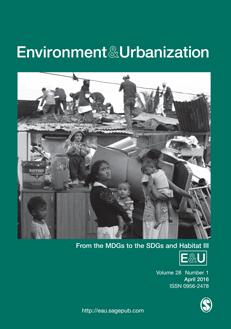
To coincide with an event at the IIED today focussing on the likely outcomes of the Habitat III process, and assessing the so-called ‘new urban agenda’, all of the papers in the April 2016 issue of Environment and Urbanization are freely available between the 5th and 12th May (including the previously advertised paper by myself and Sue Parnell on the place of urban theory in current global urban policy debates). The issue includes a series of papers on the theme From the MDGs to the SDGs and Habitat III. Further details and reflections on the event will be posted on the IIED website in due course. 

Urban Theory in the New Urban Agenda

eanduThe latest issue of Environment and Urbanization contains a collection of papers examining different aspects of the emergence of the so-called ‘new urban agenda’ in global development policy, titled From the MDGs to the SDGs and Habitat III. It includes the paper by myself and Sue Parnell, ‘Ideas, implementation and indicators: epistemologies of the post-2015 urban agenda‘ which tracks some of the intellectual influences circulating around these worlds of policy-making and agenda-setting (Sue also has another piece tracing the longer history of global urban development agendas in World Development).

To repeat a previous invitation, if you would like a copy of our paper, do let me know and I will forward it along. Once more, here is the abstract for the paper:

“The success of the campaign for a dedicated urban Sustainable Development Goal (SDG) reflected a consensus on the importance of “cities” in sustainable development. The relevance accorded to cities in the SDGs is twofold, reflected both in the specific place-based content of the Urban Goal and the more general concern with the multiple scales at which the SDGs will be monitored will be institutionalized. Divergent views of the city and urban processes, suppressed within the Urban Goal, are, however, likely to become more explicit as attention shifts to implementation. Acknowledging the different theoretical traditions used to legitimize the new urban agenda is an overdue task. As this agenda develops post-2015, the adequacy of these forms of urban theory will become more contested around, among other concerns, the possibilities and limits of place-based policy, advocacy and activism; and ways of monitoring and evaluating processes of urban transformation along multiple axes of development.”

Durban Nyts

acI find myself in Durban, where it’s hot and sticky in ways that I had forgotten. I am here to take part in the Southern African City Studies conference, which I am really looking forward to. I’m ere too to start (preliminary) work, in earnest, on the project that Sophie Oldfield and I are collaborating exploring the changing imperatives of South African urban thought.

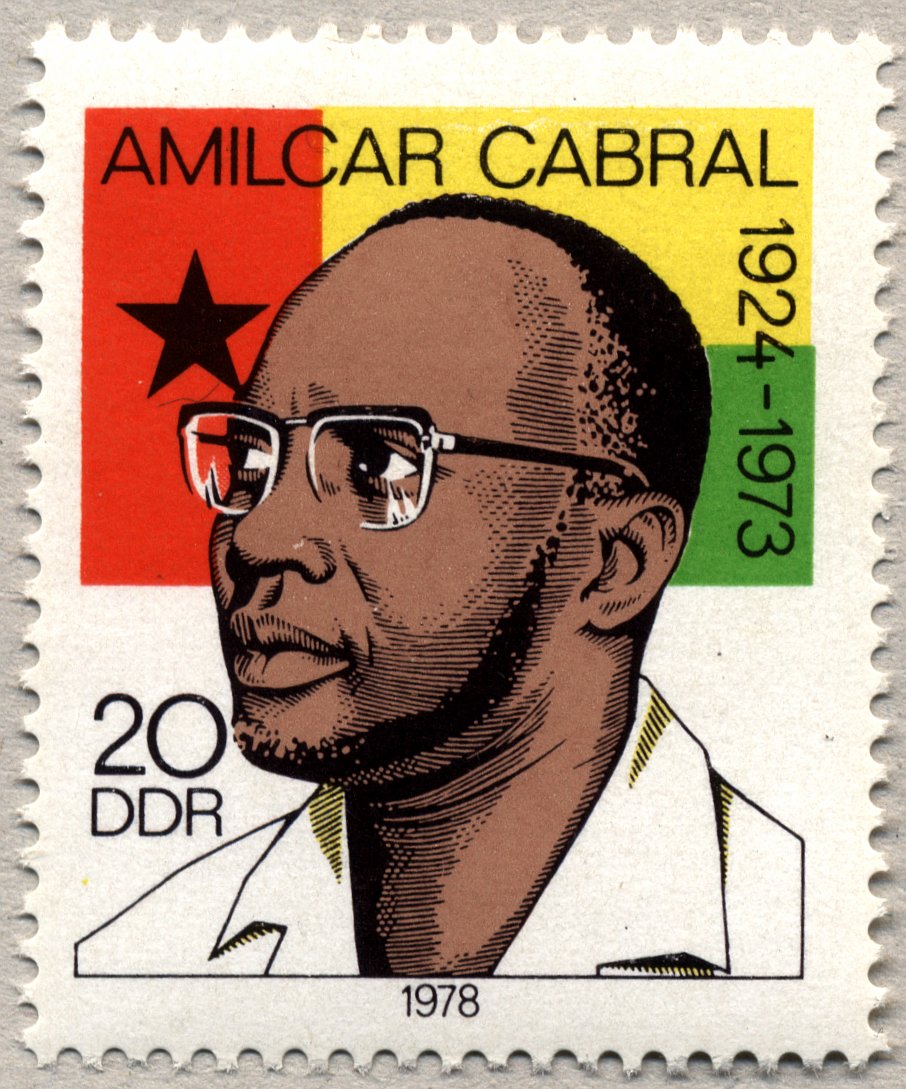
This is my first trip to Durban for 10 years, having spent quite a lot of time here in the early and mid-2000s. In the meantime, we’ve had babies, lost parents, got new jobs, moved house, moved town, and kept the cat alive. So far, after about 7 hours here, it seems very familiar and yet subtly different. Or, in some ways, not so subtly different. This is also the first time I have been to Durban, or eThekwini, it’s rather lovely Zulu name, since the controversial programme of renaming lots of the city’s roads, overseen by the former City Manager and geographer Mike Sutcliffe, in which (some) road-names with Anglo or colonial or apartheid associations were replaced with names honouring heroes and heroines of ‘the struggle’. And it’s not just South Africans who are so honoured – I am staying just around the corner from Amilcar Cabral Road. You turn a corner around here, and there is a reminder – no, literally, a sign – of an important anti-colonial thinker or Pan-African activist. It’s like browsing the spines of a vast bookshelf diffused across the street plan of the city: it could be the basis of a great field-world exercise.

Economies of attention

DSCF2834Back in December, I participated in a seminar on the theme of The Politics and Economics of Attention, organized by Jessia Pykett as part of an ESRC Seminar Series on the theme of Behaviour Change and Psychological Governance. Slides from some of the presentations (including mine, on ‘Economies of attention and the acknowledgment of partiality’), are available on the webpage for the event, where there is also a link to an incisive commentary on the whole set of presentations by Rupert Alcock.  

Urban Theory and the Urban SDG

IMG_3127Sue Parnell and I have a paper, “Ideas, implementation and indicators: epistemologies of the post-2015 urban agenda, forthcoming in Environment and Urbanization, in a special issue dedicated to exploring the significance of the so-called ‘urban SDG’ and the associated ‘new urban agenda’ associated with the Habitat III conference later this year. Our paper explores the intellectual background to the campaign that culminated in the inclusion of the ‘urban’ goal (Goal 11, which commits to making cities “inclusive, safe, resilient, and sustainable”).

If you’d like a journal-ready copy of the piece, let me know. Here is the abstract of our paper:

“The success of the campaign for a dedicated urban Sustainable Development Goal (SDG) reflected a consensus on the importance of “cities” in sustainable development. The relevance accorded to cities in the SDGs is twofold, reflected both in the specific place-based content of the Urban Goal and the more general concern with the multiple scales at which the SDGs will be monitored will be institutionalized. Divergent views of the city and urban processes, suppressed within the Urban Goal, are, however, likely to become more explicit as attention shifts to implementation. Acknowledging the different theoretical traditions used to legitimize the new urban agenda is an overdue task. As this agenda develops post-2015, the adequacy of these forms of urban theory will become more contested around, among other concerns, the possibilities and limits of place-based policy, advocacy and activism; and ways of monitoring and evaluating processes of urban transformation along multiple axes of development.”