
Via the Geography Matters facebook page, here is the link to the first of a series of discussions with Doreen Massey, one of a series of podcasts produced and hosted by the OpenSpace Research Centre at the OU.
Category Archives: Geography
Where can I find real democracy?
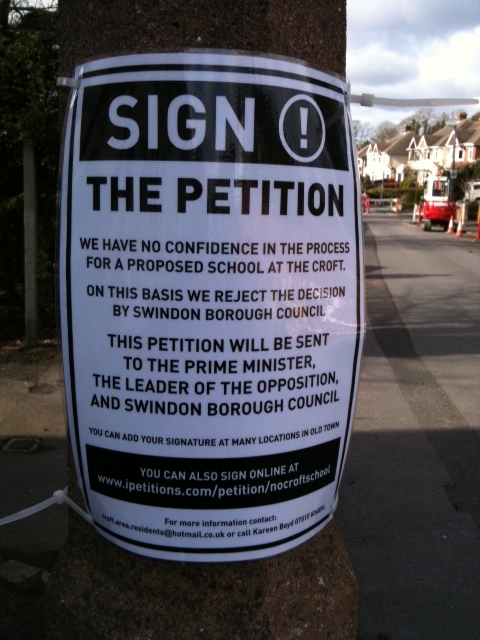 Simon Critchley has a short piece in The Guardian today, on the lessons and future of the Occupy movement and the Arab Spring. It argues that these events show us that ‘true politics’ involves two things – ‘a demand that flows from the perception of injustice’; and ‘a location where that demand is articulated’. There is, he concludes, therefore ‘no poitics without location’.
I’m interested in this sort of argument, and its appeal to these contemporary events, because they resonate with some of my own intellectual predispositions, yet I find something troubling about them (I’ve been trying to express some of the worries while e-chatting recently with Mark Purcell at Paths to the Possible about some of these things). I like the idea that politics, of the sort we like at least, democratic-y politics of a more or less radical sort, arises from a ‘felt sense of injustice’ as Honneth puts it somewhere, and have been trying to write about this idea and how it might be used to think about the relationships between democracy, place and space. So I keep writing papers which have titles like ‘locating democracy’, but the point of them is that actually (democractic) politics doesn’t have a location at all, it’s dispersed across different spaces; it might not even have a proper relation to any specific spatial figure of whatever sort.
Critchley’s piece is just one example of a range of academic commentaries which tend to repeat fairly uncritically the self-representation of activists about the political forms of Occupy, Indignados, and other movements – that these really are the emobodiment of a genuine re-birth of direct, consensual democracy stripped of the parasitical intrusions of representative politics. That’s what ‘real democracy’ turns out to mean.
I think it should be possible to affirm one’s solidarity with these movements without necessarily reiterating these claims without question. It should be possible to analyse the rhetoric and practice of anti-representation in these movements – ‘no parties, no banners’ – as a phenomenon worthy of investigation, not just present such claims as a matter of fact. Jodi Dean and Jason Jones have a really interesting piece on the question of how to think representation in relation to OWS, and it’s one of the few things of it’s sort that I can think of (it’s part of a special edition on the topic of ‘in defence of representation’). I’ve just started reading Pierre Rosanvallon’s Democratic Legitimacy, and it seems to me, for example, that these movements might fit quite well into his genealogy of the emergence of new modes of democratic legtimacy based on values of proximity and presence – my point being that what is required is an analytic imagination that can recognise the emergence of new forms without simply reproducing simplistic dualisms between direct and representative democracy which, while politically effective perhaps, don’t have much interpretative purchase if you think about it for a moment.
Back to Critchley; his piece starts out with a standard narrative device, we’ve all done it: power, as the ability to get things done, has become spatially divorced from politics, the means of getting things done (a globalization cliché he draws from Bauman). Well, maybe, maybe not, but even if this were the case, it would seem to require some thought about how poloitics can be re-spatialised to match the scaling up of power – an argument made by various traditions of thought, including plenty of geographers, and a staple of David Held-style cosmopolitanism. This is easier said than done in theory and practice no doubt, and the diagnosis might just be flawed anyway. But what I’m not sure about is whether Critchley’s conclusion from his starting point follows at all – that the divorce means we need to think about ‘true politics’ in terms of the figure of location. Something seems to get to go astray in the reasoning that starts by saying that power and politics have become too distant from one another and end up by saying that the most effective response is to take a stand in one place (after all, the most interesting aspect of these movements might well be not their ‘occupation’ strategies per se, but the movement of the strategies – that’s why they are called movements).
The attachment to location seems to have something to do with Critchley’s chosen view of contemporary protest movements as embodying values of directness, horizontality, assembly – it’s just one example I think of more general intellectual ‘moment’ in which the idea of true politics and real democracy has become associated with an image of the spaces of politics and democracy as real, physical places of co-presence and gathering together.
If one goes back to Critchley’s point about demands and injustice, then the figure of location seems, again, not to be quite adequate. If demands need to be articulated, then I’m not sure they need a location at all – a specific point, a localisation in space and time. They are, after all, articulated – a demand has a spatiality that is open to connection, combination, joining up. Not one of punctual presence or location. The space of demands generated by injustice is strung out, not gathered together.
Which doesn’t mean that ‘real spaces’ aren’t important. I just think it might be better to think of these spaces of demonstration as enacting a demonstrative force that is better thought of in terms, say, of the idea of spaces of address developed by Kurt Ivesen‘s work on public space. Or of locations as starting places, temporary stopping points. Which might well be move akin to the political geography of ‘occupying’. Even then, though, there might be pause for thought – Crtitchley ends with a call to move on and apply the force of this ‘true politics’ to the London Olympics, a recommendation which might well suggest a form of politics reduced to the purely tactical, tracking the eventalization of the world wrought by spectacular capital with events of its own. So much for getting things done.
And one final thought – Critchley is one of my favourite thinkers, his book on ethics and deconstruction was a fundamental influence on my thinking as a graduate student. It’s one place, though not the first (that was an essay by Nancy Fraser) where I remember learning about the importance of Claude Lefort to a whole strand of French thought that at that time was still being rudely called postmodern. I just wonder, remembering those things I learnt from reading Critchley back then, whether an analysis of true politics and real democracy that rests on the idea that power and politics have become divorced hasn’t lapsed into a certain sort of romantic amnesia about which it should really know better. Conceptually, normatively, the idea that power and politics should be married together, as it were, might be only rather ambivalently ‘democratic’, at best. Which isn’t to say that they should be separated, it’s just that what matters is the quality of the relationship. And conceptualising that relationship, its optimum shape, needs better analysis than can be provided by claims about the importance of location or the form of ‘true politics’.
Locating transnational advocacy networks: new paper on HIV and AIDS governance
 I have a new paper published, online at least, which is always nice –Locating the global governance of HIV and AIDS: exploring the geographies of transnational advocacy networks. It’s in Health and Place, as part of a forthcoming set of papers on global-local relationships in responses to HIV and AIDS. The paper is co-authored with Colin Marx and Abbey Halcli, and is the result of a long process of research (a bit of qualitative, and some numbers), grant writing (shortlisted once, unfunded alpha second-time round), paper drafting, chatting, re-writing, and so on. So, as well as being fun and challenging to work with Abbey and Colin, it also feels like we’ve now got some reward for our efforts.
When we started on this project, I didn’t have children.
The argument of the paper is that cities are important locations for types of politics that aren’t necessarily best thought of as ‘urban politics’, which may or may not be an interesting thing to say. That might depend on who you are saying it to. Here is the abstract:
Over the last two decades, HIV and AIDS have been framed as a “global problem”. In the process, transnational advocacy networks have emerged as important actors, and particular places are recognised as key nodes in global HIV and AIDS governance. Using the example of London, UK, this paper examines how these networks are involved in local articulations of global governance and reveals that ‘global’ processes are inflected by the locations through which networks are routed. The example suggests the need for further analysis of the geographies through which HIV and AIDS is reconfiguring power relations at a variety of spatial scales.
New Book: ATLAS: Geography, Architecture and Change in an Interdependent World
 A new book, an edited collected, has just been published by Black Dog Publishing – ATLAS: Geography, Architecture and Change in an Interdependent World. It’s edited by Renata Tyszczuk at Sheffield and three of my OU colleagues, Melissa Butcher, Nigel Clark and Joe Smith. This is part of a long-standing and on-going set of collaborations between OU Geography, Architecture at Sheffield, and the New Economics Foundation, as well as others. There is an associated web-site which archives further materials from these projects, and there is a launch event in London on March 13th, New Maps for an Island Planet.
The book is, apart from anything else, very lovely to look at (I have the least visually imaginative essay, all text, no pictures). Here’s the blurb:
Atlas: Geography, Architecture and Change in an Interdependent World helps readers find their way through the practical and ethical challenges presented by globalisation and global environmental change. Atlas: Geography, Architecture and Change in an Interdependent World combines recent thinking on human geography and architecture on global environmental change issues, setting out to develop a reinterpretation of cartography and a reframing of sustainability. The aim is to find a “re-drawing of the earth” and the “making of new maps”. With a focus on the growth and remaking of cities it offers an innovative mix of essays and shorter texts, original artworks and distinctive re-mappings. The Atlas arises out of a unique collaboration between scholars and practitioners from architecture and human geography.
Who needs a nanny?
 Here is a podcast presentation by Jessica Pykett, discussing the gendered politics of behaviour change initiatives – the subject of a paper by her in the latest issue of Antipode.
Neoliberalism after governmentality
 A good crisis is usually bad news for rigorous thinking, and so it seems as the term ‘neoliberalism’ ossifies into a catch-all popular phrase to describe all the things that right-minded lefties don’t like and blame for current troubles. Oh well. I suspect the systematic mis-representation of the past 40 years or so of politics, policy and economics which the ‘critical conventional wisdom’ on neoliberalism sustains (in both Marxoid and Foucault-inflected variants) is a hindrance to the development of creative alternative visions of democracy and economic life. The ‘critical conventional wisdom’ line is from a new book by Stephen Collier, Post-Soviet Social: Neoliberalism, Social Modernity, Biopolitics. Collier is an anthropologist, and has developed a similar line of critical thinking about ‘neoliberalism’ and the use of Foucault to that of James Ferguson – Collier has an excellent 2009 paper in Theory, Culture and Society on the need to move beyond analyses of governmentality that just extend old-style models of ‘power’ (on a related note, Michael Warner’s recent piece on the past and future of queer theory is another reminder of the degree to which political readings of Foucault tend to rush over the problems of thinking about normativity, towards simpler ideas of the power of ‘norms’; or, to put it another way, conventional accounts of governmenality and neoliberalism are remarkably ‘straight’ in the ways in which they think about subjectivity, power, and the like).
The book is a detailed empirical analysis of the restructuring of ordinary spatial infrastructures in Russia over the last two decades, but one which seeks to challenge a series of settled understandings about The Washington Consensus, neoliberalization, and the like. It’s very ‘geographical’, partly in its focus on urban and regional scale issues, but it also has a much more interesting line on how to think about the geographies of ‘neoliberal technologies’ than the standard diffusionist line peddled by many geographers. There are various notable features of Collier’s analysis:
– it looks at ordinary practices of governance, how they arise as problems in specific situations, rather than tracking circulations of policy discourse;
– related to this, he focuses (at last, someone has, one might think), on a set of ‘neoliberal’ thinkers beyond Hayek, Friedman, etc – in this case, James Buchanan and George Stigler; theorists of government, law, regulation, the state, institutions, not ‘markets’; as I have suggested here before, the insistence on thinking of ‘neoliberalism’ as a theory of markets-against-the-state is factually wrong and analytically short-sighted;
– he insists on thinking of neoliberalism as a precise range of ideas and practices, in line with the quite restrictive sense that Foucault deployed in his 1978-79 lectures on biopolitics, and resists the ‘hegemonic’ interpretation which insists that everywhere neoliberalism turns up it must and does become the dominant dynamic (i.e. neoliberalism might not be the most important thing that has been going on, always, and everywhere, once one stops calling all sorts of things ‘neoliberal’);
– and he develops the intriguing thoughts of Foucault on socialist governmentality, focussing ‘methodologically’ on thinking about socialist biopolitics from back in the 1920s, and in terms of the analysis of ‘problematizations’ rather than coherent systems of ‘governmentality’.
The thinking that Collier, Ferguson and others are doing about these issues strikes me as really important – it’s not just ’empirical’, but cuts to the heart of some prevalent ways of doing theory which have arisen around topics such as neoliberalism, concepts such as governmentality and biopolitics, and imperatives for academics to be ‘critical’.
Visual Methodologies
The third and revised edition of Visual Methodologies, by my OU colleague Gillian Rose, has been published, along with a supporting web resource. Essential for a properly reflexive season’s viewing, I would have thought.
Geography Matters!
 A shout-out for Geography Matters, the Facebook page looked after by my colleague Melissa Butcher, designed as “a site for promoting geography research and teaching”, not only, it should be said, the research and teaching of geography at the OU. It’s more like a ‘hub’ for things of interest, geography-wise. The place to go if you’re looking for geography-friends.
Amongst other things, you will find a link there to the website of another of my colleagues, Joe Smith, introducing 10 short films on climate change.
Demonstrative Theory
 Current events ‘out there’, in the streets no less, have been an occasion for the rehearsal of various theoretical standpoints on the meaning of democracy and the status of politics. Some writers have presented recent politicizations of public space as models of a purity of political action consisting of the expressive presence of bodies in space, as confirming both that this is all that is left politically and that this is what is most proper to left politics (a shout-out here for my old friend Andrew Merrifield, who provides a most eloquent variant on this theme in the latest New Left Review). I’m in no position to evaluate or assess the contours of these movements (there is no Occupy Swindon movement, nor do I expect there one to be anytime soon), but there is something about this sort of interpretation that doesn’t quite ring true for me.
There are some interesting blog discussions sparked by a piece at Critical Inquiry’s new blog site on Occupy Theory. What this piece raised for me was the question of how far one thinks of theory as essentially an interpretative device, used to give meaning to an event or events; or how far one thinks of theory as a hypothesis generating machine, something that raises questions about an event. There is a new site at Possible Futures that does some of this latter sort of theory work, including essays by Saskia Sassen and Craig Calhoun (newly announced as the next Director of the LSE – what a great appointment). Calhoun’s piece, for example, raises some interesting questions about how policing of protest has changed time. At TomDispatch, Rebecca Solnit has a piece about the Occupy movement in the US connects with longer traditions of civil society and non-violence movements, and this reminded me of arguments about the idea of the US in particular as a ‘movement society’ – there are interesting generational effects at work behind these protest movements which deserve more attention.
The fascination with the occupation of real space also surely needs to be put in the context of how this form of ‘presencing’ reverberates through other spaces, including mediated ones (it was all kicked-off by Adbusters, remember), but also through time, and above, there is the vexed question of how this moment of protest (not just the Occupy example, but also the return of street protest in Egypt) interacts with the sequencing of electoral cycles. Given the likely geographical dynamics of the 2012 US Presidential election, for example, it is interesting to speculate on how far the populist sentiments expressed by the Occupy movement will be articulated in the coming year, and by which side. Sidney Tarrow had an interesting little piece in Foreign Policy a month or so ago, on OWS as a ‘we are here’ movement akin to the women’s movement, the point being about the long-term effects of this ‘event’. Tarrow and Doug McAdam also have an interesting piece on the relationship between social movement scholarship and electoral studies, from 2010, but which is rather prescient in light of recent events in the USA – one of their points is that analysis of movements tends to be overly movement-centric, and underplays the role of electoral politics in generating and orienting non-electoral, non-party mobilisations, campaigns and protests: this point appears to be well supported by the resurgence of protest in Egypt these last few days, as Mariz Tadros argues at the IDS blog, in which the relationship between street mobilizations and elections is central.
New Book by Melissa Butcher: Managing Cultural Change
My colleague Melissa Butcher has a new book out in time for Christmas, Managing Cultural Change: Reclaiming Synchronicity in a Mobile World. You can find more details, and download the first chapter for free, at the Ashgate page for the book.

