
Details here about a temporary research fellowship post, 3 months long, in Geography at the University of Exeter, to work with me on a project ambitiously called ‘Mapping Contention’.
Category Archives: Geography
Geography and ethics: the last word
 Better late than never, the third and final of my ‘progress reports’ on the theme of Geography and Ethics is now available on the Online First page of Progress in Human Geography. This one is sub-titled ‘From moral geographies to geographies of worth‘ (and was actually completed almost two years ago). It discusses various streams of contemporary social theory in which ‘normative’ questions are approached in more or less ordinary, non-moralistic ways. As I have said previously, I have a sense of these three reviews adding up to a single narrative of sorts, though I’m not quite sure I can now remember what it was exactly, without going back and reading them all in succession. I understand that the next set of reviews on this theme are going to be written by Betsy Olsen, who I’m sure will bring a fresh perspective.
Here is the abstract for my final piece:
“Geographers’ discussions of normative issues oscillate between two poles: the exhortation of ‘moral geography’ and the descriptive detail of ‘moral geographies’. Neither approach gives enough room for ordinarily normative dimensions of action. Recent philosophical discussions of the implicit normativity of practices, and ethnographic discussions of the ordinary, provide resources for developing more modest accounts of normativity and practical reasoning. The relevance to geography of recent re-evaluations of the place of reflection and thought in habitual action is illustrated with reference to the antinomies which shape debates about the ethics and efficacy of behaviour change initiatives. The potential for further developing these insights is explored with reference to the normative turn in contemporary social theory, which includes discussions of conventions, practices of justification, lay normativity, phronesis, recognition and orders of worth. The potential contribution of philosophies of action and intentionality and social theories of the normative for moving geography beyond the impasses of moral geography versus moral geographies depends on suspending an inherited wariness about the normative, which might be helped by thinking of this topic in more ordinary ways. The outlines of a programme for geographies of worth are considered.”
Visualizing urbanization
 Came across this, from the McKinsey Global Institute – ‘a new app for exploring an unprecedented wave of urbanization’. Good to see that it includes data for Swindon, and Milton Keynes. But not Exeter.
Changing Cities: how to think about urban politics
 Freely available online at OpenLearn, a new open access teaching resource called Changing Cities, which provides a framework for thinking about the contemporary ‘urbanization of responsibility’:
“Urban processes are increasingly held to be responsible for causing a variety of problems – environmental destruction, social injustice, global financial instability. They are also identified as harbouring the potential to meet these challenges – through urban experiments in sustainably living, creative culture and alternative economies. This unit explores how contemporary processes of urbanisation challenge how we think about political agency, providing a framework for the analysis of the causes, implications and responses to issues of common concern.”
 The Changing Cities unit is a taster of sorts from the Masters level course (D837 in OU-speak) of the same name – Changing Cities: urban transitions and decision-making. It was written by myself and Nigel Clark, and draws on material in the larger module authored also with Parvati Raghuram; the unit includes an audio discussion with Margo Huxley. The aim of the whole project was to find a way of making various traditions of ‘critical’ urban and spatial theory do more than provide easy ‘critical’ reflexes to contemporary issues – to make these ideas useable by turning them into machines for generating questions which can be investigated in different contexts:
“This unit explores the ways in which urbanisation processes help to generate issues of public concern. It elaborates a theoretical framework of critical spatial thinking that can be used to analyse the complex ‘agency’ of urban processes in generating, identifying and resolving the myriad issues associated with contemporary urbanisation. This framework draws on traditions of urban thought and spatial theory in disciplines such as geography and anthropology, development studies, planning, political science and sociology.”
The module also sought to make a virtue out of what is often thought of as a problem, namely the chronic problem of conceptualising the ‘object’ of urban analysis. Taking some inspiration from our former colleague Allan Cochrane, as well perhaps as from a stray thought or two in one of Foucault’s lectures on the theme of ‘the town’, it seeks to develop the idea of thinking of ‘the urban’ as the name given to various sorts of problems:
“The framework is intended to serve as an analytical device for investigating the key questions raised when presented with a pressing urban issue or a spatial problem. It is based on a threefold understanding of the problematisations to which definitions of the urban are a response:
- The urban represents a complex of issues, problems and objects which generate contention, gathering together myriad indirect consequences that are generated both locally and from afar.
- The urban is a field where the diversity and interconnectedness of effects operate as a seedbed for issue recognition. The recursiveness of urban life is also important in the formation of signs and symbols that can represent purposes and help anticipate consequences. These objects of recognition and intervention are also the medium out of which political subjectivities can be enhanced and people can learn to be affected.
- The urban remains the site of institutional architectures that might be useful in the development of further democratising impulses, either through challenge and alternative institutions or through further democratisation of institutions that already exist.”
So, if you have a spare 15 hours, take a look, and enjoy!
Against the Smart City
Here is an extract from Adam Greenfield’s pamphlet Against the Smart City.
The New Urban Question: forthcoming book by Andy Merrifield
Hot off the presses – not the book, but the flyer – news of Andy Merrifield’s next book, The New Urban Question:

New book by Gill Hart on South African politics
 Only just noticed this, news of a new book by Gill Hart on contemporary South African politics, Rethinking the South African Crisis: nationalism, populism, hegemony. Here is the blurb:
“Since the end of apartheid, South Africa has become an extreme but not exceptional embodiment of forces at play in many other regions of the world: intensifying inequality alongside “wageless life”; proliferating forms of protest and populist politics that move in different directions; and official efforts at containment ranging from liberal interventions targeting specific populations to increasingly common police brutality.
Rethinking the South African Crisis revisits longstanding debates to shed new light on the transition from apartheid. Drawing on nearly twenty years of ethnographic research, Hart argues that local government has become the key site of contradictions. Local practices, conflicts and struggles in the arenas of everyday life feed into and are shaped by simultaneous processes of de-nationalisation and re-nationalisation. Together they are key to understanding the erosion of ANC hegemony, and the proliferation of populist politics.
This book provides an innovative dialectical analysis of the ongoing, unstable and unresolved crisis in South Africa today. It also suggests how Gramsci’s concept of passive revolution, adapted and translated for present circumstances with the help of Fanon, can do useful analytical and political work in South Africa and beyond.”
Andy Merrifield on the urban question, old and new
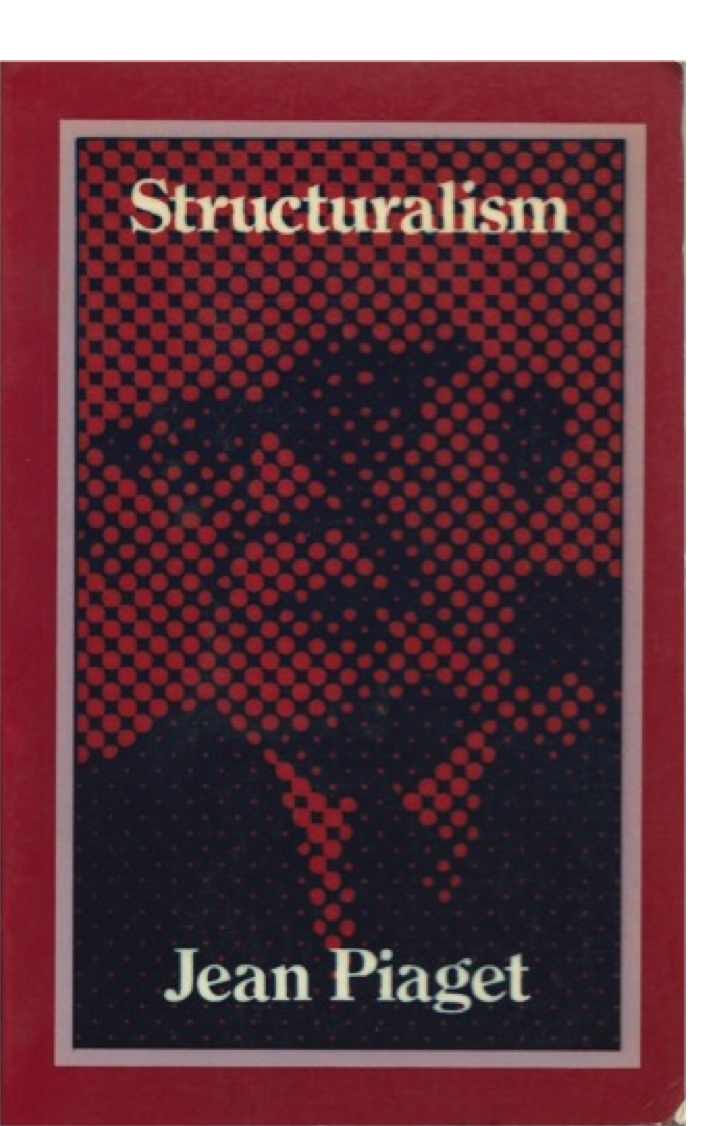 Just bumped into this at the IJURR site – the transcript of an author-meets-critics session with Andy Merrifield, from earlier this year, discussing The Urban Question under Planetary Urbanization and ‘the politics of encounter’.
Commodity Histories website
Via Geography Matters, a link to an online resource related to the Commodity Histories project led by Sandip Hazareesingh at the OU.
Let’s have a party…
 Last week, I presented a paper at the annual conference of the Royal Geographical Society-Institute of British Geographers (‘the IBG’, if you’re old and slow enough). This was my last formal act as an OUer. The paper was in one of two sessions on Geographies of the Political Party, organised by James Scott and Jane Wills. The two sessions were full of entertaining stuff, about patronage and corruption in New South Wales, Communist Party reinvention in the Czech Republic, versions of Max Weber, and much else besides.
Anyway, my paper was an attempt to think about some of the reasons why political parties don’t show up in ‘critical’ research on politics in geography, beyond a handful of stereotypes. In part, it was based on some reflections on how and why they have and haven’t shown up in some research projects I have been involved in, although that part is not very explicit. In the same spirit as my posting of my AAG paper earlier this year, I have added this paper to the Things to Read section, if anyone is interested to know what I spent at least some of the summer thinking about.
 Pop Theory