Bite Size Methods

“I’ve avoided judgments about the adequacy of any mode of representation, not taking any of them as the yardstick against which all other methods should be judged. Nor have I adopted the slightly more relativistic position that, while the jobs to be done may differ, there is a best way of doing each kind of job. That isn’t relativistic asceticism on my part either. It seems more useful, more likely to lead to new understanding of representations, to think of every way of representing social reality as perfect – for something. The question is, what something is it good for?”

Howard Becker, 2007, Telling About Society.

Bite Size Theory

“The presence/absence of mobile phones in one’s fictional worlds is going to be, I suspect, no trivial matter. Because so much of the mechanics of novel writing, past and present, is taken up with making information available to characters or keeping it from them, with getting people together in the same room or holding them apart. If, all of a sudden, everyone has access to more or less everyone else – electronic access, that is – what becomes of all that plotting?”

John Coetzee, in Paul Auster and J.M. Coetzee, 2013, Here and Now: Letters 2008-2011.

Bite Size Theory

“One of the founding insights of feminist criticism has been to point out that the idealized, beloved woman is often described as an object, a thing, rather than a subject. But perhaps the problem with being used arises from an inequality of power rather than from something inherently unhealthy about willingly playing the role of thing. Indeed, what if the capacity to become a subject were something that could best be learned from an object?”

Barbara Johnson, 2008, Persons and Things.

Bite Size LBJ

“Strong as was Lyndon Johnson’s compassion for the poor, particularly poor people of color, his deep, genuine desire to help them had always been subordinate to his ambition; whenever they had been in conflict, it had been compassion that went to the wall. When they had both been pointing in the same direction, however – when the compassion had been unleashed from ambition’s checkrein – then not only Lyndon Johnson but the cause of social justice in America had moved forward under the direction of this master of transmuting sympathy into governmental action.”

Robert Caro, 2012, The Years of London Johnson, Volume 4: The Passage of Power.

Bite Size LBJ

“Throughout LBJ’s life, in every institution of which he had been a part, a similar pattern had emerged: as he rose to power within the institution, and then, as he consolidated that power, he was humble – deferential, obsequious, in fact. And then, as the power was consolidated, solid, when he was in power and confident of staying there, he became, with dramatic speed and contrast, overbearing, domineering.”

Robert Caro, 2002, The Years of London Johnson, Volume 3: Master of the Senate.

Bite Size LBJ

“Understanding political power in a democracy requires understanding elections.’

Robert Caro, 1990, The Years of London Johnson, Volume 2: Means of Ascent.

Bite Size LBJ

“The grass had grown not over a season but over centuries. It wouldn’t have grown at all had it not been for fire – prairie fires set by lightning and driven by wind across tens of thousands of acres, and fires set by Indians to stampede game into their ambushes or over cliffs – for fire clears the land of underbrush, relentless enemy of grass. […] Even with the aid of fire, the grass had grown slowly – agonizingly slowly. […] It had grown slowly because the soil beneath it was so thin.”

Robert Caro, 1982, The Years of London Johnson, Volume 1: The Path to Power.


Urban Theory in the New Urban Agenda

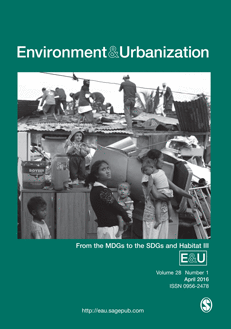
eanduThe latest issue of Environment and Urbanization contains a collection of papers examining different aspects of the emergence of the so-called ‘new urban agenda’ in global development policy, titled From the MDGs to the SDGs and Habitat III. It includes the paper by myself and Sue Parnell, ‘Ideas, implementation and indicators: epistemologies of the post-2015 urban agenda‘ which tracks some of the intellectual influences circulating around these worlds of policy-making and agenda-setting (Sue also has another piece tracing the longer history of global urban development agendas in World Development).

To repeat a previous invitation, if you would like a copy of our paper, do let me know and I will forward it along. Once more, here is the abstract for the paper:

“The success of the campaign for a dedicated urban Sustainable Development Goal (SDG) reflected a consensus on the importance of “cities” in sustainable development. The relevance accorded to cities in the SDGs is twofold, reflected both in the specific place-based content of the Urban Goal and the more general concern with the multiple scales at which the SDGs will be monitored will be institutionalized. Divergent views of the city and urban processes, suppressed within the Urban Goal, are, however, likely to become more explicit as attention shifts to implementation. Acknowledging the different theoretical traditions used to legitimize the new urban agenda is an overdue task. As this agenda develops post-2015, the adequacy of these forms of urban theory will become more contested around, among other concerns, the possibilities and limits of place-based policy, advocacy and activism; and ways of monitoring and evaluating processes of urban transformation along multiple axes of development.”

Durban Nyts

acI find myself in Durban, where it’s hot and sticky in ways that I had forgotten. I am here to take part in the Southern African City Studies conference, which I am really looking forward to. I’m ere too to start (preliminary) work, in earnest, on the project that Sophie Oldfield and I are collaborating exploring the changing imperatives of South African urban thought.

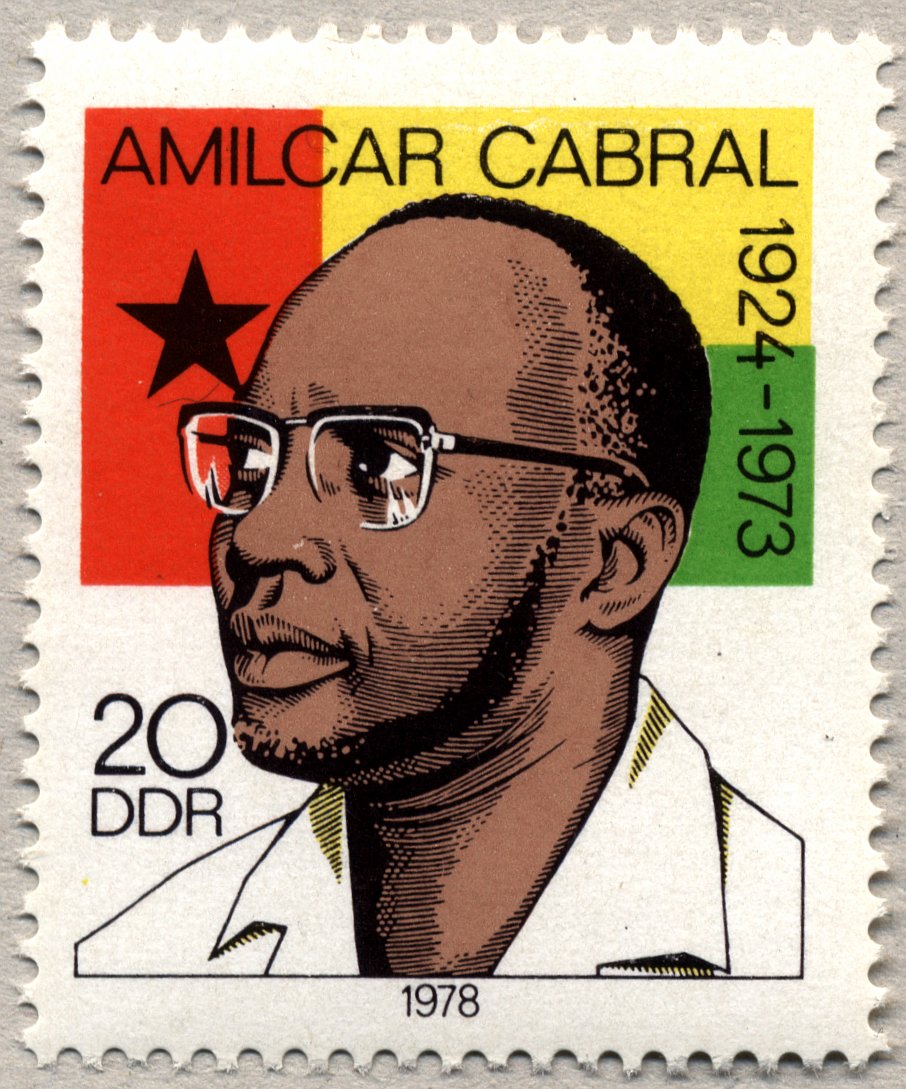
This is my first trip to Durban for 10 years, having spent quite a lot of time here in the early and mid-2000s. In the meantime, we’ve had babies, lost parents, got new jobs, moved house, moved town, and kept the cat alive. So far, after about 7 hours here, it seems very familiar and yet subtly different. Or, in some ways, not so subtly different. This is also the first time I have been to Durban, or eThekwini, it’s rather lovely Zulu name, since the controversial programme of renaming lots of the city’s roads, overseen by the former City Manager and geographer Mike Sutcliffe, in which (some) road-names with Anglo or colonial or apartheid associations were replaced with names honouring heroes and heroines of ‘the struggle’. And it’s not just South Africans who are so honoured – I am staying just around the corner from Amilcar Cabral Road. You turn a corner around here, and there is a reminder – no, literally, a sign – of an important anti-colonial thinker or Pan-African activist. It’s like browsing the spines of a vast bookshelf diffused across the street plan of the city: it could be the basis of a great field-world exercise.

Bite Size Methodology: Methods of Discovery

“Most teaching on methods assumes that the student will start a research project with a general question, then narrow that to a focussed question, which will dictate the kind of data needed, which will in turn support an analysis designed to answer the focussed question. Nothing could be further from reality. Most research projects – from first-year undergraduate papers to midcareer multiyear, multi-investigator projects – start out as general interests in an area tied up with hazy notions about some possible data, a preference for this or that kind of method, and as often as not a preference for certain kinds of results. Most research projects advance on all of these fronts at once, the data getting better as the question gets more focused, the methods more firmly decided, and the results more precise. At some point – the dissertation-proposal hearing for graduate students, the grant-proposal stage for faculty, the office hour with the supervising faculty member for any serious undergraduate paper – an attempt is made to develop a soup-to-nuts account of the research in the traditional order. Now emerges the familiar format of puzzle leading to literature review leading to formal question, data, and methods. Even then, the soup-to-nuts menu is likely to be for a different meal than the one that ends up in the final paper.”

Andrew Abbott, 2004, Methods of Discovery: Heuristics for the Social Sciences. W.W.Norton.