
 Maybe it’s just me, but the excitement of going on holiday in part involves the decision about what books to take with you [always more than you will have time to actually read, because you have to anticipate the different moods you might be in, book-wise]. The challenge, in particular, is to not take academic books – holidays should generally not be thought of as opportunities to catch up with overdue work commitments. But holidays are certainly occasions for reading, amongst others – being on trains (good for theory papers), planes (whole academic books), in the bath (novels).
After much thought, and a little fruitless book browsing, I have sort of decided on the following (there is no reason to suppose I will read any of these, we are after all going on holiday with a four year old and five-month old teething baby, rather than leaving them behind with the cat). Stanley Cavell’s autobiographical Little Did I Know – which fails the test immediately, since he’s a philosopher and this is a book about being a professional philosopher, which I have been trying to read for a few months now. So, the first rule of holiday books has already been broken. On the other hand, it is fairly readable, and it’s not as difficult as The Claim of Reason, and it was this or a biography of Levi-Strauss. Next, Stephen L. Carter’s Palace Council – crime-fiction, although, oops, Carter is of course an academic too, a constitutional expert at Yale Law School. But his novels – stories about the politics of race in the US – are shorter than the average law review paper, so that’s OK. Er, next, just because I found it cheap and it looks short, a Penguin Classics collection of Robert Musil stories – pretentious choice, not a lot of fun I expect, if I read this it will be indicative of how the holiday is going.
The fall back position is David Nicholls’ One Day, the only book I could find in the Asda in Huyton a couple of weeks ago that I could imagine wanting to read (I find myself compelled to try to buy a book whenever I get the chance these days, I have a sense that these are increasingly rare opportunities – and it’s not just living in Swindon that makes me think so). This one probably passes the holiday-book test perfectly.
 Highlights of the cricket World Cup make pretty good late night TV if you are sitting up late tending a new born. It’s about as much of this tournament that one really needs. I’ve come to the conclusion that the only reason that cricket is worth taking notice of anymore is because it provides the background for reading Mike Selvey in The Guardian, and especially for reading Gideon Haigh. Haigh’s Ashes 2011 is just published, barely a month after the end of the series – since he wasn’t writing for The Guardian, this is doubly worth it. It even contains the phrase ‘epistemological case study’ with reference to Ricky Ponting. I’ve also been reading Haigh’s latest collection of essays, Spheres of Influence, actually published by Melbourne University Press. It is mainly concerned with the institutional context of contemporary international cricket, and starts with a wonderful 60 page analysis of how India has come to dominate world cricket economically, written in a whirlwind style. Haigh is great at skewering the self-importance of cricket’s personality led culture; but he is really excellent at exposing the political economy of the game – that’s what this book does, reminding you that he was/is a business journalist, a vocation evident in his analyses of the Packer revolution or of the economics of early international cricket tours through the figure of Warwick Armstrong. The silliness that cricket has become is redeemed by this sort of writing and analysis.


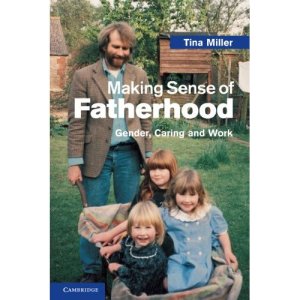 Just in time for Christmas, a new book out on becoming a father,
  Pop Theory