
Towns on TV
 For those of us who live in towns, not cities, news of a forthcoming BBC/Open University TV series on Towns, presented by Nicholas Crane – the first of four programmes will be broadcast on Thursday 28th July at 9.00pm on BBC2. Colleagues from the Faculty of Social Sciences Gerry Mooney, Matt Staples, and Geoff Andrews have helped with the academic input to the series, which includes such places, towns, as Perth, Totnes and Ludlow (but not Swindon). There is an associated booklet with the series, and other online resources, which can be accessed via the OU’s OpenLearn site – the series will have its own site which goes live the day before the first showing on July 27th. The series and these associated materials explore the “many of the ways in which towns have come to be the places they are today; places that, while shaped by often very different histories, are also looking towards futures that might be very different but which are all characterised by uncertainty.”
Michael Watts on The Oil Complex
Only just noticed this – from Africa is a Country, a lecture my Michael Watts on The Oil Complex.
Young Hearts Run Free
 I have been reading Simon Reynolds’ Rip it up and start again, his history of post-punk and new wave from 1978 through to the mid 1980s. One of his recurring themes in the book is about not falling for the Punk-derived idea that pre-Punk pop of the early and mid 1970s was a cultural wasteland. A theme which works well enough when one can track relations between Bowie and Roxy Music (and 1970s French theory too), and Scritti Politti or the Gang of Four. On the other hand… the ‘wasteland’ hypothesis is given some credence by the current run on BBC4 of weekly episodes of Top of the Pops from 1976. I have found this utterly captivating, because it brings back memories of a sort (those of an eight year old watching older sisters cavort in front of the telly in high-wasted denim trouser suits), but also because it is so utterly banal for the most part (with the exception of the weekly helping of Disco). There are a couple of blogs commenting on each show – Yes It’s Number One includes links to video of various songs beyond this 76 ‘canon’; and trip-tv reviews each song, each week. The last episode I saw still had the Wurzels at Number One, having finally displaced The Brotherhood of Man, bringing back further memories, of Country Dancing for school (a competitive sport in Gloucestershire), and of being pilloried as a ten year old when we moved to Sussex for speaking like a Wurzel; but also bringing things bang up to date – they are still playing live ’round theze partz, it turns out, as far afield as Brean and as close as The Bell round the corner from us here in Swindon.
Tributes to Ray Pahl
Thanks to Kris Olds at GlobalHigherEd for the link, here are various tributes to Ray Pahl, including comments by Chris Pickvance, Manuel Castells, and Edmond Preteceille.
Holiday books
 Maybe it’s just me, but the excitement of going on holiday in part involves the decision about what books to take with you [always more than you will have time to actually read, because you have to anticipate the different moods you might be in, book-wise]. The challenge, in particular, is to not take academic books – holidays should generally not be thought of as opportunities to catch up with overdue work commitments. But holidays are certainly occasions for reading, amongst others – being on trains (good for theory papers), planes (whole academic books), in the bath (novels).
After much thought, and a little fruitless book browsing, I have sort of decided on the following (there is no reason to suppose I will read any of these, we are after all going on holiday with a four year old and five-month old teething baby, rather than leaving them behind with the cat). Stanley Cavell’s autobiographical Little Did I Know – which fails the test immediately, since he’s a philosopher and this is a book about being a professional philosopher, which I have been trying to read for a few months now. So, the first rule of holiday books has already been broken. On the other hand, it is fairly readable, and it’s not as difficult as The Claim of Reason, and it was this or a biography of Levi-Strauss. Next, Stephen L. Carter’s Palace Council – crime-fiction, although, oops, Carter is of course an academic too, a constitutional expert at Yale Law School. But his novels – stories about the politics of race in the US – are shorter than the average law review paper, so that’s OK. Er, next, just because I found it cheap and it looks short, a Penguin Classics collection of Robert Musil stories – pretentious choice, not a lot of fun I expect, if I read this it will be indicative of how the holiday is going.
The fall back position is David Nicholls’ One Day, the only book I could find in the Asda in Huyton a couple of weeks ago that I could imagine wanting to read (I find myself compelled to try to buy a book whenever I get the chance these days, I have a sense that these are increasingly rare opportunities – and it’s not just living in Swindon that makes me think so). This one probably passes the holiday-book test perfectly.
Signs of the times
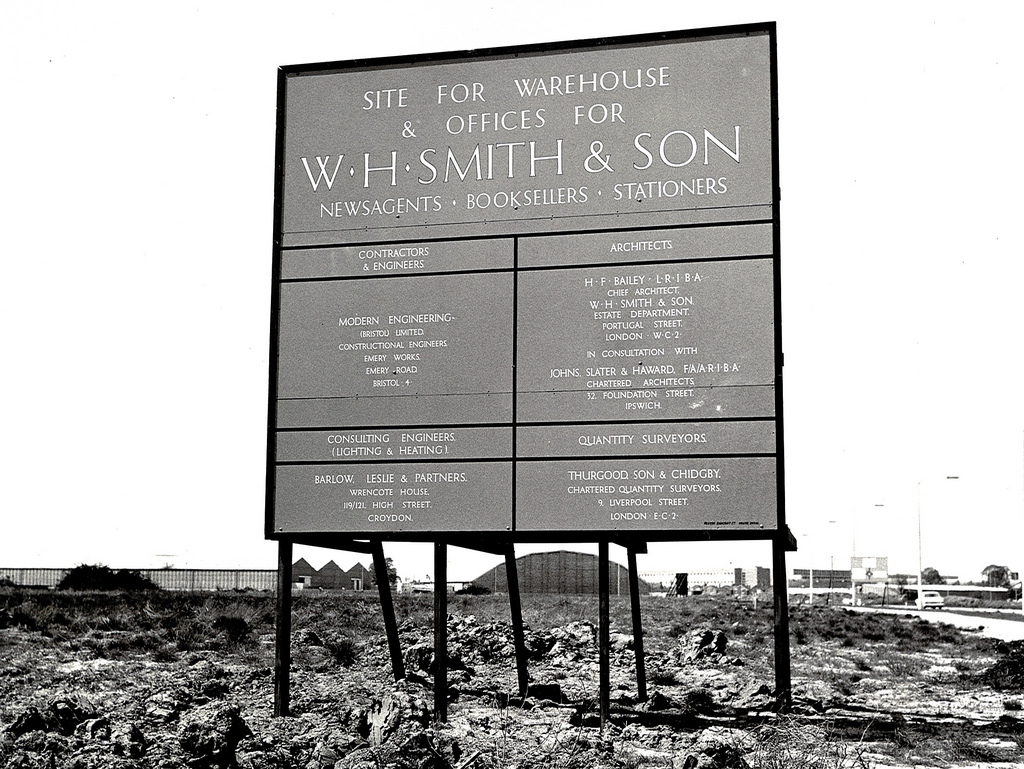 I was in Bristol yesterday for a meeting, and had a couple of hours in which to browse for books – except the bookshops all seemed to have disappeared. The Borders store, closed now for almost a couple of years, is about to re-open as a Wilkinsons, which is a little surprising; the University Waterstones looked like it was being refurbished, hopefully to re-open though (?), and best of all, the Blackwell’s, long showing the signs of a chain in trouble and struggling to survive, is now a Jamie’s Italian.
In Swindon, meanwhile, there is actually a new stationery shop, Pen and Paper, which is also selling a few remaindered books. Which counts as a 50% increase in the number of book-selling outlets in town, as far as I can work out .
William Connolly on US politics
At The Contemporary Condition, a piece by William Connolly on contemporary US politics, where everyone seems to have been primed and nudged to believe and feel the wrong sorts of things by crafty Republican strategists.
New book by Amartya Sen
Via The Enlightened Economist, a new book by Amartya Sen titled Peace and Democratic Society, accessible free online from Open Book Publishers.
Oecumene Symposium: Citizenship after Orientalism
Am announcement about the first symposium of the Oecumene research programme, based in the Faculty of Social Sciences at the OU and headed-up by Engin Isin, is pasted below, and here are further details of the programme, a call for papers, and details of the associated PhD School:
The Oecumene project is pleased to announce its first Symposium
Citizenship after Orientalism
6-11 February 2012, The Open University, Milton Keynes
The Symposium will include:
A Conference ‘Opening the Boundaries of Citizenship’ [6-7 February],
An International PhD School ‘Tracing Colonialism and Orientalism in Social and Political Thought’ [8 February],
A series of workshops addressing specific topics on critical new ways of conceptualising citizenship [9-11 February].
Keynote speakers: Judith Butler (University of California, Berkeley), Paul Gilroy (LSE), Bryan Turner (CUNY), Engin Isin (The Open University).
PhD School Conveners: Ian Almond (Georgia State University), Roberto Dainotto (Duke University).
The first Symposium will explore what it means to open up the boundaries of citizenship. How can we give an account of other ways of being political? Which political practices have been rendered inarticulable as political by exclusionary ideas of citizenship? These questions seem most relevant today, in light of the contemporary re-articulation of orientalist and colonial projects, the increasing popular discontent towards renewed exclusionary logics, and the contested meanings of democratic politics across boundaries.
The call for papers and applications are now open.
For further details please see the files attached or visit our website: http://www.oecumene.eu
 Pop Theory