
 For those of us who live in towns, not cities, news of a forthcoming BBC/Open University TV series on Towns, presented by Nicholas Crane – the first of four programmes will be broadcast on Thursday 28th July at 9.00pm on BBC2. Colleagues from the Faculty of Social Sciences Gerry Mooney, Matt Staples, and Geoff Andrews have helped with the academic input to the series, which includes such places, towns, as Perth, Totnes and Ludlow (but not Swindon). There is an associated booklet with the series, and other online resources, which can be accessed via the OU’s OpenLearn site – the series will have its own site which goes live the day before the first showing on July 27th. The series and these associated materials explore the “many of the ways in which towns have come to be the places they are today; places that, while shaped by often very different histories, are also looking towards futures that might be very different but which are all characterised by uncertainty.”
Category Archives: Teaching
Class in Human Geography
 A new textbook collection on where-its-at in human geography, edited by John Agnew and James Duncan, is now out – The Wiley-Blackwell Companion to Human Geography. I have a piece in this one, on Class. The interesting things the editors did with this collection is commission a series of pieces on substantive topics – landscape, region, sexuality, that sort of thing – rather than on headline ‘approaches’ or sub-disciplines, but they asked two people to write on each topic. So, for example, my colleague George Revill did one of the pieces on Mobility, David Ley the other. In my case, Andy Herod did the other piece on class – as I understand it, certainly from my end, we wrote these ‘blind’, without knowing the other contributor’s identity. I haven’t read the whole collection, but a quick skim through indicates that this might be quite an effective way of covering a range of different takes on the same topic without asking one person to review the whole of a sub-field.
By my count, this is the tenth collection of this student-focussed sort – Handbook, Encyclopedia, Dictionary – I have written something for in the last five or six years. I’m sure this a publishing phenomenon that tells us something interesting about how a discipline like geography is reproducing itself (though one of these 10 was for Political Theory collection, so it’s not just geography) – though I’m not sure what. The ones I have most enjoyed doing were for the latest edition of The Dictionary of Human Geography, partly because like many other people this title has such an important place in my own induction into the discipline (I belong to the late 1980s, 2nd Edition generation, nice impressionist picture on the front, lots about structuration theory); mainly, though, because the challenge of writing really short pieces on, for example, Ideology, or Culture, or Deconstruction, while trying to say all things one wanted to say about these topics was great discipline. I think the really interesting issue is how these texts get used, these days – we recommend the Dictionary for certain OU Masters courses, actually – it’s that advanced, I suppose; whether they really effectively reproduce (mini-)paradigms, who knows.
Living Geography
From Alan Parkinson of the Geographical Association at Living Geography, a draft of resources for school teachers to use to teach about and through the earthquake and tsunami in Japan. If I still taught students in real-time, this sort of material would be great even at undergraduate level – the sorts of pedagogy being done in school geography is often rather wonderful.
Geography without scruples
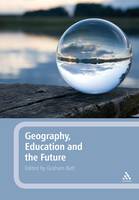 Here is a new book of conceptually sophisticated, research-informed essays about the place of geography education in schools in the UK. It is the product of the geography Education Research Collective (GEReCO), a group of scholars working on researching geography and education issues. I am not part of this group, I should say, but was invited to write a short commentary on some of the essays. Geography’s place in the school curriculum is constantly changing, it seems – sometimes bemoaned for being marginalised, although now suddenly defined as a ‘traditional’ academic subject as part of Michael Gove’s re-definition of standards around the so-called ‘English bac’. There is a vibrant on-line community of geography teachers and education researchers engaging in these issues – amongst others, I like the blog developed by John Morgan and David Lambert, Impolite Geography.
 Pop Theory