 In a recent review of a new book defending Ordinary Language Philosophy, Sari Nusseibeh makes some interesting comments on the possible connections between the war-time service of J.L. Austin and the philosophical style he developed. He also includes a couple of personal biographical vignettes to bolster the argument (he is married to Austin’s daughter, Lucy, which might explain the access implied in his review), and mentions that a full biographical study is in the offing.
Austin is an oddly anonymous figure, someone whose influence clearly depended in no small part on the force, shall we say, of his personality, without whose presence it has even been suggested the full significance of his ideas cannot be appreciated (for example, Cavell’s presentation of Austin’s importance in general revolves around a repeated invocation of the impact that Austin’s own teaching had upon him personally). I have been interested in the relationship between the biographical and the theoretical for a long time – once upon a time I even tried to write seriously about this relation, which seems to me quite central to the genre of Theory as we have come to know and love it, but which is poorly appreciated and even more poorly theorised (the construction of author-effects around Foucault and his lectures seems to me to exemplify the point, and also manages to cover over one of the most important resources available for engaging with this problem).
 Austin is a ubiquitous reference across the canon of French Theory in particular, perhaps more often mentioned than used certainly. Derrida was a fan, and Austin’s vocabulary was quite central to how literary deconstruction presented itself in the 1970s and 1980s (one of my unwritten fantasy papers would be about the ways in which deconstruction is the source for an ongoing tendency to ‘freeze’ Austin’s ideas around a simple distinction between constatives and performances, i.e. half way through How to do things with words, which helps to support strongly political, ‘de-naturalising’ interpretations of the idea of performativity [and thereby manages to sustain Emile Benveniste’s defence of this distinction against Austin’s own undoing of it]. I think this freezing still accounts for the way that ideas of performativity and enactment slip into routine constructionism all the time. ‘Force’, in Austin, is the name for a problem to be investigated, not the concept for an effect felicitously realised. Not sure I’ll ever get round to writing that one, though). The Derrida/deco link to Austin is obvious enough. Austin pops up in de Certeau, rather weakly, is more or less disavowed in Foucault’s Archaeology of Knowledge, is an important reference point for Deleuze and Guattari in A Thousand Plateaus, he gets a mention in Lacan. Pierre Bourdieu’s favourite insult, that of scholasticism, is taken from Austin. I could go on (Austin of course is also at work amongst the Anglos, such as Quentin Skinner or Hilary Putnam [I’m presuming there is a world in which Austin is not contained by John Searle] , but it is French resonance that is most entertaining – the fascinating thing about Austin’s war-time service, one of those things mentioned a lot in passing, and given his status in what becomes Continental Philosophy, is that he had a rather senior role in Allied military intelligence – he played an important part in the liberation of France…. I suspect a keen sense of pretence and masquerade, or fakery in general, might have come in handy in that world).
I suppose I find this trace, more or less visible, of Austin in French Theory interesting because it throws into question a long-standing account of this style of philosophy as ‘conservative’ – a charge which dates back to Ernest Gellner’s attack on ‘OLP‘ (as it is abbreviated these days), reiterated by Perry Anderson in 1969. Austin was Anderson’s model of the de-politicised nature of post-war British philosophy. I think Austin might be an interesting case study of what it is that academics are looking for when they go in search of ‘political’ significance in bodies of thought.
Austin the man, as a biographical figure, makes an appearance in various places – in biographies of Freddie Ayer and Herbert Hart, for example, as well as in Isiah Berlin’s reflections on life in Oxford. There are fleeting sketches in Geoffrey Warnock’s book about Austin; he is mentioned in reflections by people like Bernard Williams, Stuart Hampshire, and Michael Dummett. But in general, Austin seems to be a figure who resists much fleshing out, biographically. And as I suggested above, that might be interesting not least because of the ‘ad hominen’ qualities of Austinian styles of criticism – something that Simon Glendinning has written about recently in a volume of essays re-evaluating Austin’s legacy.
 Shosana Feldman has a wonderful take on the masculine framing of action in Austin, a theoretical reading of course, and one of the more interesting accounts of Austin I have come across is in Mary Warnock’s autobiography, which I bought for a pound in an unexpectedly large charity second-hand bookshop in Cheltenham earlier this year. Warnock’s story of Oxford philosophy centres on women, such as Iris Murdoch, and Elizabeth Anscombe, who harboured a deep personal hostility towards Austin it seems. She writes about being a woman admitted into the manly circle of the famed Saturday morning sessions that Austin ran, with all those aforementioned soon-to-be stalwarts of post-war British philosophy (Warnock’s stories reminded me too of the tale that Gillian Rose tells in Love’s Work, about being told at the start of her time as an undergraduate to remember that all the (male) philosophers she was about to encounter were much smarter than she was – and told this by Jean Austin, Austin’s widow).
Anyway, who knows, these and other fragments may come together and begin to make sense in the biography mentioned by Nusseibeh. I can’t find any other mention of this yet.

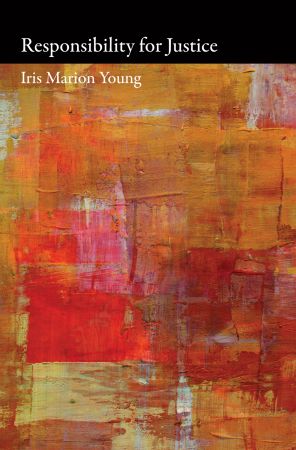 I’ve only just noticed that Oxford University Press have a final book by Iris Marion Young called Responsibility for Justice – a little bit of overlap with Global Challenges, but much deeper and more sustained philosophical engagement with concepts of responsibility. My all-time favourite thinker. I made salad for her once.


 Pop Theory